Do an
outline, whatever way works best.
Get yourself out of the word soup and know where the story is headed.
Conflicts
and obstacles. Hurt the protagonist, put things in their way, this keeps
the story interesting. An easy journey makes the story boring and boring is
hard to write.
Change
the POV. Sometimes all it takes to untangle a knotted story is to look at
it through different eyes, be it through the sidekick, the antagonist, a minor
character, whatever.
Know the
characters. You can’t write a story if the characters are strangers to you.
Know their likes, dislikes, fears, and most importantly, their motivation. This makes the path clearer.
Fill in
holes. Writing doesn’t have to be linear; you can always go back and fill in plotholes,
and add content and context.
Have
flashbacks, hallucinations, dream sequences or foreshadowing events. These
stir the story up, deviations from the expected course add a feeling of urgency
and uncertainty to the narrative.
Introduce
a new mystery. If there’s something that just doesn’t add up, a big question mark, the story becomes more
compelling. Beware: this can also cause you to sink further into the mire.
Take
something from your protagonist. A weapon, asset, ally or loved one. Force
him to operate without it, it can reinvigorate a stale story.
Twists
and betrayal. Maybe someone isn’t who they say they are or the protagonist
is betrayed by someone he thought he could trust. This can shake the story up
and get it rolling again.
Secrets. If
someone has a deep, dark secret that they’re forced to lie about, it’s a good
way to stir up some fresh conflict. New lies to cover up the old ones, the
secret being revealed, and all the resulting chaos.
Kill
someone. Make a character death that is productive to the plot, but not “just because”. If done well, it affects
all the characters, stirs up the story and gets it moving.
Ill-advised
character actions. Tension is created when a character we love does
something we hate. Identify the thing the readers don’t want to happen, then
engineer it so it happens worse than they imagined.
Create cliff-hangers. Keep the readers’ attention by putting the characters into new problems and
make them wait for you to write your way out of it. This challenge can really
bring out your creativity.
Raise the
stakes. Make the consequences of failure worse, make the journey harder.
Suddenly the protagonist’s goal is more than he expected, or he has to make an
important choice.
Make the
hero active. You can’t always wait for external influences on the
characters, sometimes you have to make the hero take actions himself. Not
necessarily to be successful, but active
and complicit in the narrative.
Different
threat levels. Make the conflicts on a physical level (“I’m about to be
killed by a demon”), an emotional level (“But that demon was my true love”) and
a philosophical level (“If I’m forced to kill my true love before they kill me,
how can love ever succeed in the face of evil?”).
Figure
out an ending. If you know where the story is going to end, it helps get
the ball rolling towards that end, even if it’s not the same ending that you
actually end up writing.
What if?
What if the hero kills the antagonist now, gets captured, or goes insane? When
you write down different questions like these, the answer to how to continue the
story will present itself.
Start
fresh or skip ahead. Delete the last five thousand words and try again. It’s
terrifying at first, but frees you up for a fresh start to find a proper path. Or
you can skip the part that’s putting you on edge – forget about that fidgety
crap, you can do it later – and write the next scene. Whatever was in-between
will come with time.
*Blinks* I-I’m not the only one to call writer’s block needing to un-stick the story?
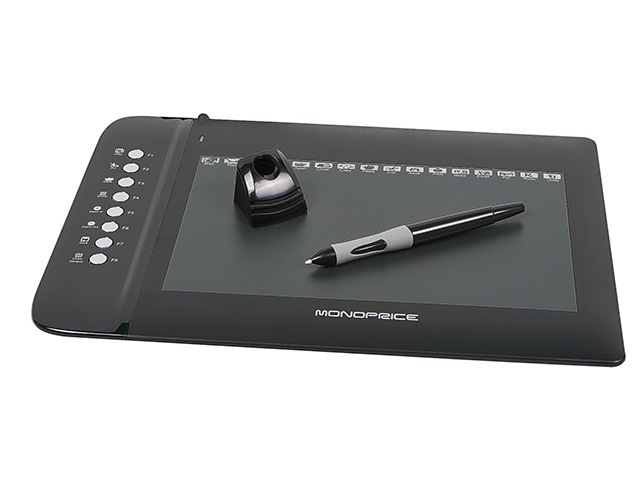
After spending a week with the 6.25“x10” Monoprice, my Yiynova and Cintiq remain unplugged and I gave my Intuos away to a friend. The Monoprice tracks subtle pressure variances and small movements with less lag and more crisp fidelity than any of the others. It is, put crudely, fucking awesome, in both OSX Lion and Windows 7 x64.
I have one of these, 10×6.5 I bought about two months ago for 48 bucks. It’s a billion times better than my old Wacom Bamboo and works like a fuckin dream.
ATTENTION ALL PENNY-PINCHING ART FRIENDS!!!
ooo reblogging this for potential future purchase
oh
I’m definitely thinking of getting one of these, or asking for one for Christmas. ‘Cause as much as I appreciate Ian giving me his old tablet, I think the pen might be on it’s last legs. ;~;
Oh my god these start at $25 for a little one.
I would be so okay with a little one.
Reblogging this again because I fucking lost it and don’t want to forget it again.
the world as we know it has ended and mother nature starts taking back what’s hers. there are no zombies or cannibals or murderous bandits. the most valued members of the community are those who know how to garden and farm, sew and weave, treat wounds, work wood or build with bricks, cook from scratch.
people bond together to begin rebuilding instead of killing each other. everyone teaches each other whatever they do know and works together to figure out the stuff none of them know. books become incredibly valued resources because they’re often the only way to learn critical information. if someone is elderly, disabled, or otherwise unable to work at the same level as most of the community, they’re taken care of by the others, not told any sort of “survival of the fittest” bs.
as the generations ware on, communities begin expanding into small cities. some of the settlements even find ways to repurpose solar or wind power on a small scale and have electricity in some of their buildings. storytellers wander the countryside telling tales of the old world in return for some hot stew or a place to rest for the night, and the mythos of the new world start to incorporate elements of the past. the only thing that remains constant is that humans survive, and they do it by working together.
A CHILL AF MANGA ABOUT A ROBOT LADY RUNNING A COFFEE SHOP DURING THE DECLINE OF HUMANITY WHERE EVERYONE IS SUPER NICE AND HAPPY AND IT’S JUST REALLY LOVELY
IT IS LEGIT ONE OF MY FAVORITE SCI-FI WORKS AND A HUGE INSPIRATION FOR MY WRITING
IF YOU LIKE A QUIET END OF THE WORLD PLEASE CHECK IT OUT BLESS
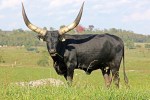
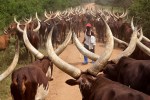
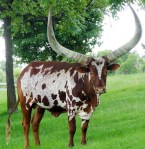
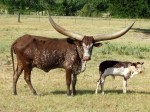
The Ankole-Watusi, also known as Ankole Longhorn is a breed of cattle originally native to Africa. Its large distinctive horns that can reach up to 8 ft (2.4 m) from tip to tip are used for defense and cooling by honeycombs of blood vessels. Ankole-Watusis weigh from 900 to 1,600 pounds (410 to 730 kg).

















 Plume de Lynx