is “chai” a TYPE of tea??! bc in Hindi/Urdu, the word chai just means tea
its like spicy cinnamon tea instead of bland gross black tea
I think the chai that me and all other Muslims that I know drink is just black tea
i mean i always thought chai was just another word for tea?? in russian chai is tea
why don’t white people just say tea
do they mean it’s that spicy cinnamon tea
why don’t they just call it “spicy cinnamon tea”
the spicy cinnamon one is actually masala chai specifically so like
there’s literally no reason to just say chai or chai
They don’t know better. To them “chai tea” IS that specific kind of like, creamy cinnamony tea. They think “chai” is an adjective describing “tea”.
What English sometimes does when it encounters words in other languages that it already has a word for is to use that word to refer to a specific type of that thing. It’s like distinguishing between what English speakers consider the prototype of the word in English from what we consider non-prototypical.
(Sidenote: prototype theory means that people think of the most prototypical instances of a thing before they think of weirder types. For example: list four kinds of birds to yourself right now. You probably started with local songbirds, which for me is robins, blue birds, cardinals, starlings. If I had you list three more, you might say pigeons or eagles or falcons. It would probably take you a while to get to penguins and emus and ducks, even though those are all birds too. A duck or a penguin, however, is not a prototypical bird.)
“Chai” means tea in Hindi-Urdu, but “chai tea” in English means “tea prepared like masala chai” because it’s useful to have a word to distinguish “the kind of tea we make here” from “the kind of tea they make somewhere else”.
“Naan” may mean bread, but “naan bread” means specifically “bread prepared like this” because it’s useful to have a word to distinguish between “bread made how we make it” and “bread how other people make it”.
We also sometimes say “liege lord” when talking about feudal homage, even though “liege” is just “lord” in French, or “flower blossom” to describe the part of the flower that opens, even though when “flower” was borrowed from French it meant the same thing as blossom.
We also do this with place names: “brea” means tar in Spanish, but when we came across a place where Spanish-speakers were like “there’s tar here”, we took that and said “Okay, here’s the La Brea tar pits”.
Or “Sahara”. Sahara already meant “giant desert,” but we call it the Sahara desert to distinguish it from other giant deserts, like the Gobi desert (Gobi also means desert btw).
Languages tend to use a lot of repetition to make sure that things are clear. English says “John walks”, and the -s on walks means “one person is doing this” even though we know “John” is one person. Spanish puts tense markers on every instance of a verb in a sentence, even when it’s abundantly clear that they all have the same tense (”ayer [yo] caminé por el parque y jugué tenis” even though “ayer” means yesterday and “yo” means I and the -é means “I in the past”). English apparently also likes to use semantic repetition, so that people know that “chai” is a type of tea and “naan” is a type of bread and “Sahara” is a desert. (I could also totally see someone labeling something, for instance, pan dulce sweetbread, even though “pan dulce” means “sweet bread”.)
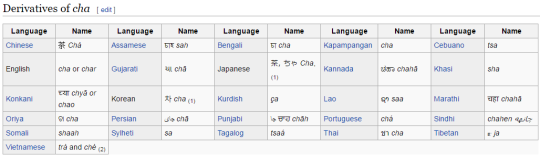
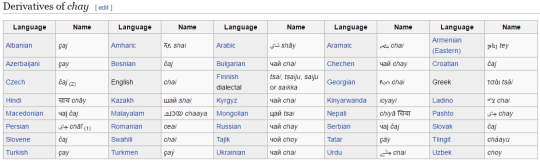
Also, specifically with the chai/tea thing, many languages either use the Malay root and end up with a word that sounds like “tea” (like té in Spanish), or they use the Mandarin root and end up with a word that sounds like “chai” (like cha in Portuguese).
So, can we all stop making fun of this now?
Okay and I’m totally going to jump in here about tea because it’s cool. Ever wonder why some languages call tea “chai” or “cha” and others call it “tea” or “the”?
It literally all depends on which parts of China (or, more specifically, what Chinese) those cultures got their tea from, and who in turn they sold their tea to.
The Portuguese imported tea from the Southern provinces through Macau, so they called tea “cha” because in Cantonese it’s “cha”. The Dutch got tea from Fujian, where Min Chinese was more heavily spoken so it’s “thee” coming from “te”. And because the Dutch sold tea to so much of Europe, that proliferated the “te” pronunciation to France (”the”), English (”tea”) etc, even though the vast majority of Chinese people speak dialects that pronounce it “cha” (by which I mean Mandarin and Cantonese which accounts for a lot of the people who speak Chinese even though they aren’t the only dialects).
And “chai”/”chay” comes from the Persian pronunciation who got it from the Northern Chinese who then brought it all over Central Asia and became chai.
i saw this post earlier about therapists and it reminded me of my old therapist paul, who in my opinion is one of the greatest men alive and who did not put up with my bullshit for even one second
anyway i go in to see paul one week in the summer of 2016, and i’m doing my usual bullshit which consists of me talking shit about myself, and paul is staring at me, and then he cuts me off and says that he’s got a new tool for helping people recognize when they’re using negative language, and gets up and goes over to his desk
and i’m like alright hit me with that sweet sweet self-help article my man, because i’m a linguistic learner and whenever paul’s like here i have a tool for you to use it’s pretty much always an article or a book or something
paul opens a drawer, takes something out, and turns back around. i stare.
i say, paul.
is that a nerf gun.
yeah, says paul.
i say, are you gonna shoot me with a nerf gun in this professional setting.
he happily informs me that that’s really up to me, isn’t it. and sits back down. and gestures, like, go ahead, what were you saying?
and i squint suspiciously and start back up about how i’m having too much anxiety to leave the house to run errands, like it was a miracle to even get here, like i’ve forgone getting groceries for the past week and that’s so stupid, what a stupid issue, i’m an idiot, how could i–
a foam dart hits me in the leg.
i go, hey! because my therapist just shot me in the leg. paul blinks at me placidly and raises an eyebrow. i squint again.
i say, slowly, it’s– not a stupid issue, i’m not stupid, but it’s frustrating me and i don’t want it to be a problem i’m having.
no dart this time. okay. sweet.
so the rest of the hour passes with me intermittently getting nailed with tiny foam darts and then swearing and then fixing my language and, wouldn’t you know it, i start liking myself a little more by the end of the session, which is mildly infuriating because paul can tell and he’s very smug about it
anyway i leave his office and the lady having the next appointment walks in and i hear what’s all over the floor? and paul very seriously says cognitive behavioral therapy tools.
We were driving to a restaurant and wanted to see how long the wait was. My dad handed me the phone book and asked me to look up the number. I, for whatever reason, thought he said “get rid of this”. So I opened the window and chucked the phone book while we were going 70 MPH down the highway.
great
I stuck my hand in a bowl of soup simply because I hadn’t before.
same
When I was maybe 10-12, I threw one of my dad’s golf clubs that had no head on it like a spear down the hallway after telling my brother it would be cool.
absolutely
One time I was eating a lemon poppyseed muffin. The phone rang, so I reacted by shoving the entire muffin my mouth and eating it as fast as I could, nearly choking to death, and I didn’t even make it to the phone before it stopped ringing.
huge mood
Gave my sister a piggyback when she was giving my other sister a piggyback at the same time