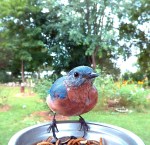
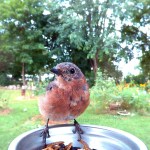
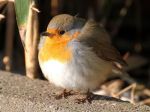
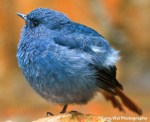
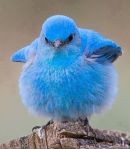
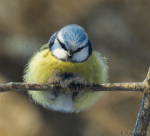
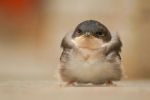
The Bluebirds have been coming each evening for a while, and it was always getting too dark for good pics, as can be seen in the last one. Today, they came in the morning, and I finally got some nicer ones. It seems like the whole family is coming, and it is becoming rather tough to tell the parents apart from the older kids because everybody is molting. However, as you can also see, there are still young ones that need their parents’ attention 🙂 Things must be less stressful now, to me it almost looks like the first one is smiling (I know, I know…)
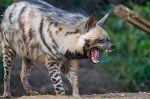
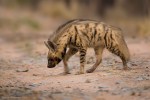
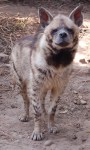
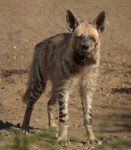
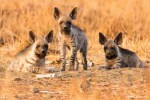
The striped hyena is the smallest of the true hyenas, endemic to parts of Africa and Asia.
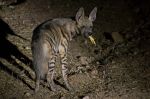
Though primarily a scavenger, large specimens have been known to kill their own prey. The striped hyena is a monogamous animal, with both males and females assisting one another in raising their cubs. A nocturnal animal, the striped hyena typically only emerges in complete darkness, and is quick to return to its lair before sunrise. Although it has a habit of feigning death when attacked, it has been known to stand its ground against larger predators in disputes over food.
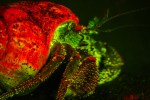
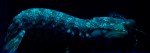
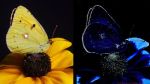
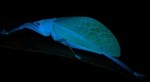
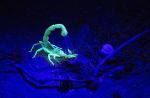
Fluorescence is the emission of light by a substance that has absorbed light or other electromagnetic radiation. Unlike bioluminescence, biofluorescence is not a chemical reaction and biofluorescent organisms do not give off light from their own power source. Instead, biofluorescent organisms absorb light, transform it, and eject – or “re-emit” – it as a different color. Biofluorescent light can only be produced – and seen by humans – while the organism is being illuminated by an external source, such as a white or ultraviolet (UV) light bulb. While humans can’t see UV light, most insects can, and much of the world around us looks quite different in UV light. Some experiments show that scorpions may use presence of UV light as a way to detect shelter. Biofluorescence may also serve important functions in signaling and communication, mating, lures, camouflage, UV protection (sunscreen) and antioxidation.









 Plume de Lynx