Growing up fat, you get made fun of for everything you do, even basic shit like eating and laughing and breathing are funny when you do it because youre fat! And its so hard to not carry that with you as you get older, like I’m still embarassed to eat or dance in front of people or smile in pictures and its ridiculous and I hate it and I wish I was treated with more humanity
Thin people can reblog this btw
they wont tho lmao
Part of learning to survive was accepting that people will be disgusted when they see me eat and deciding that I didn’t give a single fuck about that because their disgust is rooted in bigotry and their discomfort is the furthest possible thing from being my problem.
Eating is such a basic and necessary thing, the same as wearing clothes and it’s wild to me now to think about how intensely policed fat people are. Like we’re just out here trying to survive and eat and we’re dehumanized, humiliated and chastised for sport. I’m sorry my beautiful fat angels for the hell they’ve put us through. You deserve so much safety and so much freedom.
Growing up fat, you get made fun of for everything you do, even basic shit like eating and laughing and breathing are funny when you do it because youre fat! And its so hard to not carry that with you as you get older, like I’m still embarassed to eat or dance in front of people or smile in pictures and its ridiculous and I hate it and I wish I was treated with more humanity
One of our baby girls is fat, in the 99th percentile for her age. She is super cute and sweet. Lately, she has been sick with various breathing issues, so she has been reluctant to take her bottles. Normally, she’ll take 4 ounces of formula at lunch and 8 ounces in the afternoon. Today, I was lucky to get to her take 5 all day.
There was a substitute covering a lunch break in my classroom today. We emphasized to her that we need to keep trying to get the baby to drink her bottle until she finished it. She said, “Why are you guys so worried about taking her bottle?”
My coworker replied, “That’s where all her nutrients are. She needs the nutrients and the water.”
To which the substitute replied, “But she’s so fat. She doesn’t need it.”
Thin privilege is a small, pretty baby getting better childcare because the caretaker doesn’t think she’s too fat to be allowed to eat.
This reminds me of a cousin of mine who ended up with her kids being taken away from her by social services for a number of reasons but mostly for nearly killing her baby daughter. How?
By starving her. She insisted that her baby was ‘too fat’ and had an aim to remove any and all ‘chubbyness’ so her baby would be thin. She’d already been warned by her doctor about the baby not getting enough food, but insisted she knew best.
After several months of this her baby passed out cold one day and was rushed into hospital where the doctors found her to have severe malnutrition, a low body temperature and low pulse rate. They asked my cousin what she’d been feeding her daughter and she said “one bottle of skimmed milk a day. I don’t want her growing up fat.”
Even after nearly killing her daughter my cousin maintained her view that fat = bad and ended up with all her kids taken from her because she was starving them and neglecting them.
When your fatphobia leads you to starving your own children then you’ve got serious problems.
(Note. She still, to this day, maintains the view that she was right and the doctors were wrong. “They just want fat kids so they can keep employed treating them for all those diseases that being fat causes.” = her actual words.)
My mom had me dieting with her when I was eleven. She had me eating less than 600 calories a day because she was worried I was going to “get huge.” She even grounded me once because she found out my friends were bringing me lunches! I ended up passing out, going to the ER, and getting two IVs at once BC I was so goddamn dehydrated. Soooooo surprised they didn’t call child services… And looking back, this was the root of my anorexia. I’m nearly 22 and still fighting it. Please don’t starve your fucking children.
For fucks sake babies are SUPPOSED to be fat, what is wrong with people? It’s just stored energy, and growing children need stored energy – an 11 year old is just about to hit some major growing years. Damn.
Fatphobia
Is
Real
and it kills
This is no joke. people will literally starve their own babies cause they don’t want them getting fat. A parent brought in their six month old baby who was having breathing issues and kept getting sick. the parent was asked if the baby was eating regularly and the parent straight up told the doctor that they only feed the baby once a day. ONCE A DAY. A FUCKING BABY. they even had the nerve to say because they didn’t want the baby to get fat. people like this are real. they would rather have a dead baby than a fat one.
My youngest son is a very big boy and has been since he was born. When he was 10 months old I took him for his well-baby check and vaccinations. The nurse noted his weight and said, quite casually, “He is in the 99th percentile for weight so he is at risk for obesity. You may want to keep an eye on that.” I said, “He is exclusively breastfed. He refuses to eat any solids yet.” What did she expect me to do? What would it mean to “keep an eye on” an exclusively breastfed baby’s weight?
She backed off saying, ‘Well he looks fine!” – proving once again that weight bias is not truly about health – But I know many other parents who are not as informed as I am about weight science and size diversity would react to this interaction by policing their child’s food intake, if not as an infant, then when he was an older child. This is exactly the type of seemingly-inconsequential interaction that starts the ball rolling on a lifetime of dieting, disordered eating, negative body image, and weight-based abuse for too many fat people.
Years later when he was five, another doctor measured his weight and height and commented that he is off the charts on both, but “at least he is in proportion.” And if he was not “in proportion,” I am sure I would have been advised once again to “watch his weight.”
I no longer allow healthcare providers to weight my children unless it is absolutely medically necessary. They are unable to control their weight talk, which is a known harm for children.
We need to completely eliminate weight talk from medicine, especially when it comes to children. Even the smallest exposure can have terrible consequences.
Wtf…
A friend from college had been going to the doctor because she was having trouble breathing. She was told to lose weight.
Over the course of several years, she went back to the doctors time and time again, telling them that she’d been sticking to the diet but because of her breathing problems she had been unable to even walk for more than 20 minutes at a time.
The doctor got her into an exercise programme and told her that she just needed to really try to lose weight because that was clearly the reason for her breathing problems.
By the time they found the tumour on her lungs, it was inoperable. She only lived three months after diagnosis. She was 25.
She’d had the tumour for over five years.
The doctor was so focused on the fact that my friend was “fat”, that they refused to look for any underlying cause.
They killed her.
Weight-first treatment KILLS. Fatphobia KILLS.
I have 2 scary stories to share about fatphobic doctors & parents harming their childs/patients’ health:
1. The 4 years old daughter of a friend of mine came to our house to spend the weekend. She gave me a letter from her mom that said that the child was in a glutenfree diet because she was getting ‘awfully fat’ when eating cookies or bread (my celiac ass; who gets dhiarrea and loses a scary amount of weight whenever I eat something with gluten was like ’???’).
You can bet that I went to the supermarket with the kid and told her ‘go & take whatever you feel like eating’ and the poor child came back smiling with her arms full of biscuits and cupcakes.
She didn’t got sick (as a celiac would get) and told me later that she hated the diet her mother made her follow; because her cousins didn’t had to pass through that.
And what’s the scariest thing about this story? Her mother was a NURSE. A fucking nurse who didn’t have a clue of the harm that she was doing to her daughter’s body!
2. My little sister started to feel fatigued and dizzy at 9 years old. She felt nauseated at the sight of food and had abdominal pain that increased with physical activity.
Mom got her to the ER and the doctor dismissed it saying: ‘she’s fat and probably is feeling ill after eating too much burgers, get her to make some exercise and she will be better in no time’.My mom didn’t felt ok with the diagnosis and took my sister with a second doctor who also told her that ‘the child was just fat’.
My sister’s skin was starting to get yellow as the days passed and the abdominal pain was getting awful so my mom (heaven bless her!) got her to the ER for the third time:
SHE HAD STAGE 4 HEPATITIS AND WAS ABOUT TO DIE.
She survived after a long and painful recovery who involved being in bed for a whole year (remember that we’re speaking of a 9 years old child). Luckily they saved her liver and she didn’t went through a transplant… but let this sink:
If it weren’t for my mother, fatphobia would have killed her. Fatphobia kills kids and teenagers, fatphobia kills inocent people everyday. It treats human beings as lesser than others and hurts them in their most vulnerable times.
It’s a real shame that we all have so much stories to share about this issue. A REAL SHAME.
Future doctors, interns, and residents following me:
FUCKING TAKE NOTE OF THIS!
Don’t let bias against your fat patients kill them!
i’d really like my thin followers to reblog this if you can. fat people are already here for each other, we need you guys to help us out too. this is something i never see anyone actually talking about in-depth, and it’s disappointing. be there for your fat siblings, too.
Both as a doctor and a fat woman ALL OF THE ABOVE!!!
When I was 14 I lost 50 lbs at fat camp. Two weeks after I came home, I had a gallbladder attack and ended up in the ER, vomiting from the pain. Doctor said it was probably indigestion and that I would be fine with pepto. Six days and countless tests later, he finally agrees that I have to have surgery to get my gallbladder out, since I wasn’t just fat and over reacting. I have serious spine and back pain, but I’m terrified to go to a chiropractor because they always just write it off as “obesity related pain”. As a young athlete, I complained of debilitating knee pain for years, had countless x-rays and ortho visits before a doctor finally looked closer and noticed that my knee caps were crooked, and I wasn’t just complaining because I was fat. The main reason that I refuse to get psychological help is because I’ve been to three different mental health professionals who isist that my depression would be cured if I’d lose weight and start wearing makeup. My GP did blood work on me twice because he couldn’t believe that I am this fat and not unhealthy in any way, so when the first results came back clean, he pulled another full workup, just in case. Fat people suffer enough without being treated like a joke my medical professionals
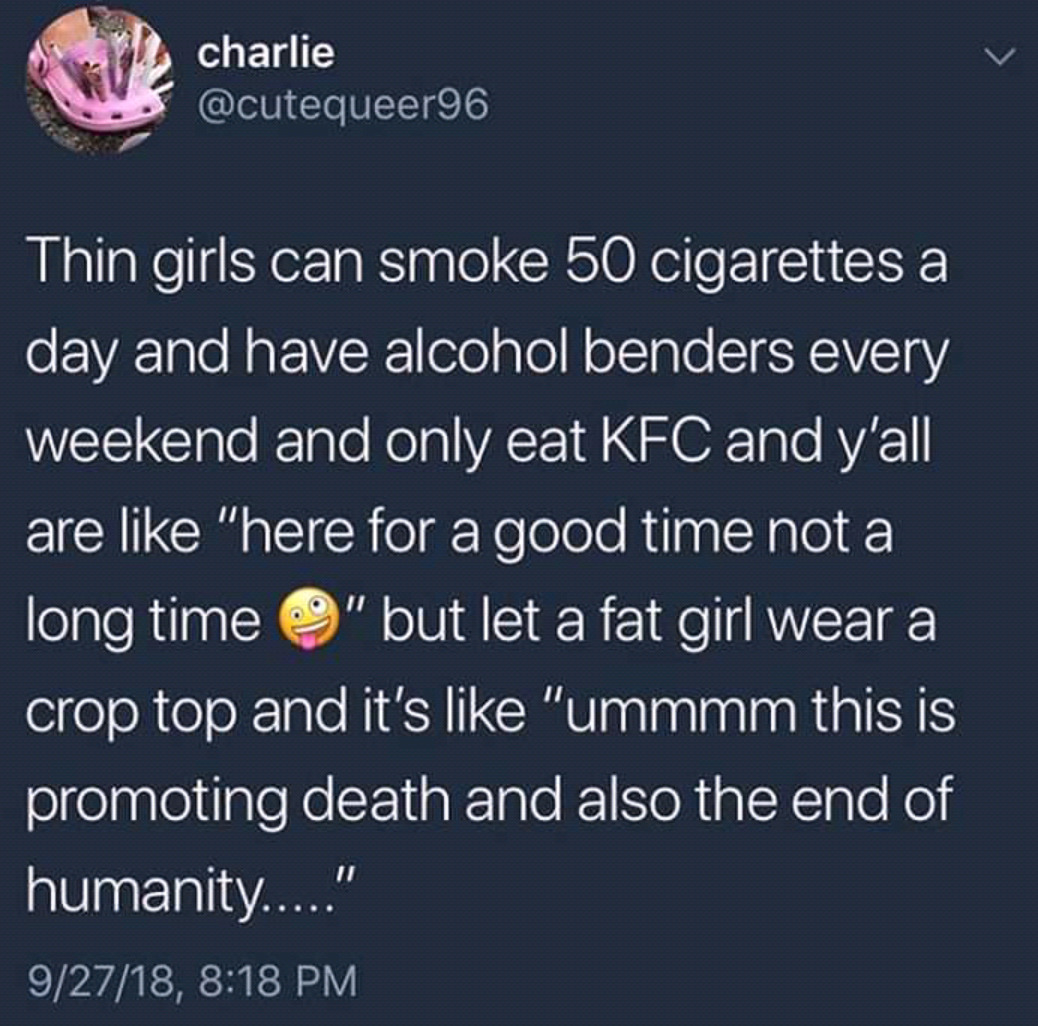
Videogames:you can choose from twenty different eyelashes!!!! oh but you can’t be fat
Yeah, whine about how you can’t have a fat character that can scale walls, or sprint. Please whine more.
you’re so right kiddo….. games are very realistic……. like the parts where you die and then come back again? classic realism.
but we can’t have fat people in videogames because fat people are the real fantasy creatures and not like… the dragons. and of course, every thin person can scale a wall. sure sure.
Y’know what, here’s something that’s been pissing me off for a while.
Fat? Easy to gain. So so easy. Our bodies want to keep fat around, because we’re designed not to starve.
Dropping fat? NOT so easy. When people talk about “losing fat,” what they’re saying is “I need to override millions of years of genetics to convince my body I’m not dying and it doesn’t need this carefully-stored fuel.” Dieting? Your body thinks it’s starving. Work out like crazy? Your body thinks it’s in a situation where it needs to bring the hammer down on the regular, and that means you need more fuel – speaking just for myself, I want to eat the world after I lift. That shit doesn’t melt away, even if you’ve been training like a motherfucking monster for months and eating right, because the body wants to keep it.
So yeah, the “eat less move more” doctrine can fuck itself right in the face.
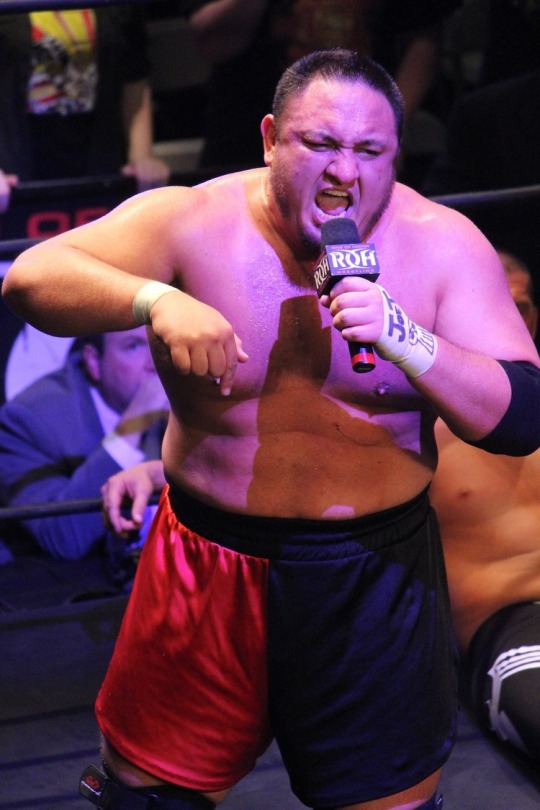
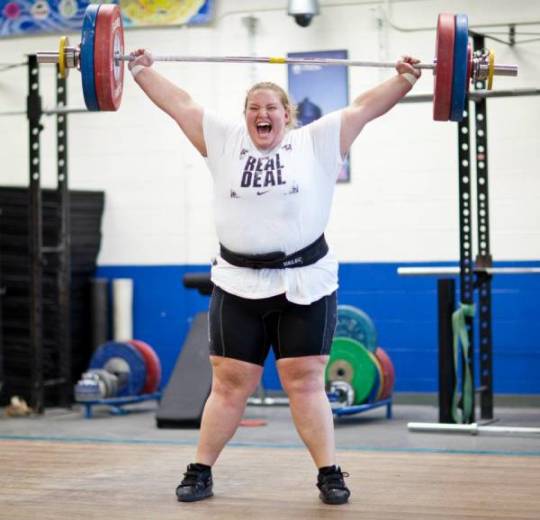
There are very, very active fat people, fat people who are experts at every sport and physical activity you can imagine. But because fat rests on top of the muscle, you don’t know when we’re jacked. Oh, sure, sometimes you can get a idea, if a person is WILDLY active, like for a fucking living. Here’s Samoa Joe, the NXT pro wrestling champion who was literally dethroned last night:
Yeah, you can see there’s a lot of power there.
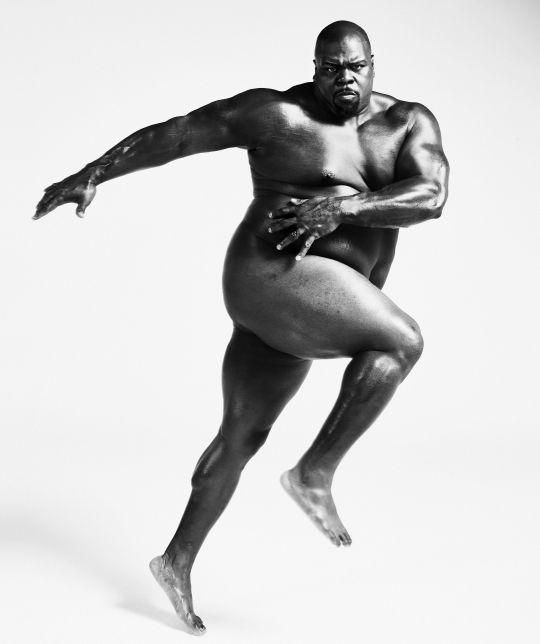
But a lot of times you can’t. Here’s Vince Wilfork, two-time Superbowl tackling champion:
And here’s Holley Mangold, 2012 superheavyweight division Olympian:
These are people who fight (and flip, and do all kinds of crazy shit in Joe’s case), and run, and lift for a living.
And they’re not unusual, as much as you’d like to think so. The world is full of fat powerhouses, of fat runners, of fat Crossfitters, and they’re just as good at doing the thing as their smaller counterparts.
So realism? Fuck off. The only reason we don’t have fat game characters is because society is fatphobic as fuck.
Also? Saints Row lets you be fat, *and hot,* so don’t even come at me with “nobody wants that.”
“fat people can’t climb though”
(Exhibit A: Fezzik carrying 3 people up a cliff)
“yeah but that’s fictional!”
and video games aren’t?
Apparently weight weighs differently if it’s fat instead of, like, eight different machine guns and a rocket launcher?
Video games let you carry all sorts of shit, they can let you carry your own body.
(This got better) -V
I love whenever people are like “ugh, fat people can’t climb a wall”.
Cool story, quick question: can you?
Because plenty of people aren’t into climbing. Being skinny isn’t what allows people to climb. Training is.
Je me revendique du fat activism. Eh bien, figurez-vous que
depuis quelques années de nombreux-ses chercheur-e-s académiques travaillent
aussi dans le champ des fat studies.
Ces études sur la grosseur se distinguent des recherches sur la dite « obésité »
(qui sont généralement anti-obésité et sponsorisées par des parties prenantes
dans l’industrie de perte de poids (0)). Le point de départ des fat studies n’est pas la pathologisation
d’une certaine corpulence mais plutôt les aspects sociaux, économiques,
éducatifs, psychologiques, les biais médicaux, les représentations relatifs à
la grosseur. (1). Dans la lignée du fat
activism tel qu’il s’est développé au départ des Etats-Unis dans les années
70 et du développement des fat studies,
voici quelques grands principes sur le choix des mots :
Surpoids
Il est conditionné à l’existence
un poids normal. Vous allez me
dire : oui, c’est l’IMC qui le détermine. En fait, ce qui est devenu l’indice
de masse corporelle a été développé au 19e siècle par Quetelet,
statisticien belge, afin de pouvoir observer les variations dans la population
et de faire des typologies (établir des « types » c’était super à la
mode à l’époque, on en connaît les dérives racistes et eugénistes). Son but n’était
pas du tout d’évaluer la santé d’individu-e-s. Son usage s’est répandu au cours
du 20e siècle notamment à cause des compagnies d’assurance
américaines à la recherche d’outils qui leur permettaient de classer leurs
clients en fonction de leurs risques supposés de contracter des maladies.
Quelques décennies plus tard, l’organisme national de la santé aux Etats-Unis a
décidé, sous l’influence de l’OMS, de changer quels indices correspondraient à
quel type de corpulence. Et hop, du jour au lendemain, des millions d’Américain-e-s
sont devenus « en surpoids ». Indice fluctuant et utile pour
catégoriser? Peut-être pas pour diagnostiquer! Et puis, il ne prend aucunement en compte les différences, pas
même celles de genre. En outre, même si on s’entête à utiliser des outils
problématiques, la répartition de la morbidité selon l’indice de masse
corporelle n’est pas celle d’une augmentation constante mais plutôt une
courbe : élevée pour les personnes très minces comme très grosses, plus
élevée chez les personnes considérées comme « normales » que chez
celles « en surpoids » (ces dernières seraient donc plus « saines »).
(2)
Obésité
Ce terme a gagné en popularité
dans le monde occidental à la fin du 19e siècle et au cours du 20e
siècle. On assiste alors à une pathologisation
de la grosseur (3). Le monde médical, largement relayé dans les productions
culturelles, y a vu un état dont résulterait toute une série de conditions
problématiques comme des maladies cardiovasculaires. Or, aucune relation
de causalité n’a à ce jour été démontrée (4). Il y a bien une corrélation. Un lien. Pas
nécessairement de cause à effet. Le lien pourrait être : les personnes
grosses font le yoyo toute leur vie pour tenter de perdre du poids ce qui
perturbe l’organisme. Ou : les personnes grosses subissent un harcèlement
constant au sujet de leur poids (fat
shaming) ce qui affecte leur santé (5). Ou bien : les personnes
grosses sont systématiquement traitées de façon peu adéquate par le corps
médical qui rechigne à les examiner ou qui attribue tous leurs soucis à leur
poids sans chercher plus loin, en conséquence elles sont soit mal soit pas ou
plus soignées. Ou bien : les personnes grosses appartiennent en majorité
aux classes sociales défavorisées et précaires, elles ont donc un accès limité
à de l’alimentation de qualité et à des soins de santé. Et probablement, le secret de la corrélation réside-t-il dans la combinaison de ces facteurs.
Corrélation et pas causalité. Un
rappel que toutes les personnes grosses n’ont pas forcément des problèmes de
santé qu’on identifie comme causés par leur poids (problèmes d’articulation, cholestérol,
hypertension, etc.) ni les risques qui leur sont associés. Personne ne peut
déterminer notre état de santé en nous regardant.
Bon, en plus, sérieusement,
maladie ou pas : qu’est-ce que ça peut foutre l’état de santé de
quelqu’un-e ? Quand on est malade, on devient indignes de respect ?
On vit de plus en plus vieux/vieilles (malgré la dite « épidémie d’obésité »
hein, le mal de ce millénaire) et on ingurgite et respire de plus en plus de
crasses. Alors, les personnes valides qui décrètent qu’on est dégoûtant-e-s et
pitoyables quand on est malade, devinez quoi ? Eh bien oui, il est
plus que probable que vous rencontrerez la maladie et le handicap à un moment
ou à un autre dans votre vie. C’est facile de vous rassurer en nous dénigrant
en raison de notre mauvaise santé supposée mais le corps valide obligatoire (compulsory able-bodiedness), c’est une
norme sociale très présente (et validiste), qui ne vous met à l’abri de rien
(6). Depuis quand la santé est-elle le curseur de la valeur de quelqu’un-e ?
C’est une bonne question ça, ma
foi. Dans les années 70, s’est développée, dans le monde occidental, dans le
sillon du néolibéralisme, une idéologie « santéiste » et une injonction au bien-être. Soudain, être en
bonne santé physique et mentale
(ce qui serait indiqué notamment par un corps mince)
est devenu une question morale et de volonté
individuelle, un idéal auquel chacun-e devrait se conformer. Il est désormais
de la responsabilité de chacun-e de prouver et de garantir cette santé et ce
bien-être qui déterminent notre valeur dans le monde. Soudain ? Enfin, depuis
que les grandes entreprises nous ont incité-e-s à consommer dans ce sens.
L’idéal est celui d’individu-e-s indépendant-e-s, productif-ves, qui génèrent
de l’argent et qui consomment. Des corps considérés comme
hors-normes – gros et handicapés – se voient stigmatisés sous le motif de leur
improductivité, de leur incapacité à intégrer et à incarner la logique de la
norme. Les discours actuels sur l’ “obésité” sont empreints de ce contexte. D’autant
plus que les personnes grosses sont perçues comme personnellement responsables
de leur état et possédant la capacité individuelle de s’en extraire. Les
politiques de santé publique, les médias et n’importe quel-le quidam s’en donne
à cœur joie dans la culpabilisation. Je vous invite à parcourir les liens (7)
en bas de ce texte pour des analyses plus développées et nuancées. Mais je ne
veux pas vous perdre. Nous en étions donc aux termes utilisés pour désigner nos
corps.
Les mots qui font joli
Les militant-e-s contre
l’oppression de la grosseur (8) ont aussi fait le choix de refuser d’utiliser
dans leurs luttes les euphémismes qui sous-entendent qu’il faudrait masquer la
réalité de nos corps, autrement dit : rond-e (surtout utilisés pour les
femmes cisgenres comme une validation par le regard masculin au même titre que pulpeuses et autres femmes à formes), corpulent-e (on a tou-te-s une corpulence en
fait), grassouillet-te, etc. J’aime bien certains de ces mots cependant, je vous
l’avoue.
Petit clin d’œil : on me
glisse à l’oreillette que le mot « crapoussin » est tombé en
désuétude. Il signifie, selon le wiktionnaire, « Personne courte, grosse
et mal faite (physiquement proche du troll et mal vêtue) ». On l’adopte ?
Grosseur
La lutte contre l’oppression de
la grosseur (ou en tout cas la frange dans laquelle je m’inscris) a
historiquement fait le choix d’un terme politique : grosseur, gras,
personne gros-se. Politique pour son rejet de la médicalisation et de la
pathologisation et pour la réhabilitation du mot descriptif derrière l’insulte.
Comme petit-e, comme grand-e, comme mince. Gros-se, tout simplement. C’est l’histoire
de nombreuses luttes sociales de revenir à ou de proposer des termes neutres au
lieu de ceux qui sont imposés par les dominant-e-s : les personnes noires
face à des termes racistes et insultants, les personnes transgenres face au mot transsexualité
teinté de pathologisation et de psychiatrisation alors que les transidentités
sont pourtant indépendantes de la sexualité. Certaines se sont aussi
réappropriées des insultes. C’est ce qu’on appelle le retournement du stigmate.
Comme si on vidait l’insulte de sa capacité à nous stigmatiser et à nous rendre
impuissant-e-s en l’utilisant à notre tour. Je suis queer et gouine par
exemple. Et « gros-se » est encore tellement utilisé pour insulter et
mépriser qu’il est émancipant de le réclamer à nouveau comme notre terme. Un
mot avec lequel on ne peut plus nous blesser. Grosse et fière.
– Paul Ernsberger, « BMI, Body
Build, Body Fatness, and Health Risks », 2012, Jenn Anderson, « Whose
Voice Counts? A Critical Examination of Discourses Surrounding the Body Mass
Index », 2012, et
Sonya Satinsky et Natalie Ingraham « At the Intersection of Public Health
and Fat Studies: Critical Perspectives on the Measurement of Body Size »,
2014, dans Fat Studies. An
Interdisciplinary Journal of Body Weight and Society
– A
écouter : Let’s Talk About Fat.
Raising Critical Questions and Debunking Cultural Myths de Noortje van
Amsterdam. Si vous ne comprenez pas l’anglais, téléchargez quand même le
pdf et regardez p. 14. C’est sur le site de Sophia, réseau belge des études de
genre : http://sophia.be/index.php/fr/pages/view/1397
(3) Georges
Vigarello, Les métamorphoses du gras,
dans la version de poche de 2010, pp. 262 et suivantes.
(4) La conférence de Noortje van Amsterdam mentionnée ci-dessus.
(6) Robert McRuer, Crip Theory. Cultural Signs of Queerness and Disability, 2006.
Pour une première approche: Dea Busk Larsen, Creating Disability – Invisible Bodies and Public Spacesur HYSTERIA dont voici un essai de traduction partielle : « On
considère généralement l’hétérosexualité comme une condition qui se marque
naturellement dans les corps. Le terme d’hétérosexualité obligatoire conçu par
Adrienne Rich (1980) le résume parfaitement. L’hétérosexualité “est, tout
simplement”, c’est le paramètre par défaut qui nous serait assigné à
tou-te-s, en attendant que nous fassions notre coming out en tant qu’autre
chose ou que rien du tout. A l’inverse, la “validité” (non-handicap) obligatoire
n’a pas autant été traitée et théorisée. Ce qui se cache derrière cette
expression, c’est que certains corps sont rendus invisibles et qu’ils sont
exclus. Comme l’a écrit Robert McRuer (2006), “ la validité, plus encore
que l’hétérosexualité, se déguise encore largement comme une non-identité, comme
l’état naturel des choses”. Cette idée que certains corps sont naturels et
normaux crée le handicap. En effet, le corps valide représente la norme, ce qui
assure en retour que le corps “moins/différemment valide” peut être
considéré uniquement comme anormal ou handicapé (de la même façon que
l’homosexualité et le queer n’existent que comme l’espace de l’Autre de
l’hétérosexualité obligatoire). Cela reproduit l’idée d’une unique forme de
“validité” et insiste sur l’existence de la norme. La validité
obligatoire part du principe que le corps valide est préférable et que nous
devrions tou-te-s y aspirer. (…) L’espace public est perçu comme neutre. Mais
en réalité, il n’en est rien. C’est un champ de bataille. Un champ de bataille
qui n’est pas perçu comme tel par le corps valide dès lors qu’il y est
valorisé. Cela entretient la croyance que le corps valide est le corps par
défaut naturel et que les autres corps sont anormalement déviants et
socialement abjects. Cela rend le corps non-valide invisible, mais aussi cela
crée un discours qui nous amènent à croire que “la bonne vie” ne peut
appartenir qu’à des corps valides. Par conséquent nous évitons et rejetons activement
les corps déviants. »
(7) – E.
Chandler et C. Rice, « Alterity In/Of Happiness: Reflecting on the radical
possibilities of unruly bodies », 2013, dans Health, Culture and Society: https://hcs.pitt.edu/ojs/index.php/hcs/article/view/146 – F. Schrob, « Fat Politics in Europe: Theorizing on the Premises and
Outcomes of European Anti-‘Obesity-Epidemic’ Policies », 2013, dans Fat Studies. An Interdisciplinary Journal of
Body Weight and Society








 Plume de Lynx