Here at the Scientific Pokedex, we like dealing with scientifically-proven facts. Here is one such fact for you: Cutiefly is flippin’ adorable.
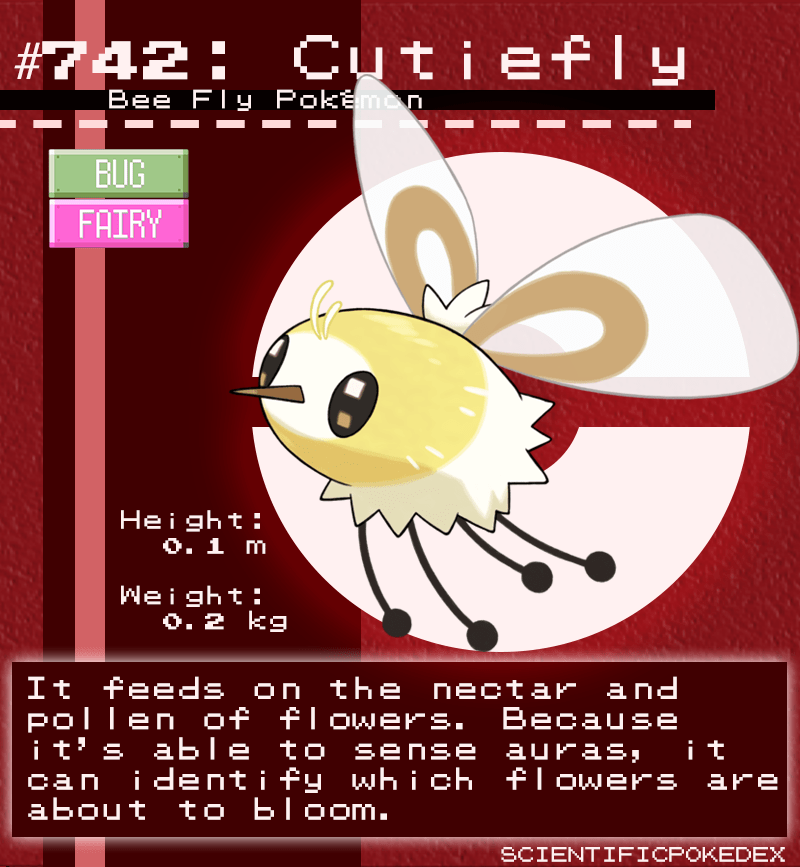
This is one of those rare pokémon that’s straight-up ripped off from our world. Cutiefly is the “Bee Fly” pokémon, and Bee Flies are the Bombyliidae family in our world:
Bee Flies are in fact flies, not bees. They are also fuzzy and adorable. Like bees, they feed on nectar and pollen. Looking like a bee works to their advantage: bee flies will infiltrate bee nests, eating the bee’s hard-earned storage of nectar and honey. They also eat the bee’s eggs, replacing them with their own bee fly eggs for the bee mom to raise unsuspectingly.
The pokédex states that Cutiefly can “sense auras” of flowers, and because of that can they tell which flowers are about to bloom. Usually when a pokédex entry mentions the word “aura”, things start to slip scientifically. In Cutiefly’s instance, this is not the case at all: real bees (and bee flies) have special eyes that show them a lot more about flowers than we can see.
Human eyes, as you might know, can only detect a small wavelength range of light. All other kinds of light–infrared, radio, microwave, x-ray etc. – are invisible to us. This is not the case for bees (and bee flies): A bee’s eye can see a different wavelength range than us, and therefore they can see more “colors”. Specifically, they can see farther into the ultraviolet:
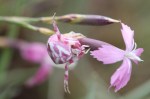
Flowers are colorful enough as they are to us, but it turns out flowers are even more colorful in the ultraviolet. Specifically, flowers “light up” close to the center: basically a big neon sign saying “the nectar is right here!” for creatures that can see it. Here’s a few examples of what flowers might look like to Cutiefly:
Beyond this, bees can also sense electric fields. Pollen has a slight negative charge to it which creates an electric field, so when a flower has a lot of pollen it will light up even more on a bee’s radar. A flower has a lot of pollen when it is in full bloom and hasn’t been visited by a bee yet. With this, bees can “sense” when a flower is in its prime, just as Cutiefly’s pokédex entry suggests.
Cutiefly is a Bee Fly, with special eyes that can see ultraviolet light. Because of this, Cutiefly can sense when a flower is rich in nectar and pollen.
with some bugs it really does feel less like the larval stage is the ‘baby’ stage and more like its the ‘normal’ stage and the bug’s final form is just their extra special final form they use to fuck
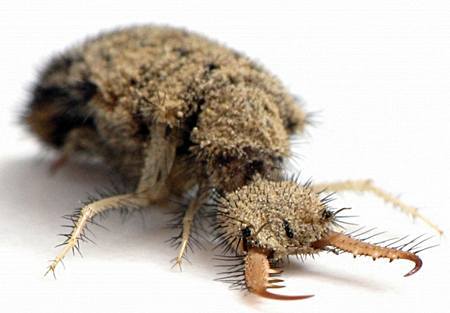
I was actually distraught as a child when I found out that an antlion was “just” a “larva” to something else but later I learned that they spend two to three entire years that way and the adult only lives for a couple of months.
Butterflies are also shorter lived than caterpillars; we can think of them more as the caterpillar dispersal system.
We also always hear about how “mayflies only live a few days” but that ignores the fact that they, too, spend years as aquatic nymphs.
same for dobsonflies, which live for maybe a week as adults, but for years as enormous highly predatory aquatic larvae called hellgrammites.
except with dobsonflies, all forms feel a bit extra. If they were pokemon they would be some late generation multi-form legendary
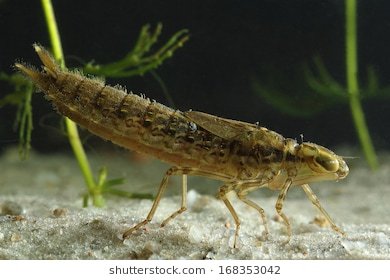
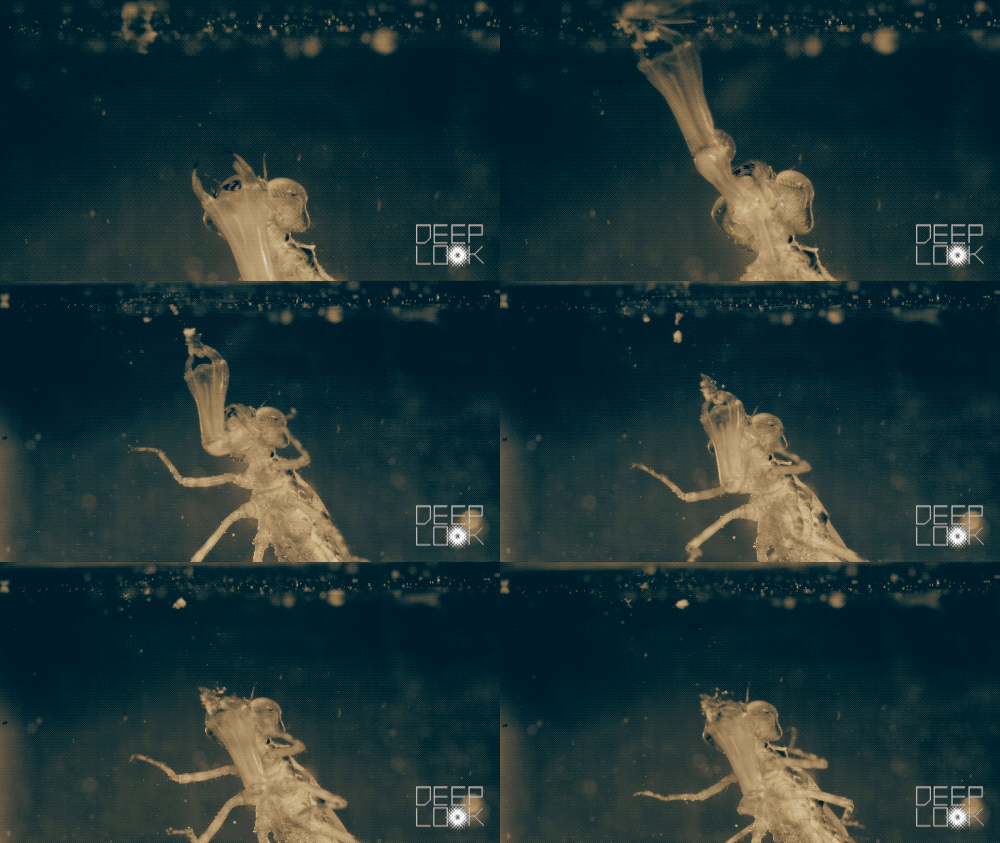
Pretty, graceful adult dragonflies live only for like seven months, but beforehand they spend five years as this
aquatic predatory incarnation of bullshit, which hunts other aquatic insects and even small fish with its big fucking xenomorph mouthparts.
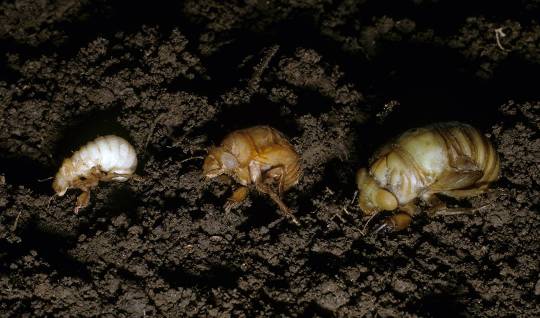
not to make a long thread longer but i think the ultimate manifestation of powered up final fuck form is 17 year periodical cicadas
like they arent just hibernating or something, they spend the length of a human adolescence as these nymphs living underground and feeding on fluids from roots. and after 17 years their population group emerges in eerie synchronization and they all molt into their adult stage, which only survives for a few weeks . like 99.5% of their life is spent in their “baby” stage and the final .05% of it is a powered up flight capable adult form that exists solely to scream and fuck
I will never not reblog dainty deer-stepping beetle
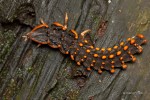
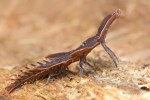
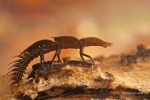
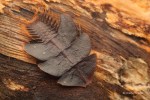
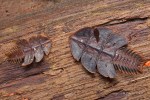
wanna know the best thing about these trilobite beetles?
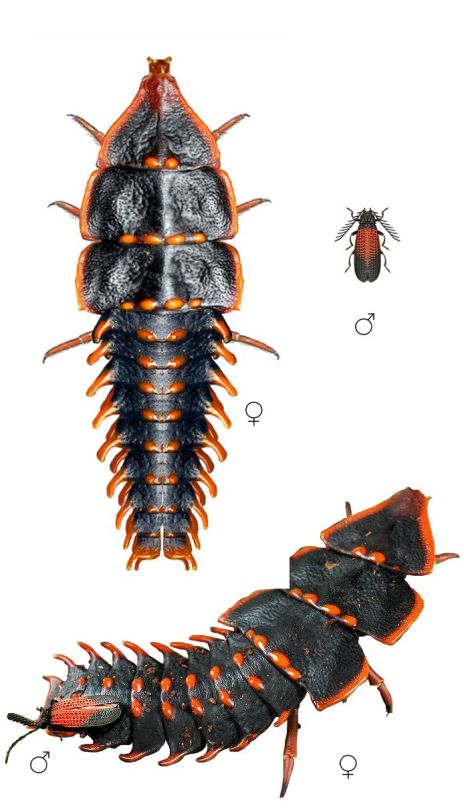
these are all ladies.
males look like every other beetle out there, but are the same species. it was a huge mystery for the longest time what the hell a male even looked like, or if there even were males, until they issued a money reward and someone brought in a mating pair. and they couldn’t believe that they were even of the same species because of how different they look.
we have an irl species of giant monstrous ladies and tiny dainty plain males
What’s also neat is that these have the same anatomy as firefly larva, but they’re a different family sharing a common ancestor.
And in some fireflies, the same thing has happened convergently where females remain “larviform” and only the males develop wings!
There are these little tiny fuzzy bugs that are flying around my pear tree and I kind of want to call them cute but I feel like the second I do someone’s gonna tell me they’re like the spawns of satan and they sting people and kill my trees
Nevermind they’re called “Woolly Aphids” and they’re literal fairies
I feel bad for calling them evil now they’re so frickin cute
i saw one and nearly shat myself thinking it was a fairy
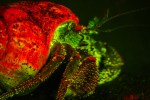
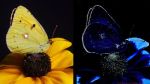
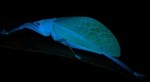
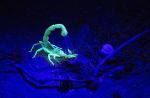
Fluorescence is the emission of light by a substance that has absorbed light or other electromagnetic radiation. Unlike bioluminescence, biofluorescence is not a chemical reaction and biofluorescent organisms do not give off light from their own power source. Instead, biofluorescent organisms absorb light, transform it, and eject – or “re-emit” – it as a different color. Biofluorescent light can only be produced – and seen by humans – while the organism is being illuminated by an external source, such as a white or ultraviolet (UV) light bulb. While humans can’t see UV light, most insects can, and much of the world around us looks quite different in UV light. Some experiments show that scorpions may use presence of UV light as a way to detect shelter. Biofluorescence may also serve important functions in signaling and communication, mating, lures, camouflage, UV protection (sunscreen) and antioxidation.

















 Plume de Lynx
