So I heard this story second-hand, many years ago, but the gist was that a friend of a friend lived in what was generally considered a bad neighborhood, because he was a super poor college student and it was what he could afford. He didn’t have any furniture, he just slept on a blanket on the floor and had a milk crate for a chair and like an old wire spool as a table. No TV, nothing in the fridge, no microwave, basically just bare walls and a roof to keep the weather off. So one day he comes home, and there’s a man in his apartment, just standing there, with this look of utter amazement and horror on his face, and he turns to the guy who’s just entered and says, “This your place? ‘cause I broke in to rob you, but shit, man, you ain’t got nothin’. Wait here, I’m’a be right back.” And the burglar left, leaving a puzzled college student alone in his empty apartment. But sure enough, the burglar came back a while later, and brought some friends, and they delivered a table, a couple of chairs, and a small TV. “I think I got you a bed, too, but that might take a couple days.”
So, the poor college student made some friends. And he didn’t ask where they got the stuff.
Deuteranomalia: This is caused by reduced sensitivity to green light. Deutan color vision deficiencies are by far the most common forms of color blindness. This subtype of red-green color blindness is found in about 6% of the male population,
mostly in its mild form deuteranomaly.
Protanopia: Caused by a reduced sensitivity to red light due to either defective or a lack of long
-wavelength cones (red cones). Some scientists estimate that being a protan is associated with a risk of a road accident equivalent to having a blood alcohol level of between 0.05 and 0.08 per cent.
Tritanopia: People affected by tritan color blindness confuse blue with green and yellow with violet. This is due to a defective short-wavelength cone (blue cone). Whilst
Protanopia and Deuteranomalia are significantly more common in men, tritanopia affects both sexes in equal amounts.
Monochromacy: Only around 0.00003% of the world’s population suffers from total color blindness, where everything is seen in black and white.
Morgana is one of the greatest of all faery queens. She is skilled in necromancy and the ancient art of shape shifting, able to be whatever she desires. She soars through the night on raven’s wings, landing silently in your dreams to work her dark enchantments. Well versed in star craft and arcane healing powers (with knowledge gleaned from Merlin himself), she is the mistress of the mystical arts of sexuality and high magic.
Hers is a complex nature, neither totally beneficent nor totally malign. Her faults are anger, resentment, and, true to faery nature, using her cunning arts against those who offend her. Yet although she schemes against King Arthur (her half brother), it is on her lap that he rests his dying head as she and two other dark queens sail him to Avalon to be healed. It is her necessary role to be found at the crux of the drama in our lives, working toward wisdom and healing in dramatic, difficult times. She guides in moments of forceful emotions such as anger, bitterness, resentment, and sexual jealousy. The disturbing influence of this dark queen can lead to profound change.
The tree powerful days at the dark of the moon are this faery’s special time- when all processes are internalized and concealed. It is then that Morgana comes to us to reveal the mystical starlight, the bright points of faery consciousness, which permeates all of the matter. Morgana is an enchantress who works her magic at the deepest levels- in the dark, secret, hidden places of our minds. She imitates us into mystic realms of creative imagination where all that is not yet manifest begins the journey into the light and form.
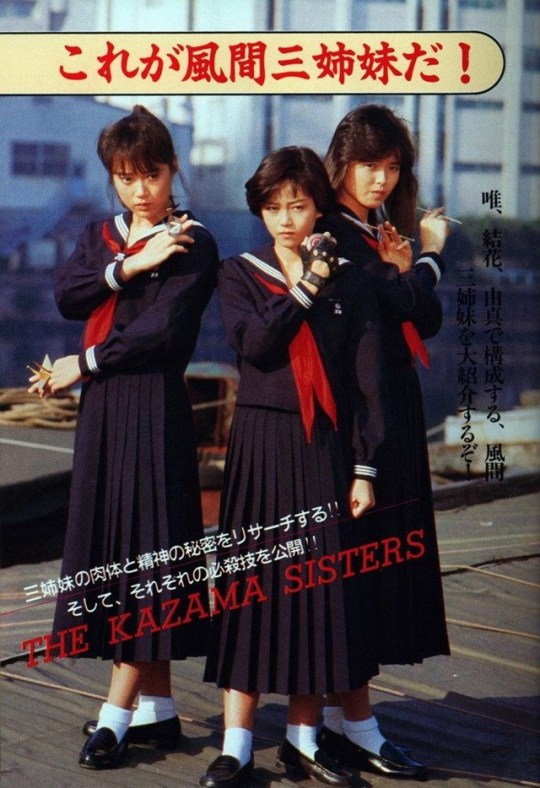
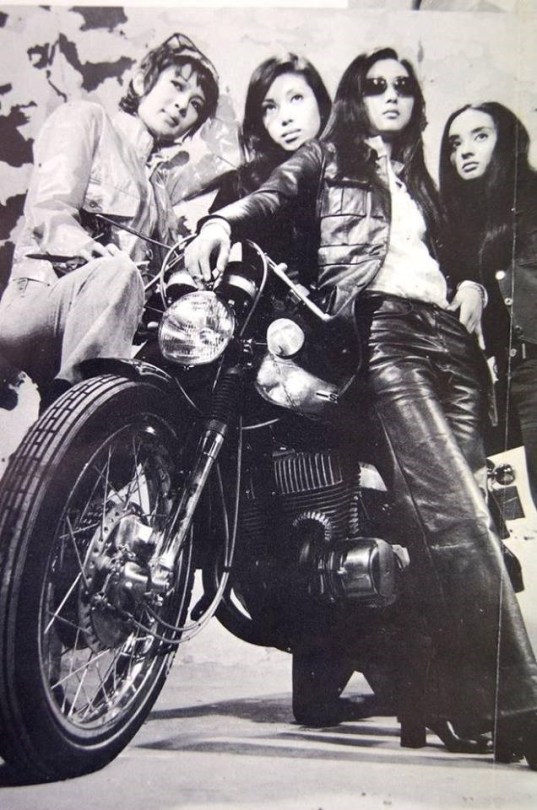
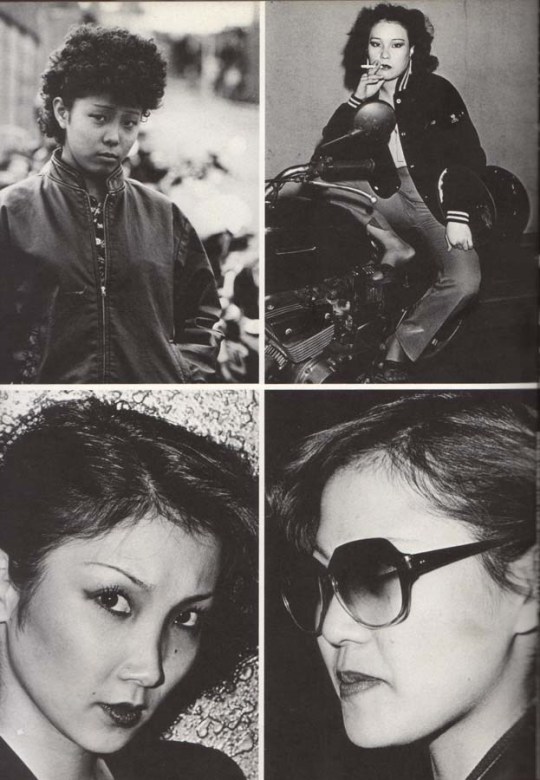
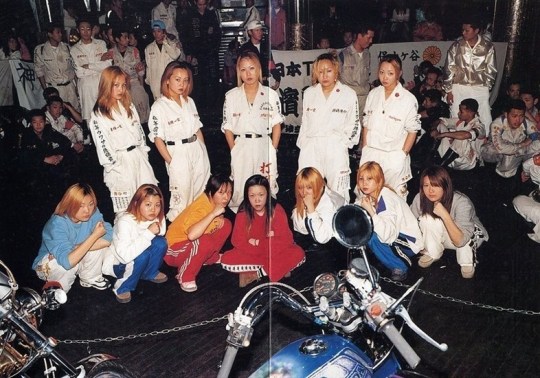
When all-male gangs wouldn’t let them join, all-female “sukeban” gangs formed their own identities – starting with the uniform.
Between the layers of clothing, sukeban girls would conceal weapons – razors, chains and anything else that one ought to take a jot more seriously than a yo-yo. Indeed, the sukeban sisterhood rivalled their male equivalents for violence and crime: facing off with rival factions, punishing girls within their own group (e.g. for cheating with someone else’s boyfriend), or generally colouring suburban ennui with a splash of petty crime. What’s more, Yakuza-style levels of organisation meant that, at the subculture’s peak, the largest alliance had over 20,000 teenage girls sworn in.
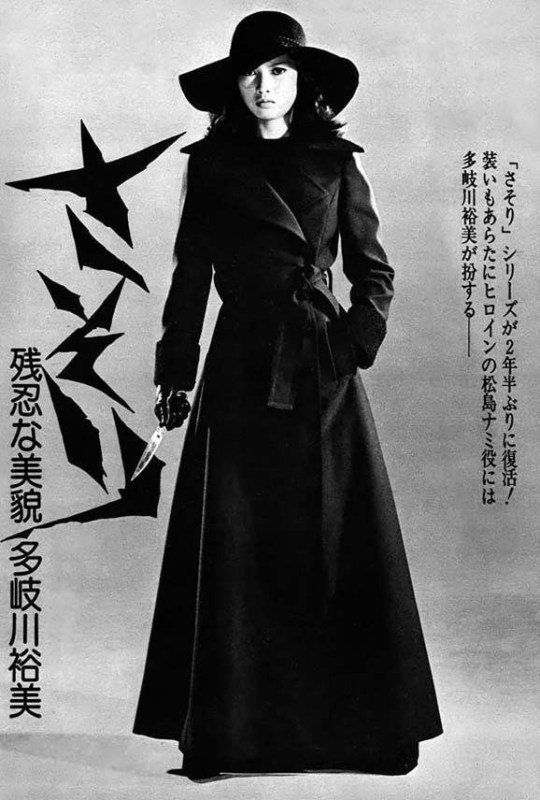
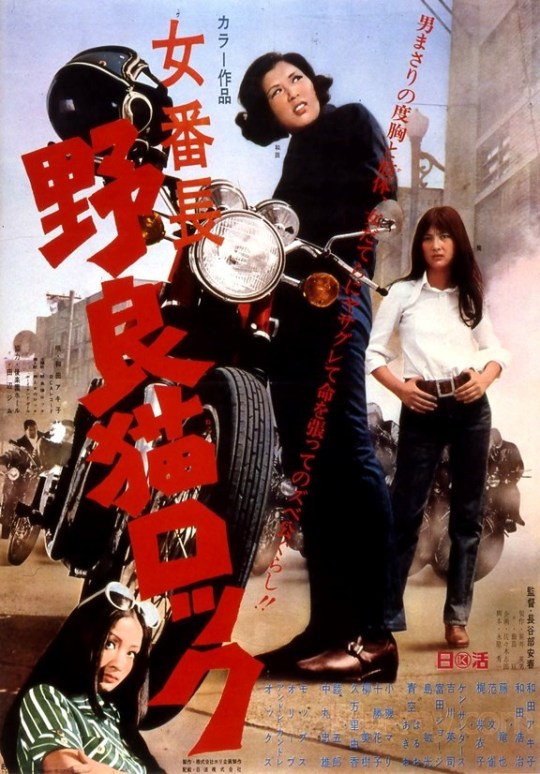
They even inspired a series of exploitation-style movies, akin to the works of Russ Meyer. These movies bore titles like Delinquent Girl Boss,Girl Boss (Sukeban), and Terrifying Girls’ High School.
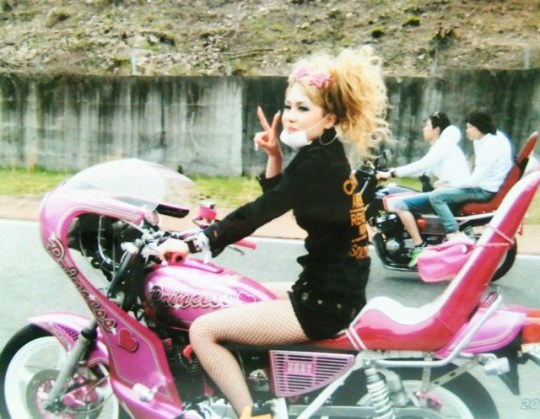
It continues today in the form of all-female bosozoku biker gangs:
As the expectations for young women to marry and settle continue to be a fact of life in Japan, so too has this all-girl outlaw subculture prevailed as an alternative narrative for young women. Today, you can spot them by their embellished and embroidered jumpsuits, floral tattoos, long manicured nails and bright pink, heavily stickered bikes.
@post-and-out I believe this is relevant to your interests?
Helllllllllllllooooooooooooooooo
So of course I see the pictures and I’m like *_* but I’m also like “Can he dance tho?” because a man in a bellydance costume is a+ but a Male Bellydancer is basically that good shit meme with all the thumbs up emojis


 Plume de Lynx