“The rare households established by pairs of women in early America risked raising community concerns about lesbianism. For example, a pair of Philadelphia women were arrested in 1792 on a charge of “cohabiting,” a term typically applied against unmarried opposite-sex couples who set up homes together. The authorities apparently suspected the women of having a sexual relationship. Visitors to Charity and Sylvia’s home, viewing the single bedstead in their one-room house, had to confront the same sexual potential within the women’s relationship. Although bed0sharing was common on the nineteenth century frontier, medical and moral authorities expressed concerns about the sexual dangers of the practice, warning that bed-sharing was might lead to the “fondling of young persons of the same sex” and train youth in the habits of sodomy. By building a home together and sharing the same bed, Charity and Sylvia created strong cause for concern in Weybridge. To maintain their domestic arrangement, the women would have to counter potential anxieties about lesbianism. Some female couples before Charity and Sylvia had found acceptance in their communities by projecting a Christian reputation and contributing to the public welfare. Hannah Catherall and Rebecca Jones, who lived together in Philadelphia from the 1760’s to the 1780’s, gained the respect of the town’s Quaker elders despite their reputation as “yoke fellows,” a common metaphor for spouses. The women’s piety and good works protected them from questions about their sexuality. Alternatively, the Ladies of Llangollen, Eleanor Butler and Sarah Ponsonby, relied on their elite social class to maintain the open secret of their sexuality. Satirical accounts of the women’s mannish appearance suggest that people considered them to be lesbians, but their gentility allowed the women’s reputation to weather these suspicions. The same held true for the mannish Anne Lister and her parter Ann Walker, who lived together in Yorkshire. Suspicions about Lister’s sexuality in particular were quashed by her aristocratic social power. Charity’s evident masculinity made her and Sylvia’s unusual household equally vulnerable to sexual suspicion, but she possessed neither the money nor the elite status that insulated Butler, Ponsonby, Lister, and Walker from assault. Instead, Charity and Sylvia, like Catherall and Jones, would have to build reputations for piety and good works to secure communal toleration. It took time to acquire this social capital, and at the outset of their lives together many in the community treated the new house with suspicion.”
— Rachel Hope Cleves, Charity and Sylvia: A Same-Sex Marriage in Early America p111-112
A clear example of this is in the medieval chivalric story, the Roman de Silence. For those of you unfamiliar with it, Silence tells the story of a heroic person who is born female and assigned female by “Nature” but who decides to live as a man after consultation with the forces of “Nurture” and “Reason.”
In this article Gabrielle Bychowski also tells the story about Eleanor Rykener, a sex worker who was recognized as a woman, in spite of having lived as a man.
Then there is St.Marinos:
According to tradition, passed down through story, relics, and shrines, Marinos was assigned female at birth but chose to enter a monastery and live as a monk.
Ironically, Marinos was ejected from the monastery for a time, because it was believed that he possessed a penis—and that he used it to impregnate a local girl!
Father in heaven, who did miracles for our ancestors with fire and water, You changed the fire of Chaldees so it would not burn hot, You changed Dina in the womb of her mother to a girl, You changed the staff to a snake before a million eyes, You changed [Moses’] hand to [leprous] white and the sea to dry land. In the desert you turned rock to water, hard flint to a fountain. Who would then turn me from a man to woman? Were I only to have merited this, being so graced by your goodness…
It’s so interesting, because one of the early theories about Earth and its situation in the Universe was the geocentric model…which basically told that we lived in a sphere (around Earth, making it the unmoving center of the Universe) that was contained in another rotating sphere on which stars were “painted” (of course this schema is a sort of “basic idea”, it was discussed and adapted by many scholars on the subject at the time).
So in fact, this young girl just drew a conclusion on what she could empirically observe and her interpretation would not have been seen this derisive if we did not have the knowledge we have today! Of course we could be living “inside” the Earth-sphere, because the concept of Earth “limits” is an intellectual one, not something instinctively perceived!
I think the best piece of character design advice I ever received was actually from a band leadership camp I attended in june of 2017.
the speaker there gave lots of advice for leaders—obviously, it was a leadership camp—but his saying about personality flaws struck me as useful for writers too.
he said to us all “your curses are your blessings and your blessings are your curses” and went on to explain how because he was such a great speaker, it made him a terrible listener. he could give speeches for hours on end and inspire thousands of people, but as soon as someone wanted to talk to him one on one or vent to him, he struggled with it.
he had us write down our greatest weakness and relate it to our biggest strength (mine being that I am far too emotional, but I’m gentle with others because I can understand their emotions), and the whole time people are sharing theirs, my mind was running wild with all my characters and their flaws.
previously, I had added flaws as an after thought, as in “this character seems too perfect. how can I make them not-like-that?” but that’s not how people or personalities work. for every human alive, their flaws and their strengths are directly related to each other. you can’t have one without the other.
is your character strong-willed? that can easily turn into stubbornness. is your character compassionate? maybe they give too many chances. are they loyal? then they’ll destroy the world for the people they love.
it works the other way around too: maybe your villain only hates the protagonist’s people because they love their own and just have a twisted sense of how to protect them. maybe your antagonist is arrogant, but they’ll be confident in everything they do.
tl;dr “your curses are your blessings, and your blessings are your curses” there is no such thing as a character flaw, just a strength that has been stretched too far.
This is such a fabulous flip side of what I’ve always known about villians. That their biggest weakness is that they always assume their own motivations are the motives of others.
with some bugs it really does feel less like the larval stage is the ‘baby’ stage and more like its the ‘normal’ stage and the bug’s final form is just their extra special final form they use to fuck
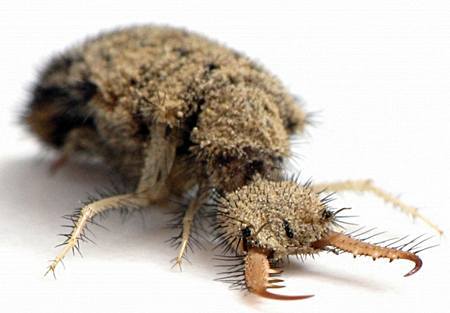
I was actually distraught as a child when I found out that an antlion was “just” a “larva” to something else but later I learned that they spend two to three entire years that way and the adult only lives for a couple of months.
Butterflies are also shorter lived than caterpillars; we can think of them more as the caterpillar dispersal system.
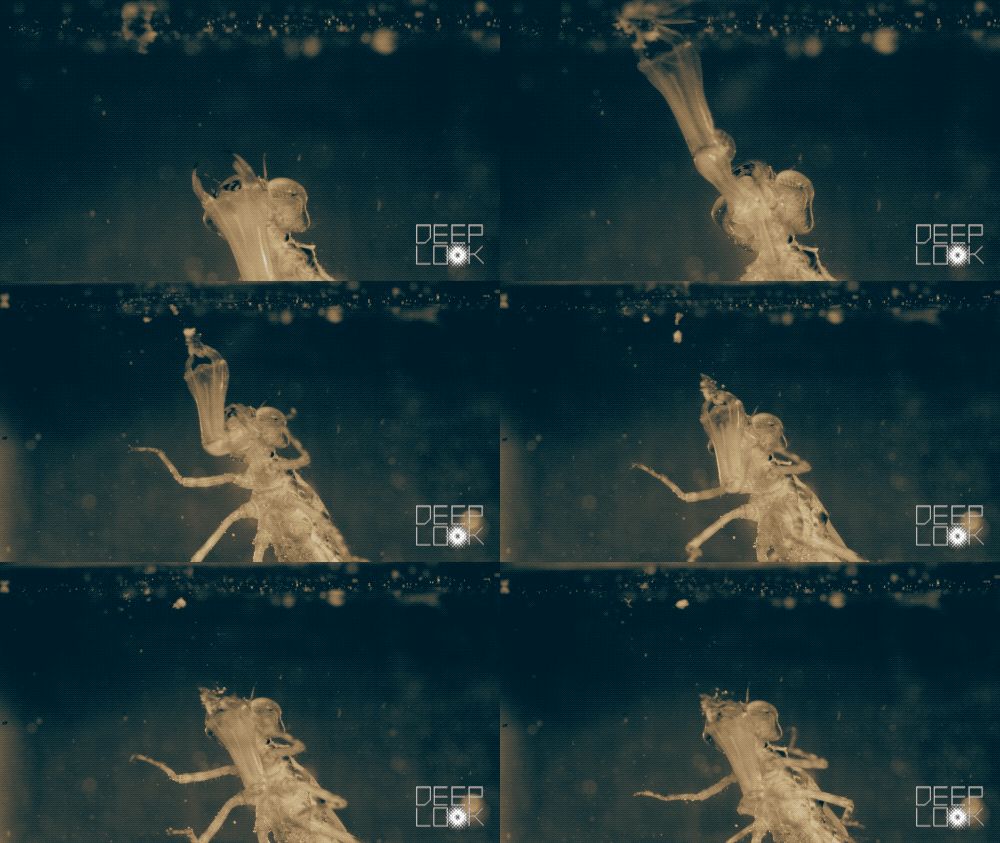
We also always hear about how “mayflies only live a few days” but that ignores the fact that they, too, spend years as aquatic nymphs.
same for dobsonflies, which live for maybe a week as adults, but for years as enormous highly predatory aquatic larvae called hellgrammites.
except with dobsonflies, all forms feel a bit extra. If they were pokemon they would be some late generation multi-form legendary
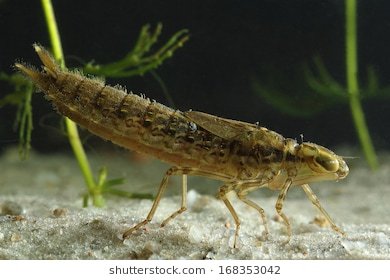
Pretty, graceful adult dragonflies live only for like seven months, but beforehand they spend five years as this
aquatic predatory incarnation of bullshit, which hunts other aquatic insects and even small fish with its big fucking xenomorph mouthparts.
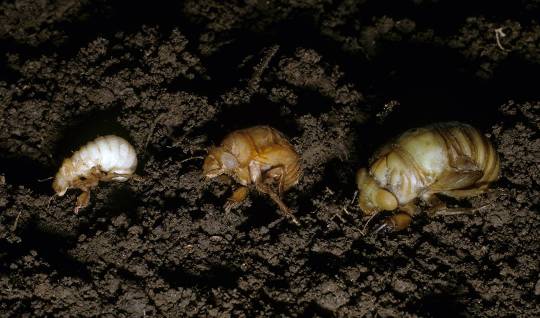
not to make a long thread longer but i think the ultimate manifestation of powered up final fuck form is 17 year periodical cicadas
like they arent just hibernating or something, they spend the length of a human adolescence as these nymphs living underground and feeding on fluids from roots. and after 17 years their population group emerges in eerie synchronization and they all molt into their adult stage, which only survives for a few weeks . like 99.5% of their life is spent in their “baby” stage and the final .05% of it is a powered up flight capable adult form that exists solely to scream and fuck
In New Zealand, there is a man legally known as ‘The Wizard’ who is an educator, comedian, magician and politician. Some of his political ideas include:
Abolishing old-fashioned gender roles
Travelling to find the “center of the universe”
Replacing God and the Church with Wizardry and the World Wide Web
“Wizard, The”
This is The Wizard, reblog in 35 seconds to reveal the secrets of the center of the universe and abolish old fashioned gender roles.
The Wizard of New Zealand is not just legally named “The Wizard” so he can appear on his driver’s licence that way. He is actually, literally, officially, the Wizard of New Zealand and was appointed to that role by Prime Minister Mike Moore in 1990.
Kryptopterus vitreolus, known in the aquarium trade traditionally as the glass catfish and also as the ghost catfish or phantom catfish, is a small species of Asian glass catfish.
It is endemic to Thailand, where found in rivers south of the Isthmus of Kra that drain into the Gulf of Thailand and river basins in the Cardamom Mountains.
I will never not reblog dainty deer-stepping beetle
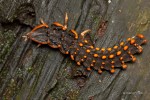
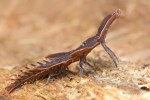
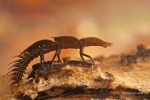
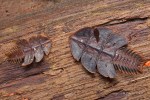
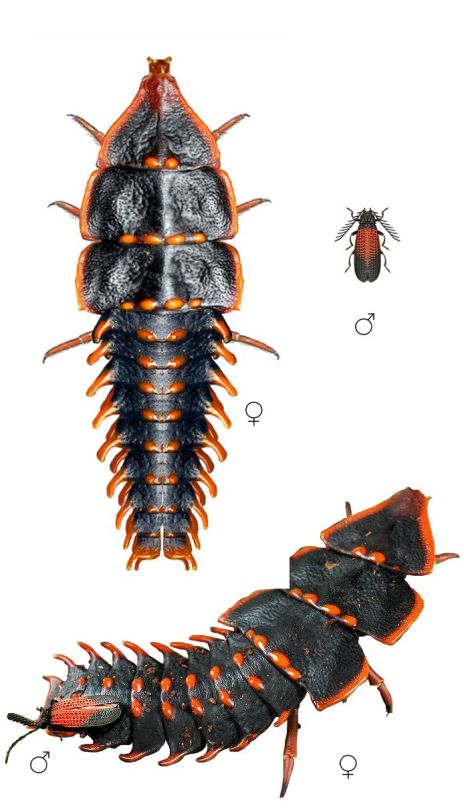
wanna know the best thing about these trilobite beetles?
these are all ladies.
males look like every other beetle out there, but are the same species. it was a huge mystery for the longest time what the hell a male even looked like, or if there even were males, until they issued a money reward and someone brought in a mating pair. and they couldn’t believe that they were even of the same species because of how different they look.
we have an irl species of giant monstrous ladies and tiny dainty plain males
What’s also neat is that these have the same anatomy as firefly larva, but they’re a different family sharing a common ancestor.
And in some fireflies, the same thing has happened convergently where females remain “larviform” and only the males develop wings!









 Plume de Lynx