Things I’ve learnt as a skater that almost never make it to fanfiction
Because I’ve read enough fics to cringe when the figure skater throws their very expensive skates in their bag and run off somewhere because nobody ever treats their skates like that.
DRY OFF YOUR SKATES.
You dry off skates with a towel so that you protect the leather and so that the blades don’t rust
You put your blades in soakers (aka basically socks for your blades) so that the condensation gets absorbed somewhere and doesn’t rust the blade
AIR YOUR SKATES they smell when left in a closed bag
It takes like 10 minutes putting on skates and like 15 minutes getting them off because you need to wipe it down
YOUR SKATES NEED TO BE REALLY TIGHT SO THEY NEED 10 MINUTES TO PUT ON
Literally everyone falls
Everyone.
Falls.
From the board huggers to the pros doing jumps and spinseveryone falls and that’s natural
Just fall
TRIPPING ON TOE PICKS
The number 1 cause of falling
You can be talking to someone and then end up face down on the ice the next moment because toe pick
Stabbing yourself with a toe pick is not fun but extremely common to do so
Stabbing yourself in the boot is literally the most heartbreaking thing it’s like stabbing an expensive bag with a fork
Boots need to be replaced often if you’re skating at a high level cuz the support breaks down faster than you’ll see physical wear and tear outside of the boot
Blades need to be sharpened every 30-ish hours of usage (around once every two weeks-ish if you skate everyday)
Blades can sometimes cost as much as a boot
There is a break-in time for boots because they’re sooooo stiff
Some people wear their new skates around the house to quicken the break-in time
Boots have different stiffness ratings and you can’t get any random boot you like because you need to make sure it has sufficient padding for your foot
You can’t randomly get custom boots made for someone without their foot measurements
Boots need to fit on your feet like a damn glove
An exact fit
You can’t use anyone else’s skates unless you’re both the same size
Rental skates are pieces of shit
No matter how pro you are you’ll never be able to skate normally on rentals
WEAR GLOVES
The ice gets super cut-up and falling without gloves on can scrape your hands
It’s extremely painful when that happens
Wear gloves pls
PEOPLE WEAR PADDING
Especially if they’re learning something new
Pads for your butt, pads for your knees, heck even padded gloves
Padding protects your joints especially if you have joint problem
Like smashing your knees against the ice frequently causes you problems
A one-way ticket to old lady knees
Say goodbye to unblemished legs
Your knees will forever be bruised
Things people put in their skate bag:
Waterbottle, towels, band-aids, exercise tapes, extra socks, extra gloves, extra layers/clothes, hair-ties, skate guards, soakers, gels for blisters
You’ll notice that Olympic pros use luggages and that’s cuz they literally lug their entire house with them
Whatever looks easy on screen is actually really freaking difficult to do
Katsuki Yuuri should technically not have been able to land the Quad Flip on a whim without practice unless he actually trained for it in Detroit
You can’t learn stuff on your own
Like you need a coach or an experienced skater to teach you the correct techniques
You need someone to spot your mistakes cuz you won’t be able to tell on your own
People record themselves for this reason
Throwing yourself in the air and spinning is difficult like try jumping and turning more than 360 degrees on land and see if you can do it well
ZAMBONI
WHY DOES EVERYONE FORGET THE ZAMBONI
Skating on fresh ice after a zamboni is a religious experience
ZAMBONI
Thank you for coming to my TED talk.
Adding some more stuff that may be relevant:
Caveat to the “you can’t teach yourself” thing: once taught by a coach, some skaters can feel what they’re doing wrong some of the time. Even if they can’t, anyone can prop their phone on the boards and record themselves. This is the way 99.9% of good skaters practice.
A lot of skaters keep a notebook for stuff to practice, questions to ask their coach, notes on lesson times, choreography sketches, etc.
A note on choreography sketches: frequently when learning orchoreographing a new program, skaters draw out the outline of an ice rink on a sheet of paper and draw the tracings that would be made by their skates on it. It creates an easy reference for what things should be done where on the ice (the pattern). This is also how patterns are shown in rulebooks and on judging forms.
Many skaters have what’s called a “Kiss and Cry bag”, which is an easily portable bag that can be taken on the ice and set on the boards. Pictured below is my sister’s, which contains:
gloves
water bottle
ibuprofen
hair bands
bandages
notebook, as mentioned above
forms and other paperwork (receipts for ice time, etc)
CDs for music
Agree 100% on the “nobody can skate well in rentals”. My sister and I tried once (we forgot our skates on a trip) and we failed so epically. Neither of us could do more than crossovers or hold an edge, and she’s headed to an international competition in a few weeks. Caveat though: most people learn in rentals for the first while, so they are ok for simple beginner-y stuff.
Some experienced skaters can put their skates on in less than 5 minutes, because though it’s difficult and precise, muscle memory is a thing.
As it relates to soakers (aka blade socks, also called softguards): basically the process of taking skates off is, you dry them off with a towel, but because they’re crazy cold, even when you get all the residual ice and water off, there’s still gonna be some condensation that happens as the blades come back down to room temperature. As such, you put em in soakers which catch that condensation and make sure your blades don’t rust sneakily while you’re not looking. In addition, a lot of soakers are made to look like cute animals. For example, here’s my skate with pastel bunny soaker:
As to breaking skates in: OP is 90% right. One thing to add: certain types of skates take more or less time to break in, because not all skates are leather, and further, not all leather skates are the same kind. My current skates, pictured above, are Edea Ice Fly (Edea is the brand, Ice Fly is the model). They had basically no break-in period, and I only had to take a day or two to get used to the different center of balance (Edea skates balance further forward than other brands), because they’re synthetic. By contrast, my previous pair, Risport Excellence (again, brand first, model second), took me over a month to break in, and that was with time spent wearing them around my house in hardguards (skating term for standard plastic blade guards) and also using a hairdryer to warm the leather so they would mold to my feet faster (you can do this with all high-end skates).
While breaking in skates, you really can’t bend your knees, and when you do it hurts. Paradoxically though, you still have to bend your knees as much as possible. Nobody can jump for the first third of the skate-breaking-in period. (The break-in period can be between a few days and a month depending on both the skates and the person.)
More specifics on skate bags: a popular type of skate bag is the Züca, which is the kind I have (first picture). They have a metal frame and can be used as a small chair in a pinch. (It’s also popular among young skaters to sit on the back end, where the wheels are, and ride them around like a higher-up version of those butt scooters we all rode in elementary school.) Additionally, many major competitions (Nationals, Worlds, etc.) give out suitcases/skate bags as goodies. My sister’s skate bag (second picture) came from Nationals. All of these skate bag types have significant amounts of mesh so the skates can air.
A common thing for skaters (and some coaches, esp. those who both coach and skate) to have is pants which have zippers all the way up both sides. This way, you can take them off or put them on over skates. (Tbh, the biggest problem with quick costume changes in shows is when you have to take your skates off to take off or put on a costume.) Unfortunately, I don’t have any of these to take pics of, but they basically just look like fleece athletic pants with zippers down the legs. Because of the existence of these, it is pretty common to see people taking their pants off on the ice.
OP is right about pads, but forgets about the kind which go inside your skates to protect your ankles from blisters! If your feet/ankles are blistering, you don’t just sit there and take it, you buy what are called Bunga pads or ankle sleeves. They’re EXPENSIVE (like $60 for a pair) but they also last for ages. They have a gel inside and a woven fabric outside, and they’re stored inside-out so the gel can air. Below are mine:
Another thing you can do to keep your feet from blistering is get your skates “punched out”. Essentially, this means that if any part of the skate is problematically tight, you take it to your resident skate person and get it fixed. Any experienced skater will have a favorite skate sharpener (mine’s name is Rich and he works by my home rink), and this sharpener will also be able to make modifications to boots: stretching the boots for kids whose feet are growing, and punching out certain areas to make sure they fit a specific contour in anyone’s foot perfectly.
OP is right about number of hours for lower end blades, but for higher end ones it takes longer. In any case, skaters never count the number, because it’s so easy to feel when your blades need sharpened. If you wobble on deep edges, or if your blades don’t crunch into the ice, or you skid when you stop, your skates need sharpened. Additionally, one blade has a limited number of sharpenings in it (more sharpenings for higher-end blades). This is the main reason that skaters get new blades after they stop growing (another possible reason being gaining levels and needing a higher-end blade).
OP is 10000% right about toe picks being a frequent cause of falling, but forgets the most painful and shitty type of toe pick fall: the belly flop. Not only does any exposed skin get ice burn, but you probably get the wind knocked out of you. Furthermore, it never happens on anything complicated; it happens on like. forward crossovers. It sucks. So not only does it hurt like a son of a bitch, you also inevitably feel like an idiot. That’s the only kind of fall I’ve ever seen pro skaters not just bounce back from immediately.
Nobody fucking realizes how CROWDED warm-ups are, or how often people get in other peoples’ way. Collisions happen very infrequently, because good skaters stop or move on a dime, but people messing up other peoples’ jumps/patterns happens ALL THE TIME. You don’t even get frustrated, you just start over without giving it another thought, because it happens so often. If you’re skating on a normal freestyle session, the ice is inevitably crowded as fuck. If you’re skating on public ice that isn’t in the middle of the afternoon (when everyone’s in school), then the ice is even MORE crowded as fuck. On crowded sessions, you can skate in a circle three, four, five times before being able to ATTEMPT a jump.
I’ve never been to an ice rink that doesn’t have a place to buy food. Never. There is always good food in an ice rink. Actually, because locker rooms are frequently packed (see OP’s comment about pro skaters taking their whole damn house to competitions), the cafeteria is frequently the overflow space for extra skating-related crap (bags, costumes, everything and the kitchen sink).
In smaller competitions, results are posted by way of printed paper taped to the wall. Even in bigger competitions, shows, tests, etc., there’s paper taped to stuff. Skate orders? On the locker room wall. Bulletins? On the rink door. Paper is taped EVERYWHERE.
GLITTER OH MY GOD HOW DID YOU FORGET GLITTER?!?! Every locker room, bathroom, hallway, etc etc etc is COVERED in glitter and also smells nauseatingly of hairspray. Even the mens rooms.
Speaking of hairspray, everyone borrows everyone else’s stuff. You need lipstick? Ask someone. Mascara? Ask. Fishing line? Ask. (Fishing line is used to sew in hairdos because it’s clear, and bobby pins and other hair fastening stuff comes out too easily when skating and can be a tripping hazard. I have never been to an ice rink that doesn’t ban bobby pins.)
There’s this whole complicated system of volunteers that works behind the scenes at every competition. Ferrying papers and music, printing things, bringing food to the judges, figuring out where the fuck the skater who’s supposed to be on next is at, etc. Everything that keeps a competition running smoothly happens because of the Volunteer Network™.
Outdoor ice rinks SUCK. Inevitably. It’s nowhere near as terrible as wearing rentals, but doing difficult tricks on outdoor ice is still not recommended. It’s not because of debris on the ice or anything, just that the ice quality is BS.
The kind of material that’s under the ice in a rink makes a difference. Materials for under rinks include plastic, concrete, sand, wood, and others. Lots of other stuff, including temperature, coolant type, chemicals used in making the ice, and style of ice grooming, make a difference in the quality of the ice. (Wood seems to be the best base for an ice rink, because it’s a bit bouncy and makes jumps easier.)
Ice rink stands SUCK. They’re too cold, the benches are hard, etc. Nobody with any sense goes into the stands of an ice rink without several coats and blankets, some for wearing and some for sitting on.
I also feel compelled to write about some exercises that skaters do in off-ice workouts, because a lot of people don’t know and it’s really hard to find info about this. So this seems like as good a place as any to write this down.
My sister and brother are competing internationally in a few weeks, and here’s their workout plan (and mine, bc I like to tag along):
Skating for 3 hours a day, every day from 6-9am. Frequently they don’t get home until 10am or later, though, because their coach keeps them to continue working on jumps and lifts off-ice. Two days a week (Thu and Fri), 2 more hours, from 4-6pm. In addition, every other day, they do “high intensity cardio”, which works like this. For each of arms, legs, and core, they pick a strength exercise and a cardio exercise. The strength exercise needs to work the specific muscle group described, the cardio does not – it’s purpose is to get your heart rate up in a way similar to the way skating does.
Set 1: Arms: lateral raises & jumping jacks Core: situps & grapevines Legs: one-legged squats & jump rope Set 2: Arms: pushups & skipping (cross arms in front and skip like an axel takeoff without turning) Core: planks & mountain climbers Legs: wall sit & side toe hops (like on ice, but multiple times in a line each way)
For each sub-set (arms/legs/core), they do the strength exercise for 30 seconds followed immediately by the cardio exercise for 30 more seconds, then repeat with no rests for 4 minutes. After this, they get a one minute rest, then do the next set. Repeat for each item on the above list.
That’s about it! Please ask if there’s anything else you’d like to know or anything you’d like more information about. I tried to keep each topic short so I could cover a lot, but I know much more than what I wrote here.
This is all awesome, and I don’t really have any qualms with what’s been said! But as one half of a Novice Pairs Team, I feel it’s my duty to point out how some of this changes when you’re talking about Pairs Skating.
* Firstly, I don’t get to wear gloves. That messes with the grip and would make things like death spirals and lifts next to impossible.
* On that note, pretty much all pair teams have some sort of liquid chalk that they put on their hands before they skate. It’s made for people like tennis players, but it helps a lot with death spirals and other elements.
* When learning elements, you fall a lot.
* One of the most entertaining things to fall on is when you are learning a death spiral. You tend to slide across the ice, and your whole leg gets really wet and cold.
* Oh, and we do a lot of off-ice lifts, to practice those things in a safe space.
* On an entirely different note, skating (especially in the US) is a small world. Pairs skating is even smaller. While there are ~50 girls at any given level at, say, Regionals, Pairs teams don’t even go to Regionals because there are so few of us.
I don’t really have anything else to say, I’m just throwing a few ideas out there for my specific niche, and having some fun ranting. >///<
Oh, and consider this an open invitation to ask me anything you’d like about my skating experience! I’ve been doing if for 10 years now so I have a good few stories I’d love to share if anyone’s interested! 😀
Just when you thought this post couldn’t get any longer
As a some people asked me on Twitter for writing purpose, I thought I’d share this with you all too.
The Japanese school system is slightly different from the western one but has some thing in common with the European one.
The first thing to know about the Japanese schooling system is that the school year starts in APRIL and ends in MARCH. Everything in Japan “starts” anew in April, and even companies ends their year in March. This is extremely important because the start of spring scans the start of the new working and academic year.
Generally the students have around two weeks of vacation between the end of the academic year and the start of the new called “spring vacation” (春休み). They also have generally a week off during Golden Week in May, around two to three weeks of vacation in August (お盆休み) and around ten days between December and January. That’s all about their school vacations for the year.
The first day of school they have the entrance ceremony, something that might be well-known to Americans but not to Europeans as most schools don’t have entrance ceremony.
The Japanese school system is divided in five parts:
Kindergarten (幼稚園) 3-5 year olds (day-care for younger children)
Elementary school (小校) 6 years
Middle school (中学校) 3 years
High School (高等学校 or 高校) 3 years
University (大学) 4 years (6 to 8 for medical school)
The biggest difference is that their elementary school years are 6 and the university years are 4 instead of 3 (in Europe).
There are also a lot of vocational schools (専門学校) that are generally private and can be either high school-like or college-like. They are typically 2-to-4 years long.
Japanese education is compulsory until middle school but 99.9% of Japanese people go up to the upper secondary level of education.
Both public and private education are present in Japan, but while until middle school generally kids go to public schools, private schools and college are famous for high school and university.
Hours
School in Japan starts at 9 am and ends at 3 pm with one hour for lunch around 12 pm. They go from Monday to Saturday. On Saturday, their school day ends at 12 pm. They have around 30 min of ‘homeroom-ing’ where they talk about activities, school festivals and others. After school hours, students clean their own classroom in turns. In elementary school often they serve lunch at school and students are required to manage the lunch serving in turns. After the end of lessons, most students go to club activities or crams school, the few ones who don’t, go out or return home.
Entrance Exams
The toughest part of the Japanese schooling system (and the reason of most stress, suicide, mental health problems and bullism) are entrance exams. Generally Japanese kids have high pressure from their parents to get into a good school as the society values the name of the school more than academic success (you’ll see why in the University Section).
Generally the toughest years for Japanese students are the high school ones (and the last year of middle school if they are trying to get into a good private high school).
The entrance admission exams go from October to February depending on the school and depending on the school they’re trying to get into.
This is why 3rd years are “forced” to quit their clubs after summer and study for the entrance exams, especially if they are in high school. So the summer tournaments are the last ones where they can participate.
Clubs
Something widespread in American schools but not much in European schools are school clubs. There are a various range of clubs depending of the school. Most secondary level schools value their sports clubs very much if they win in leagues because they make the school famous. It’s very important if the school doesn’t have any academic prestigious (that is, the chances of being able to enroll into a top-tier university) and the pressure the club members sometimes get into keeping a name in high school sports leagues is extremely high.
Clubs generally needs to have from 4 to 10 joining members and an adviser teacher to exist. If not, they get closed.
Often sports club have training before lessons (from 6am to 8am) especially during tournaments, and during these periods they also often have practice during school lunch hours. But generally clubs activities starts after the end of lessons at 3pm until 6pm. Schools with dormitories for sports club members often have their practice until 11pm, especially before and during tournaments.
Seniority system
The biggest part of Japanese schooling that also reflects the Japanese culture is their seniority system. The senpai-kohai relationship are extremely important and the ones who don’t respect this system are either: expelled from clubs, get disciplinary reports or get isolated from the rest of the class.
Of course it also depends from school to school. The more renowned the school is the more the rules are strict.
It’s very rare that a underclassman talks casually to a upperclassman and it’s important to always use honorifics (they don’t exist in English so there is no problem when writing), it’s mostly the “way of talking” (words, expressions, the ‘desu-masu’ form etc.) that makes the difference and even the biggest hotheads generally respect the seniority system. Even if you become close friend with a upperclassman unless you mutually agree to tone down the level of politeness you are required to speak formally to them. This is something that cannot be conveyed in english 100% so my advice it’s not not make the underclassman using slang expressions and swearing words if they are talking to a upperclassman unless they already do that in canon.
Lessons
Contrary to the American system the Japanese students don’t change classes during periods. They are always in the same class with the same classmates and they move only for gym and home ed periods.
It’s also rare albeit not impossible to find students repeating a year.
The students (male and female) take turns to change in the classroom into gym clothes if they don’t have locker rooms (which is usually the case because more than one class has gym class in the same period. Locker rooms are mostly used by sports club members).
The students might change class when the new school year starts because class members get assigned randomly at every start of the academic year.
Generally, as I said that even for companies the year starts in April, it’s very rare that a transfer student gets transferred in another moment of the year (it’s mostly and anime-like thing lol).
Uniforms
I’d say 90% of Japanese schools use uniforms. There are cases where public elementary schools don’t use uniforms but I’m almost sure is compulsory for the second level education. Generally the uniforms are divided in western style and sailor style for girls and western style and gakuran for boys.
Rules for Uniforms
They depend from school to school, and usually the more prestigious is a (generally private) school the more strict the rules are going to be. For girls, there are cases where for their uniforms, they have to wear their skirt not up their knees, they are required to use the bows, under-the-knee socks and often they also need to have their hair styled in a certain way (ponytail, braids, other), cannot use any make up and cannot have their ears pierced. There are some even more strict schools that requires that all the students -the foreigner ones too- dye their hair black.
For males, the strict schools requires them to have their shirt buttoned up and tie tight tied if they have western-style uniforms and their gakuran buttoned up if they have gakuran. They cannot dye their hair, cannot have them any longer than a certain cm and cannot pierce their ears. In summer, the schools that have gakuran as uniform let the students have a short-sleeve shirt usually without any tie. Gakuran have the school’s symbol embodied in the buttons and often on the collar they have pins that represents the school year and some times the class rank (eg. class rep)
Public schools are more loose with rules, especially with the western style uniforms. Often in winter the students can choose the sweater they’d like (generally suggested by the school) to wear or the kind of socks they’d like, and they usually let the students dye their hair and have their ears pierced. But depending from school to school, the ‘how much’ you can dye your hair and ‘how much’ you can have your ears pierced can vary.
Uniforms are important because they become part of people’s school lives, and are nostalgic for adults. Young people in uniform are a symbol of ‘youth’ and ‘carefree-ness’, of a time that passed and that contains sentimental memories.
Student Council committee
Something again that is also in American schools but not often in European ones is the student council. Generally in anime the student council is a sort of god-like presence that has the same, if not more, power than the principal, they have access to any kind of budget and can do whatever they like. In reality, it’s not like that. While the student council committee often has words into managing the clubs and the budget, school trips and such, because the student council is a chance the school gives the students to ‘govern’ themselves to a certain extent to let them experience how democracy should work, they have not as much power as the exaggerating anime and manga tends to give. Generally the ones elected for the student council are the more popular ones, and when I say more popular ones I mean the most academically achieving student, which is the most important thing in japanese schools. Popular students are often not popular for their external appearance but more for their academic or athletic achievements that brings prestige to the school.
Differences between High School and University
High School in Japan is said to be one of the most difficult periods of their lives because they have to prepare for the university entrance exams. As I said before, especially for students in private (but even public) schools who aim to enter important universities, the pressure is high and cause of extreme competitiveness and bullism between the students. Both private and public high school are not free. Of course private schools are more expensive but even for public ones the yearly price goes around 300,000 yen (around 3000$). The uniforms are also very expensive, and they might cost between 200 and 1000$. This is why often poorer families buys bigger uniforms hoping that their children would ‘grow up to fit’ it in their third year.
Generally High Schools have two kind of courses that are the college-preparatory classes and the vocational classes. The first ones aim to train the student to pass the college entrance exams while the second ones are for the students who are expecting to find a job right after graduation. There are schools where depending the class you are in, the more high your academic success is. (Eg, often being in the 3-A class means you’re part of the best students of the school, while being in the 3-B means you are also very good, but not as good as the first ones. It’s not always like this and it depends from school to school.) It IS possible to change from the vocational course to the college-preparatory course but integrating the lacking parts is often difficult and nerve-wracking (though not impossible).
University in Japan is far different from Europe and America. In fact, university years are often called ‘college summer vacations’. While they almost give up their mental and physical health to be able to enroll in the top universities, once you are able get in you generally do nothing. They don’t have any kind of oral exams, their written exams are often multiple choice ones, the evaluations are mostly based on group presentations and works and they don’t have much pressure as they know they are going to graduate in march of their fourth year anyway. The only thing required to fully graduate is attendance. In one year you have only 3 days of permit and they require you to come unless you’re basically so sick you gotta go to hospital. This varies from college to college but it’s generally the same. Students go there and literally sleep on desks (in fact, often assistants go around the class waking up students)
Students in University
The cost of University in Japan is around 1 million yen per year (around 10000$) and to pay for it most students either work a part time job or enroll in the japanese scholarship association. Assistance is also offered by local governments, nonprofit corporations, and other institutions.
The top university in Japan is the Todai (Tokyo Daigaku) which is considered one of the best university in Asia. It’s ranked 1st in Japan and 5th in Asia, and around the 20-25th in the world. It’s a public university but it’s been said to have one of the most difficult entrance exam of universities in Japan. Who manages to get into Todai has a shining employment future ahead of them. Other top-tier universities include Kyoto Daigaku, Osaka Daigaku, Tokyo Institute of Technology, Nagoya Daigaku and more.
To be able to get into top-tier universities usually high schoolers go to cram schools (Juku) after their normal school hours. Often, the teachers in cram schools are currently top students at good universities. The ones who cannot get into the school of their choice on the first try become ‘ronin’ (which literally means samurai without master), this happens if they decide to not enroll in any of their other choices but aim to get in that one university they failed to get in. Usually they take one year off after high school graduation to concentrate on studies and pass their top-choice university entrance exams.
Generally, university students starts to search for a job between their third and fourth year of university, and, generally, they get hired before they even graduate. They will start their job as soon as they graduate (that’s why also the working year starts in april, even though it’s not rare to get into a company in other moments of the year) and 99% of university graduates is said to find a job once they graduate. I’d have to say, it depends a lot on the student’s university name since as I said before, the employers valuate more the university name than anything since university students basically don’t have any academic merit in general and their degree mark is not even listed in their resume.
They often have clubs also in university and there are some private universities that requires uniforms, but they are rare.
They don’t have brotherhoods in university. They don’t make parties, especially in their own houses because:
1. Japanese houses are small. Very small. Even if you are rich, your house is small. Especially if you live in Tokyo. 2. Usually college students are off-site, they live in small apartments or in share houses. The only share houses I know that host parties are the ones for foreigners and are always fully controlled by the house agency and they end at 11pm. 3. Japanese people are not that kind of social animals who like to go wild in parties in a house. The house is a sacred territory where things like parties don’t happen. They drink and have fun outside (usually at izakaya restaurants or karaoke) but never in their houses, especially if it’s the family house. In fact, it’s very rare to get invited at a Japanese’s house. If they want to study with friends, they study in cafes or libraries, if they want to have sex often they go to hotels unless one of the two lives alone. 4. Japanese houses are not the same as american single-family houses, they are narrow and full of things.
Another important thing is that underage drinking is way less widespread than one might think. Drinking is part of japanese culture and it’s considered a step into adulthood (you can start drinking at 20), so japanese people value very much this important moment and they don’t rush it by drinking underage (there are exceptions of course). Drinking in japan is important: as soon as you turn 20, you are able to ‘join’ the adults drinking in izakaya, restaurants and karaoke, you can go to your friends and/or company ‘飲み会’ (lit. drinking parties) and often you are even forced to drink even if you don’t want. Often you cannot decline your superiors asking you to go drinking with them and you have to drink if they fill your glass. It’s considered rude refusing because of the seniority system and because of the importance of the drinking culture. In fact, I had to learn in school how to ‘politely decline’ a drink and find a way to say the reason why I declined in the most polite way possible in order to not offend my superior. It’s ordinary to see salaryman/woman and generally working people passed out in their own vomit on friday nights. Nobody considers this inappropriate because that is just ‘what they do’. It’s their culture and they just think ‘ah, they probably spent a good time with their co-workers’. I have to say that often police has to run around picking up these lifeless bodies all night and bring them home and I’d say not every wife loves to see their husband come home stoned and covered in vomit but hey.
School activities and Festivals
If you read manga or watch anime that are set in school, you would often see these ‘school festivals’ and ‘activities’ that are integral part of Japanese school live. Let’s see what they are.
Cultural Festival (文化祭い)
The cultural festival is one of the most important days in the school year, because it’s when students can often show the results of their artistic and cultural achievements and often former students get to visit their old school again. The activities done during the cultural festival are planned at least one month before and the students work on it usually during their club hours and sometimes during lesson hours. There are usually concerts, dance sessions, plays, art displays etc. and most classes get turned into cafes and themed cafes, little restaurants and other little activities (such as horror houses and such) where the students can display their creativity and management skills. Usually the culture festival is held on Culture day (November the 3rd) which his a national holiday in Japan. It might also be held in the Saturday and Sunday close to this day. Often students use this opportunity to visit other schools, especially if they are planning to get into them.
Sports Day (運動会 or 体育の日)
Sports Day is on the second monday of October and it’s a great chance to polish the students’ cooperativeness and enhance their physical and mental health through exercise. Generally they are divided by class and do a various range of physical activities such as baton-pass races, three-legged race, soccer, volleyball and such. This day was established to commemorate the olympic games of 1964, that were held in october because summer is the heavy rainy season (梅雨) in Japan.
School Trips
While they often are done mostly during elementary and middle school, there are a lot of high schools who also plan school trips. They are part of the school’s activities and are usually one twice a year, in spring and fall. Usually in their last year of school in every grade they experience overnight school trips. They visit naturally and culturally important place such as Nara, Hiroshima, Kyoto, Okinawa, all depending where the school is, or often they take one-day trip to visit factories and show kids how the adults work.
Overnight Camp
Often during summer the school organizes a overnight camp over the sea or on the mountains. This is generally something that mostly elementary and middle schoolers do. They are in contact with nature and learn various things about the species living in the surrounding area.
Appendix: Sports club training camp
Often sports club organize overnight camps or summer camps especially close or during tournaments. These are a chance to make the members get close with their teammates, concentrating only on training and work on special-menu training to enhance their physical and mental health in view of the upcoming tournaments. Overnight camps are a 1-to-3 days full immersion where the members sleep all together in the school’s gym/facility while summer camps are either done over the sea or in the mountains or joined with other schools’ same sports club, to give a chance to the members to experience training with different students and enhance their sportsmanship.
Schools dormitories
There are some schools that give their students a chance to live in dormitories if they have. Generally it’s either if they are part of a (school with a famous) sports club or if the school is rich and private and difficult to get to with transportation. There are also a good number of universities that give their students the chance of stay in dormitories, this applies often to foreigner and exchange students. Dormitories are often cleaned by the students themselves (though it depends from school to school) and they have a communal area where often they have a canteen and a relax area. Sneaking into a school dorm at night is almost impossible as there are guards but generally since most dormitories don’t have single rooms and in japan the act of ‘bothering others’ is seen as one of the most rude things that can ever be done, almost no one tries to break the rules. Generally if someone disrupts the dormitory life gets immediately chased out after a few warnings.
I probably forgot something so if you have any questions about a specific theme, you can message me!! Thank you for reading until the end! (*´ω`)
Source: I live in japan and I teach English to high schoolers and college students.
O sultan, Turkish devil and damned devil’s kith and kin, secretary to Lucifer himself. What the devil kind of knight are thou, that canst not slay a hedgehog with your naked arse? The devil shits, and your army eats. Thou shalt not, thou son of a whore, make subjects of Christian sons; we have no fear of your army, by land and by sea we will battle with thee, fuck thy mother.
Thou Babylonian scullion, Macedonian wheelwright, brewer of Jerusalem, goat-fucker of Alexandria, swineherd of Greater and Lesser Egypt, pig of Armenia, Podolian thief, catamite of Tartary, hangman of Kamyanets, and fool of all the world and underworld, an idiot before God, grandson of the Serpent, and the crick in our dick. Pig’s snout, mare’s arse, slaughterhouse cur, unchristened brow, screw thine own mother!
So the Zaporozhians declare, you lowlife. You won’t even be herding pigs for the Christians. Now we’ll conclude, for we don’t know the date and don’t own a calendar; the moon’s in the sky, the year with the Lord, the day’s the same over here as it is over there; for this kiss our arse!
– Koshovyi otaman Ivan Sirko, with the whole Zaporozhian Host.”
Reply of the Zaporozhian Cossacks to Sultan Mehmed IV of the Ottoman Empire
In case anyone needed a dramatic reading of the above historical letter.
I’m dying!
Oh my god.
I’m now dying to know what happened next.
The accent makes it. I am *crying* with laughter here
Shocking no one I have opinions about horses, and in light of a similar post I saw that I didn’t like I decided (couldn’t help myself really cause I’m a jerk) to write my own. No I won’t link to the other one for reasons you’ll see below, mainly being that horse people are jerks–yes including me–and what do I know?lol)
So..
Horses and ponies:
A horse and a pony are not the same thing, but height (while
a good starting point) is not the only fact in determining whether a horse is a
horse or a pony. Nor is it the only factor for deciding what load an equine can
carry or haul. A horse may be tall and rangy but ultimately not suited for
heavy loads, while some larger ponies (or horses who happen to be pony height)
might be broad and stout and able to carry a bigger ride or pull a cart with
ease. You can find a helpful link [here].
Sex/gender/age:
Horses typically live 25-30 years, though many live into their thirties. Breed and size definitely matter here, and there always anomalies. Ponies tend to have a longer lifespan.
Young horses are called foals. Technically up to age four
but this neutral designator is not used as much after they reach one year old.
At which point they’re called yearlings.
Once a horse’s sex is known they’re pretty much referred to by the gender
specific terms: filly (young female up to age four) and colt (young male up to
age four).
Once a male is gelded/castrated (and this is done for a number of reasons and at different ages for different reasons because #horsepeople) they’re typically called a ‘gelding’
no matter the age.
Which brings me to adult (four and over) horses. Mares
(females), stallions (uncastrated males), and geldings.
Young horses are generally not ridden as early as the racing
industry would have you believe. It’s not safe or healthy practice for horses
so young to be started with heavy riders/work loads. I personally do not
believe they should be started under saddle and rider until age two or more and
then lightly. Ideally age 3, but this does depend on the breed. Draft horses
and warmbloods physically mature more slowly than say thoroughbreds and quarter
horses, but I still don’t think *those* should start as early as the racing
industry demands.
WE INTERRUPT THIS POST TO REMIND YOU THAT HORSE PEOPLE ARE
THE BEST AND THE WORST:
Look, we all have opinions. If you’ve met a horse person who
says they don’t really have an opinion they’re lying about one or the other. (being a horse person or not having an opinion. lol) We
don’t all agree and we almost all think we know best and in at least one
situation we’re right and at least one situation we’re wrong. Which is why I’m
not citing sources. You can find hundreds with just a quick google search that
agree with me and just as many that don’t. Instead I will say that these are my
opinions based on nearly forty years research and practical experience and that
nearly all of my opinions/beliefs can and will be adjusted depending on the
animal. The equine animal. Not the human animal. Though I will make adjustments
for humans and their horses if a training technique doesn’t work for them. But
changing my thoughts just cause someone yells at me about it on the internet…nah.
WE NOW RESUME OUR INFORMATIONAL POST:
Temperament:
Gendered personality statements are largely biased and
useless unless they contain actual cause and effect explanations. For instance, mares are not
‘harder to work with’ or moody. They experience estrus cycles that make their
behavior and attitudes change but these are predictable if you know your dang
horse. Otherwise a fairer statement would be ‘spring makes the entire animal
kingdom act like morons and mares and stallions are included there in.’ so for
that matter are geldings who were gelded later in life.
You can find a very good introduction to equine puberty and breeding behavior [here].
Breed is often a
better gauge of temperament and if you are writing horses I highly recommend
you research breeds rather than making assumptions or listening to assumptions about sex for behavior. The simple truth is that
mares in heat/estrus are going to be feeling their oats so to speak and
likewise stallions (or late gelded geldings) will be wanting to sow theirs. Lol
This makes everyone act like fools on occasion. Stallions would likely only be
ridden or handled by experienced riders/horse people, but as always there are
exceptions. I once worked with a stallion who followed me like a lamb past a
dozen mares all calling to him and breed ready. The trick here is that when you
write these atypical creatures, make sure your readers know it’s atypical.
Speaking of
Breed:
Different breeds have different builds and different temperaments
much like dogs. You need to choose the right one for the job/role. And yes,
like dogs there are ‘mutts’ out there and by and large they are awesome, but
how awesome and how suited depends on what breeds are mixed in there and of
course the individual horse.
This [Wikipedia page] is actually a great starting point for researching. Once you find your breed
though it’s always better to google the breed organization for the most current
standards.
Anecdotes:
You’ll always find/hear stories from people contradicting
any and all of the above. Remember, horse people (and yes that includes me) are
jerks and generally think they know everything so sure…this one guy might not
like ponies because he knew some assholes and wouldn’t want his kids to ride
them. Sure this woman swears that Shetland ponies are the most kid friendly in
the world. *shrug* it’s going to vary pony to pony, but overall breed standards
and reputations exist for reasons.
An incomplete list of your usual Horse Professionals:
Most of these seem pretty self-explanatory but I’ll explain
farrier.
A farrier is a person who works on horses feet. Hooves grow
the entirety of a horse’s life, so they have to be trimmed (like our finger
nails) fairly routinely (generally 6-8 weeks depending on growth season,
weather, etc). Some horses wear shoes, but not all and there are (shockingly)
varying stances on when or whether or a horse should. This is largely based on
what work a horse does, the health of their feet/legs/confirmation, and what
surfaces said horse works on (dirt, concrete, etc).
Also, blacksmiths aren’t as common nowadays. Most farriers I know buy their shoes wholesale and make modifications to them. But if you’re writing historical/fantasy style works with worlds before horseshoes were mass produced then you’ll want to research them and add them in as appropriate. Often blacksmiths and farriers worked closely together or where the same person working both trades.
Finally, (not finally,
but finally for this post)
Equine Confirmation:
Equine confirmation is all about how a horse is put
together. How they’re built. Height, weight, stance, etc.
Confirmation standards vary by breed, some are aesthetic,
some are structural. Some are both and can affect a horse’s health and
abilities. A horse might be pigeon toed
or bow legged or have high withers or low heels. A horse might need correct
efforts for these (like braces, shoes, certain saddles/pads, physical therapy,
training, etc). Helpful starting link [here]. But as always it’s best to move onto the breed specific information out there.
Finally, (for real this time) some other things I’ve written on the subject of
horses and writing (but never a basic intro):
As always feel free to research, or ask me anything. Know
that like every horse person out there I’m biased. I just happen to be honest
about it and relatively aware of what my biases are. 😉
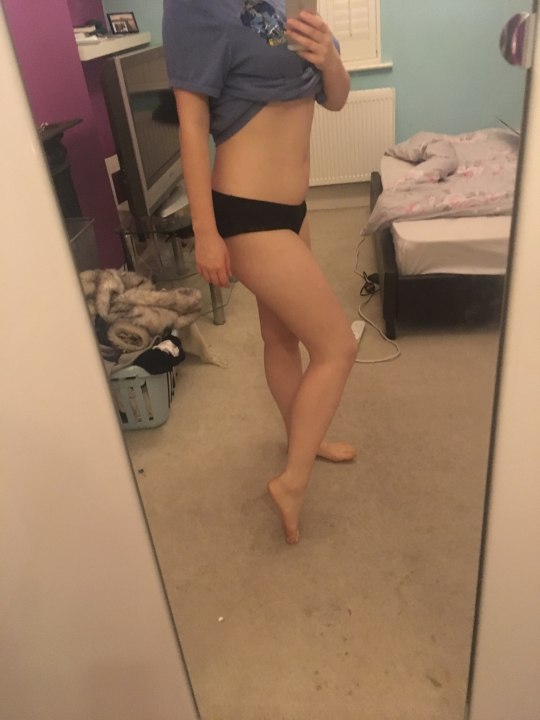
let’s start with a few pictures of my body shall we
(please ignore messy room i’m in the process of packing)
okay so that’s the body of someone that eats healthy, literally my fave food is broccoli, and i work out 5 days a week, you’d think i’m at ‘’’healthy weight’’’’ right?????
BITCH NOPE
that bitch telling me to eat 1500 – 1900 calories a day are you fucking joking??? that’s fucking starving myself and i’m not doing that. fuck you.
Bmi was never meant to be used for individuals; it’s only useful for talking in generalised terms about a large population and as a potential guide.
thank you for your input, not many people know that. but still, an official site such as the fucking nhs recommending a full grown woman to eat under 2,000 a day is not okay!!! (Especially considering the fact that it took into account my regular activity)
calories are bullshit too
a calorie is the amount of energy released in laboratory conditions to heat water when it’s burned
so in the lab you have an instrument to burn the food and you measure how much of it it takes to heat water a set amount,
this does not in any way reflect how the body works
your body breaks down foods in different ways, for example monosaturated fats break down very slowly but processed sugars break down very fast
so by that logic something that is almost pure carbohydrate would be much worse than something that is almost pure monosaturated fat
not necessarily
oats, for example, are something like 95% fibre, meaning although they are pure sugar the body decides it’s not worth the bother of breaking them down so you get a small fraction of the sugar in the oat
so just going by carbohydrate [aka sugar] content doesn’t work properly either
a stick of butter has WAY more calories than a boiled potato but the stick of butter breaks down over several hours and keeps you satiated longer than that boiled potato that immediately floods your system with sugar, that triggers the response of too much store that for later, which causes a lack in your body which triggers the i’m hungry response
or the peanuts being high protein high fat are the reason why a snickers fills you up longer than a mars bar even though it might have a higher calorie count – because you’re full longer you eat less calories because you don’t go i’m hungry and eat another mars bar
and that’s all assuming that every body processes food the exact same way
tl:dr the human body is a very complicated machine and using a very simple method of measuring energy intake is complete nonsense
i always knew the BMI was bullshit but having solid proof is reassuring and will def help with my recovery!!!
BMI is bullshit and I’m so mad the medical community is still using it
I’m a varsity athlete (rugby, so let’s keep in mind i throw myself at other human beings who are often bigger than me) and my BMI is always ‘overweight’ except for the brief period last summer in which i was eating about 1300 calories a day to make myself hot (12/10 would not recommend). right now my butt looks great, and I’m probably in the best shape ive ever been in. muscle weighs more than fat. BMI does not factor in body composition, which is a much better indication f health. also beauty standards at totally unattainable so. I’m 5′2″ and weigh more than most 6ft models because of the amount of muscle mass i carry and sure I’m a little squishy round the edges but I’m healthy. so BMI can kiss my ass
This post is so good, so pure, so important
Adding on to all of this up here, hormones play a significant role in fat storage. “Eat less and exercise more” is a fad diet. Losing fat, gaining fat, and maintaining weight has far more to do with hormonal composition in your body than anything. Change your hormonal composition, and your body’s fat distribution is subject to change. This is why dfab people often gain weight when undergoing menopause or after having a hysterectomy (gender confirmation surgeries typically excluded as the subjects are often on testosterone). This is why endocrine disorders are often associated with significant weight loss or weight gain.
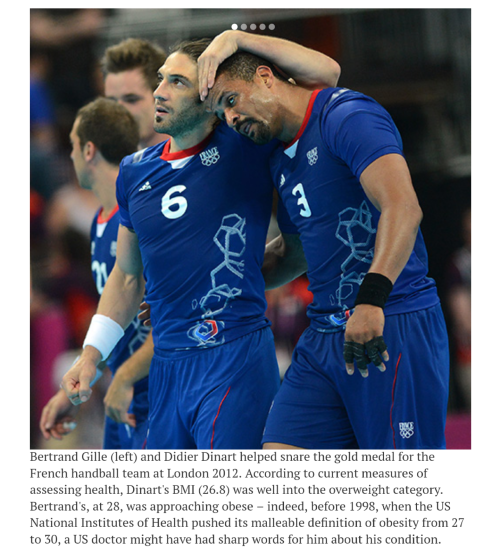
Another example of the BMI being bullshit: many professional athletes have very low percentages of body fat while also having a high BMI.
Joe Rogan is considered obese by the BMI, regardless of his low body fat percentage.
Some more examples of actual Olympians:
The BMI is bullshit
Quetelet, the guy who invented the bmi, literally influenced the eugenics and phenology movements. He developed this thing in a quest to quantify the perfect human (coincidentally white northern European and relatively slim, by his preference) by the numbers, labeling outliers as deviant – sound familiar? He wasn’t even a doctor, he was an astronomer and mathematician.
The bmi isn’t bullshit because it’s inaccurate, it’s bullshit because it’s built on fatmisia
Please watch this playlist on YouTube from @ok2befat (sources are listed for each video)
I’m sorry this took so long – I was doing a bunch of spelunking and got lost in rabbit holes along the way. Besides the obvious Junior Grand Prix series, there are various international competitions for Juniors and even Novices. An easy way to find these is to go to a skater’s wikipedia bio and look at their competitive highlights or early history, then click on competitors and look at their early history. You can build a collection of competitions that way.
The International Challenge Cup and the Asian Open Figure Skating Trophy(Asian Trophy) are two notable competitions that have been around for quite a while and which various Japanese skaters have competed at over the years. As a Junior, Yuuri (and you can extend this to Minami) may have competed in one of these even after entering the JGP circuit because it’s good experience. But if we’re talking about the first time he competed abroad as a 13-15 year old middle-schooler, he probably went to a smaller competition to get experience….
For Yuuri specifically, I would say the Mladost Trophy is a very likely competition he went to. Almost every big Japanese skater has gone to that competition in either Novice or Juniors. Daisuke Takahashi, Nobunari Oda, Yuzuru Hanyu, Takahito Mura, and Takahiko Kozuka. Since Yuuri’s character is partly a combination of all these big Japanese skating names, it’s kind of nice to have a competition that so many of them went to. It hasn’t been held in some years, but it was popular among Japanese skaters during the early-mid 2000s, which is when Yuuri would have been in middle school. You can always tweak dates to suit your fic too.
Another likely one would be the Triglav Trophywhich is usually the last ISU sanctioned event of the skating season. This means you could give Yuuri a redemption skate here! It’s also conveniently out of the way of JGP and GP competitions. Although virtually no Japanese Junior Men have skated here, plenty of Novice Men and quite a few Senior Men have competed: Daisuke Takahashi (as a Novice), Sota Yamamoto (as a Novice), Daisuke Murakami (Senior), Takahito Mura (Senior), Keiji Tanaka (Senior), and Tatsuki Machida (Senior). It’s also a great option for Yuuri if he wanted more competitive experience toward the end of his first Senior season. Other notable skaters include Stephane Lambiel and Johnny Weir when they were Novices.
Other international competitions for Juniors include:
Egna Spring Trophy – it was known as the Gardena Trophy for the longest time and that’s the name you should use in fics for Yuuri’s middle school years as a Junior. Tatsuki Machida is the only notable Japanese Junior to have competed and medaled (gold!). Which could make for a nice set-up in a story… A decent amount of Japanese skaters go to this trophy, but nowhere near the number of U.S. and Italian skaters who attend – and of the Japanese skaters who compete here, it’s largely in the Ladies division. Notable Senior Men’s medalists are Shoma Uno, Takahito Mura, Keiji Tanaka, and Takahiko Kozuka. The competition has been around since 1990 for Juniors, included advanced novices in 2006, and Seniors in 2011.
Coupe International de Nice (Nice Cup)– includes Novice, Junior, Senior levels. It’s not popular with Japanese skaters at all, but MANY Russian skaters have competed here, so this would be a good competition for a young Victor. It’s been around since the 90s.
Golden Bear of Zagreb – if the name sounds familiar, it might be because we see Yurio on the podium at the Golden Spin of Zagreb between his showing at the Cup of Russia and the GPF. The Golden Bear is the Junior/Novice version of the Golden Spin. It even includes skaters below the Novice level. As of 2012 it has a Senior division. It’s not popular with Japanese skaters, but it’s a long running competition – the Golden Bear has been around since the 80s and the Golden Spin since the 60s – so it’s pretty noteworthy.
Coppa di Merano (Merano Cup) – started in the 90s and includes all levels; not very popular with Japanese skaters in the Junior and Novice levels, but some Seniors have skated there.
NRW Trophy– started in 2007 it falls in late November/early December, so it’s a good time for Junior Yuuri if he didn’t make the JGPF. Although it’s not very popular with Japanese skaters either.
Coupe de Printemps(relatively new, started in 2012) – includes Novice, Junior, Senior levels. Many young Japanese skaters have competed here. Given the year it started, it would be a better choice for Minami than Yuuri unless you ignore dates completely.
Denkova-Staviski Cup (relatively new, started 2012) – not very popular for Japanese skaters. However, it’s a legit option for Yurio and makes a nice opportunity for where Minami might have competed with him.
Bavarian Open– Novice, Junior, Senior levels. It’s been around for a while but almost no Japanese skaters have competed here.
(and there are many more competitions, but that’s a decent list for now)
—————————
Bonus:
If you need to make up some scores to fit that time period, this is a wonderful site which has all of the big competitions from 2003-2018 (Junior Grand Prix, Grand Prix, Challenger Series, some Senior B competitions, Worlds, etc.) along with who competed, their scores, and graphs to visually see it all: http://www.figureskate.me/competitions
So, we once did a gifset on jump identification, in slow-mo. But it’s time for an ambitious upgrade — now, identify jumps in real time, without slowing down or pausing.
All skaters land (clean) jumps in the same way: on the outside edge of one foot, gliding backwards. Skaters who rotate counterclockwise during their jump will land on their rightfoot while skaters who rotate clockwise will land on their left. All the examples below feature skaters who rotate counterclockwise.
Therefore, the first and most important thing in jump identification is to scrutinize the takeoff instead of anything else. Look carefully at what the skater does with their feet before they jump, anything else is not particularly relevant in naming a jump.
Toe Jumps
If the skater strikes the ice with their toe pick, it’s either a Toeloop, FliporLutz. These jumps are known as Toe Jumps because of the skater’s use of their toe pick.
The Flip
Skaters usually do a turn immediately before this jump. Notice how Zhenya swings her right foot while doing the turn; this is very characteristic of flip jumps. This is a very common entry into the flip, but it’s not a necessary one, skaters can opt to perform a flip with a different entry.
Zhenya rotatestowards the foot that is placed on the ice during her takeoff. Her own torso and leg are “blocking” the direction of her rotation, such that she is assuming a closed body position just before takeoff.
Take note of how the foot that is placed on the ice is on an inside edge. If a skater uses an outside edge instead, they will be penalized for incorrect technique.
The Toeloop
Skaters usually do a turn immediatelybefore this jump. Again, while this is a very common entry to the toeloop, skaters don’t necessarily have to do it.
Yuzuru rotates away from the foot that is placed on the ice during his takeoff. His torso and leg are not “blocking” the direction of his rotation, such that he is assuming an open body position just before takeoff.
The Lutz
Skaters don’t usually do any turn immediately before this jump. Instead, they do a long backwards glide. Notice how Yuna gradually deepens the outside edge on her gliding foot as she goes backwards; this is one distinct indication of a lutz jump. Once again, this is just a very common entry to the lutz but skaters can use other entries too.
Yuna rotatestowards the foot that is placed on the ice during her takeoff. Her own torso and leg are “blocking” the direction of her rotation, such that she is assuming a closed body position just before takeoff.
Take note of how the foot that is placed on the ice is on an outside edge. If a skater uses an inside edge instead, they will be penalized for incorrect technique. Skaters who make this mistake often switch to the inside edge at the very last second, just before takeoff.
Edge jumps
If the skater does not strike the ice with their toe pick, it’s either a Salchow, Loopor Axel. These jumps are known as Edge Jumps because the skater takes off from the edges of their blades.
The Salchow
The skater’s legs assume a “/ ” shape.
After that, the skater sweeps his right foot forward and takes off.
The Loop
The skater’s legs assume an “X” shape.
After that, the skater briefly “sits” down before launching into the jump.
The Axel
Skaters typically do a long glide backwards before this jump. This is common but not necessary.
After that, they turn their head and take off in aforward direction.
And that’s all you need to know! It also helps if you watch videos of many, many skaters, so you can practice identifying jumps with these common indicators from various camera angles. 🙂
As a challenge, try identifying all the jumps in these programs (x, x, x, x, x) and let us know if these tips were useful! (Not all the takeoffs in those videos are the typical ones, but we’re sure you’ll get the hang of it eventually if you watch enough skating). ^^;;;
Planet 55 Cancri e is basically a giant diamond. like the planet is a diamond. and it would be worth $26.9 nonillion
Planet Gliese 436 b is an ice planet that is constantly on fire do to its close proximity to its parent star. the ice doesn’t melt bc the planet’s gravity is so strong it physically prevents the ice from melting
Planet HD 189733b rains sideways glass…. constantly
Planet J1407-B has planetary rings that are 200x the size of saturn. if saturn’s ring were as big as J1407-B’s we’d be able to see them with our naked eye from earth AND they would dominate our sky and look larger than a full moon
Planet Wasp-12b rotates so close to its parent star that its slowly being consumed by the it
Planet Gliese 581c is one of the candidates for a planet that can support life however it orbits a tiny dwarf star and is tidally locked so one side is constantly subject to immense sunlight while the other is constantly in darkness. there’s a small area of the planet however, that is just the right temp to support life. u just can’t step out of said area. the skies are red and the plants would have be a black color instead of a green bc they would use infrared light for photosynthesis. (a message was actually sent to the planet in 2008 in hopes that there’s life on the planet but the message wont reach the planet until 2029).
Planet GJ 1214b is a water planet nicknamed “water world” is has no land at all and the water is so deep it goes down miles all the way to the planet’s core.
Planet Wasp-17b is the largest planet discovered thus far. its so large its existence contradicts our understanding of how planets are formed. and it has a retrograde orbit, so it orbits in the opposite direction of its parent star.
Planet HD 188753 has 3 suns you should have triple shadows and there would be almost daily eclipses. and no matter which direction u face on the planet u would always see a sunset
Planet HD106906b is the loneliest planet discovered thus far. its known as “super jupiter” bc its 11x bigger than jupiter. it orbits its parent star at a distance of 60 billion miles (which is v strange) hence why its the loneliest planet.
Planet Tres 2b is the darkest planet known. it reflects less than 1% of light (it reflects less light than coal and black acrylic paint). the tiny part of the planet that does reflect light is red making the planet glow a dim red.








 Plume de Lynx