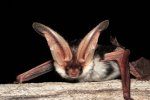
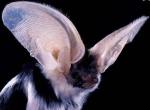
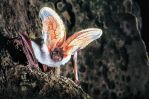
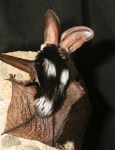
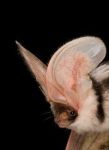
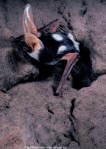
The spotted bat (Euderma maculatum) can be identified by is large ears which have a pinkish tone. Its body is jet-black in color with two large white spots on its shoulders and one white spot on its rump. The fur on its underbelly is snow white. The wings are also pink in color. Unlike most other bats, the spotted bat is solitary and territorial. This bat is considered to be one of the rarest bats in North America. That being said, it does occupy a very large range, but little is known about its wild status. It is considered to be a species of special concern.
why do jellyfish only sting when theres physical contact
why doesnt the electricity just surge throughout the entire ocean
why dont jellyfish rule the world
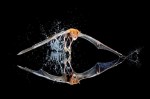
Fun fact! Jellyfish don’t use electricity to sting you. Whenever they feel pressure against their tentacles, it causes its cells to rapidly send out these stingers into your skin that then release its venom. Like this:
They are called nematocysts. They are what make box jellies and other fun lil critters so dangerous, because without these wee little daggers, the venom would have no way to get into your skin.
And yet something as thin as nylon stockings or pantyhose is enough to protect you, they are so small.
So if you’re scared of jellyfish? Wear sexy sheer undergarments into the sea like the regal creature you are.
I’m going to reblog this again because that is some of the best advice I have ever gotten on this blog.
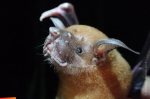
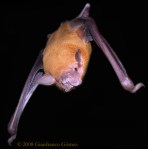
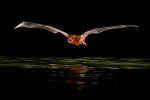
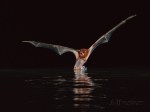
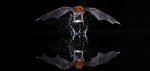
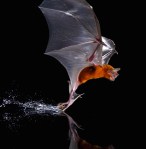
The greater bulldog bat or fisherman bat (Noctilio leporinus) is a type of fishing bat native to Latin America (Spanish: Murciélago pescador). The bat uses echolocation to detect water ripples made by the fish upon which it preys, then uses the pouch between its legs to scoop the fish up and its sharp claws to catch and cling to it.
Some succulents have translucent leaves to allow sunlight to penetrate deep inside their tissues.The glass-like Haworthia cooperi ‘Dodson’ has taken this phenomenon to the extreme.
Found only on the Galápagos Islands, marine iguanas often wear distinctive white “wigs” of salt expelled from glands near their noses. Conservation status: Vulnerable












 Plume de Lynx