“The rare households established by pairs of women in early America risked raising community concerns about lesbianism. For example, a pair of Philadelphia women were arrested in 1792 on a charge of “cohabiting,” a term typically applied against unmarried opposite-sex couples who set up homes together. The authorities apparently suspected the women of having a sexual relationship. Visitors to Charity and Sylvia’s home, viewing the single bedstead in their one-room house, had to confront the same sexual potential within the women’s relationship. Although bed0sharing was common on the nineteenth century frontier, medical and moral authorities expressed concerns about the sexual dangers of the practice, warning that bed-sharing was might lead to the “fondling of young persons of the same sex” and train youth in the habits of sodomy. By building a home together and sharing the same bed, Charity and Sylvia created strong cause for concern in Weybridge. To maintain their domestic arrangement, the women would have to counter potential anxieties about lesbianism. Some female couples before Charity and Sylvia had found acceptance in their communities by projecting a Christian reputation and contributing to the public welfare. Hannah Catherall and Rebecca Jones, who lived together in Philadelphia from the 1760’s to the 1780’s, gained the respect of the town’s Quaker elders despite their reputation as “yoke fellows,” a common metaphor for spouses. The women’s piety and good works protected them from questions about their sexuality. Alternatively, the Ladies of Llangollen, Eleanor Butler and Sarah Ponsonby, relied on their elite social class to maintain the open secret of their sexuality. Satirical accounts of the women’s mannish appearance suggest that people considered them to be lesbians, but their gentility allowed the women’s reputation to weather these suspicions. The same held true for the mannish Anne Lister and her parter Ann Walker, who lived together in Yorkshire. Suspicions about Lister’s sexuality in particular were quashed by her aristocratic social power. Charity’s evident masculinity made her and Sylvia’s unusual household equally vulnerable to sexual suspicion, but she possessed neither the money nor the elite status that insulated Butler, Ponsonby, Lister, and Walker from assault. Instead, Charity and Sylvia, like Catherall and Jones, would have to build reputations for piety and good works to secure communal toleration. It took time to acquire this social capital, and at the outset of their lives together many in the community treated the new house with suspicion.”
— Rachel Hope Cleves, Charity and Sylvia: A Same-Sex Marriage in Early America p111-112
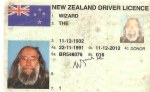
In New Zealand, there is a man legally known as ‘The Wizard’ who is an educator, comedian, magician and politician. Some of his political ideas include:
Abolishing old-fashioned gender roles
Travelling to find the “center of the universe”
Replacing God and the Church with Wizardry and the World Wide Web
“Wizard, The”
This is The Wizard, reblog in 35 seconds to reveal the secrets of the center of the universe and abolish old fashioned gender roles.
The Wizard of New Zealand is not just legally named “The Wizard” so he can appear on his driver’s licence that way. He is actually, literally, officially, the Wizard of New Zealand and was appointed to that role by Prime Minister Mike Moore in 1990.
Ancient moon priestesses were called virgins. ‘Virgin’ meant not married, not belonging to a man – a woman who was ‘one-in-herself’. The very word derives from a Latin root meaning strength, force, skill; and was later applied to men: virle. Ishtar, Diana, Astarte, Isis were all all called virgin, which did not refer to sexual chastity, but sexual independence. And all great culture heroes of the past, mythic or historic, were said to be born of virgin mothers: Marduk, Gilgamesh, Buddha, Osiris, Dionysus, Genghis Khan, Jesus – they were all affirmed as sons of the Great Mother, of the Original One, their worldly power deriving from her. When the Hebrews used the word, and in the original Aramaic, it meant ‘maiden’ or ‘young woman’, with no connotations to sexual chastity. But later Christian translators could not conceive of the ‘Virgin Mary’ as a woman of independent sexuality, needless to say; they distorted the meaning into sexually pure, chaste, never touched. —Monica Sjoo
Casual reminder that “virgin” in the modern/Christian sense of the word is literally a complete bullshit, made-up social construct, arbitrarily given a negative connotation.
I really doubt Friedrich Wilhelm I was, since he exiled the first (male) lover of his son (der alte Fritz, Friedrich der Große)
and then literally had the second one decapitated before his very eyes, traumatizing him…
However, Friedrich der Große… That king of Prussia was a big gay, yeah… And also a fascinating historical figure, I encourage people to go check out his life.
this is whats called a ‘coffer dam’, you basically build some walls, drop them in the water, tie them together, and then pump out the water from your new hole in the water so you can build while staying dry
its oddly not that hard- the flippin ROMANS were able to do it with logs and mud
occasionally particularly devious people would use this to hide treasure or tombs underneath the river so its not only impossible to find but impossible to get to without an engineer division
that last part gives me ideas for campaigns
“Not that hard – the ROMANS were able to do it” – people seriously underestimate how advanced some ancient cultures were and the organized effort it takes to come up with something like this and actually implement it. The Romans had heated floors, glass windows and ceilings that could be rotated to reflect what you were eating (forests for game, sea landscapes for fish). Hell, the Greeks built cameras and moving robots. The Minoans, who lived four thousands years ago and were wiped out by a tsunami three times as powerful as the one which devasted Japan in 2011, had running water and modern toilets. And let’s not get into how China basically invented everything centuries before anyone else.
Bottom line: just because someone was already doing it thousands of years ago, doesn’t mean it’s not very difficult and an extraordinary feat of engineering.
someone: you build how many bridges on a single military campaign…?
I grew up believing that women had contributed nothing to the world until the 1960′s. So once I became a feminist I started collecting information on women in history, and here’s my collection so far, in no particular order.
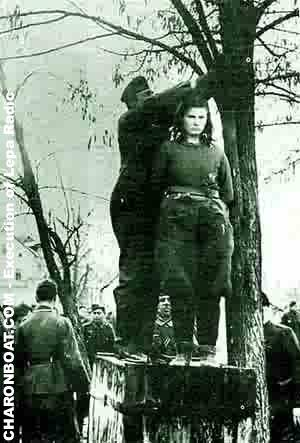
Lepa Svetozara Radić (1925–1943) was a partisan executed at the age of 17 for shooting at German soldiers during WW2. As her captors tied the noose around her neck, they offered her a way out of the gallows by revealing her comrades and leaders identities. She responded that she was not a traitor to her people and they would reveal themselves when they avenged her death. She was the youngest winner of the Order of the People’s Hero of Yugoslavia, awarded in 1951
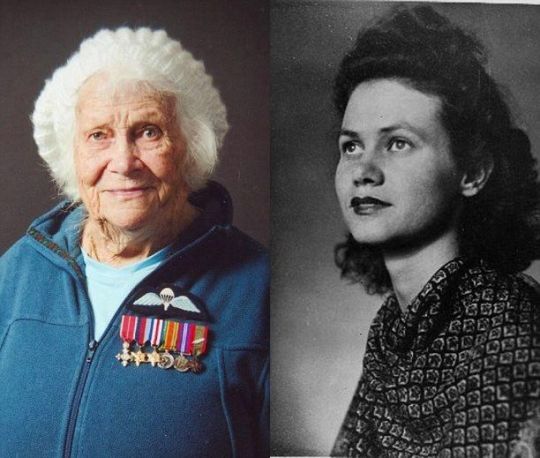
23 year old Phyllis Latour Doyle was British spy who parachuted into occupied Normandy in 1944 on a reconnaissance mission in preparation for D-day. She relayed 135 secret messages before France was finally liberated.
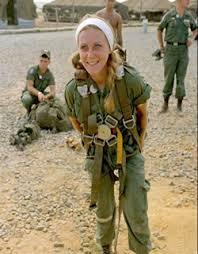
Catherine Leroy, War Photographer starting with the Vietnam war. She was taken a prisoner of war. When released she continued to be a war photographer until her death in 2006.
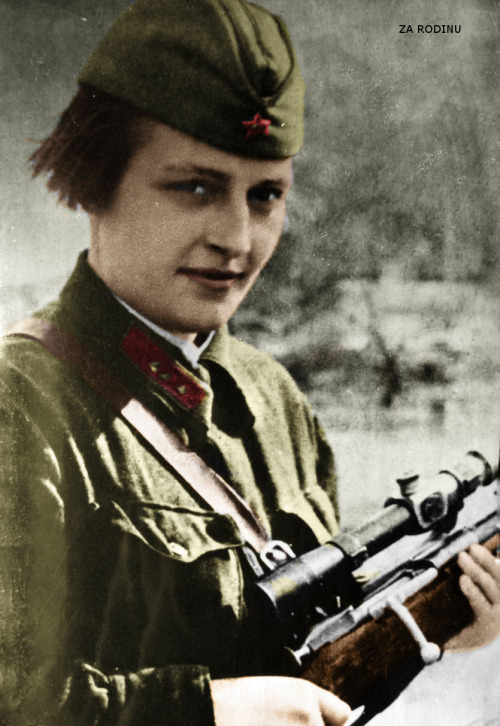
Lieutenant Pavlichenko was a Ukrainian sniper in WWII, with a total of 309 kills, including 36 enemy snipers. After being wounded, she toured the US to promote friendship between the two countries, and was called ‘fat’ by one of her interviewers, which she found rather amusing.
Johanna Hannie “Jannetje” Schaft was born in Haarlem. She studied in Amsterdam had many Jewish friends. During WWII she aided many people who were hiding from the Germans and began working in resistance movements. She helped to assassinate two nazis. She was later captured and executed. Her last words were “I shoot better than you.”.
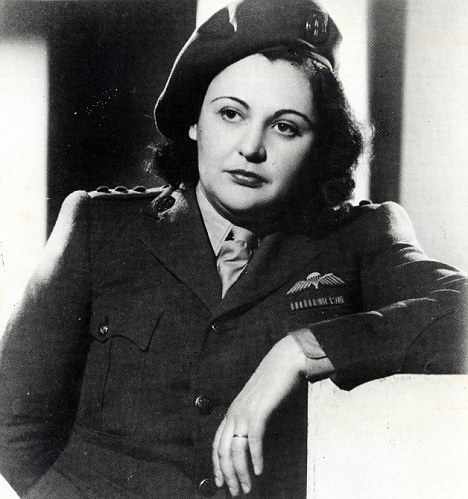
Nancy wake was a resistance spy in WWII, and was so hated by the Germans that at one point she was their most wanted person with a price of 5 million francs on her head. During one of her missions, while parachuting into occupied France, her parachute became tangled in a tree. A french agent commented that he wished that all trees would bear such beautiful fruit, to which she replied “Don’t give me any of that French shit!”, and later that evening she killed a German sentry with her bare hands.
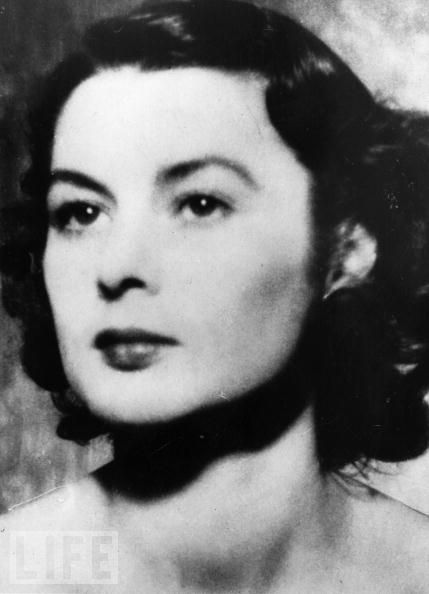
After her husband was killed in WWII, Violette Szabo began working for the resistance. In her work, she helped to sabotage a railroad and passed along secret information. She was captured and executed at a concentration camp at age 23.
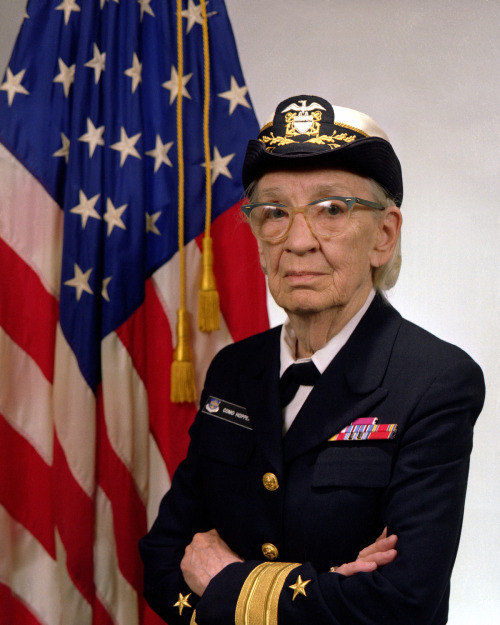
Grace Hopper was a computer scientist who invented the first ever compiler. Her invention makes every single computer program you use possible.
Mona Louise Parsons was a member of an informal resistance group in the Netherlands during WWII. After her resistance network was infiltrated, she was captured and was the first Canadian woman to be imprisoned by the Nazis. She was originally sentenced to death by firing squad, but the sentence was lowered to hard lard labor in a prison camp. She escaped.
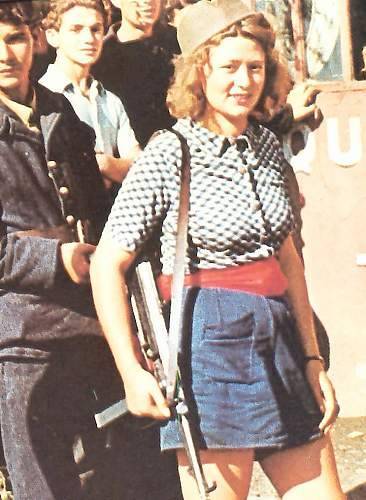
Simone Segouin was a Parisian rebel who killed an unknown number of Germans and captured 25 with the aid of her submachine gun. She was present at the liberation of Paris and was later awarded the ‘croix de guerre’.
Mary Edwards Walker is the only woman to have ever won an American Medal of Honor. She earned it for her work as a surgeon during the Civil War. It was revoked in 1917, but she wore it until hear death two years later. It was restored posthumously.
Italian neuroscientist won a Nobel Prize for her discovery of nerve growth factor. She died aged 103.
EDIT
jinxedinks added: Her name was Rita Levi-Montalcini. She was jewish, and so from 1938 until the end of the fascist regime in Italy she was forbidden from working at university. She set up a makeshift lab in her bedroom and continued with her research throughout the war.
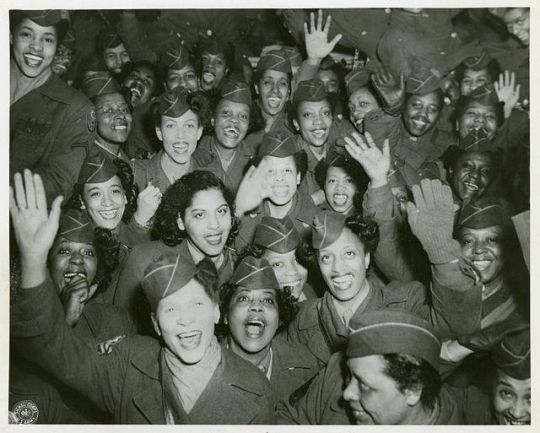
A snapshot of the women of color in the woman’s army corps on Staten Island
This is an ongoing project of mine, and I’ll update this as much as I can (It’s not all WWII stuff, I’ve got separate folders for separate achievements).
File this under: The History I Wish I’d Been Taught As A Little Girl
Part 2
Annie Jump Cannon was an american astronomer and, in addition to possibly having one of the best names in history, was co-creator of one of the first scientific classification systems of stars, based on temperature.
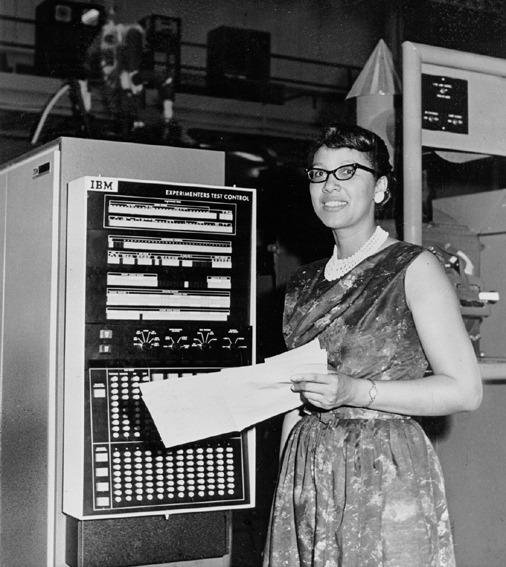
Melba Roy Moutan was a Harvard educated mathematician who led a team of mathematicians at NASA, nicknamed ‘Computers’ for their number processing prowess.
Joyce Jacobson Kaufman was a chemist who developed the concept of conformational topology, and studied at Johns Hopkins University before it officially allowed women entry in 1970.
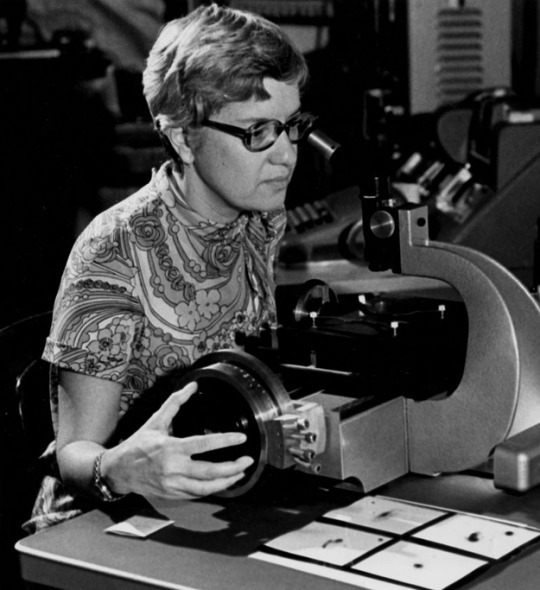
Vera Rubin is an astronomer and has co-authored 114 peer reviewed papers. She specializes in the study of dark matter and galaxy rotation rates.
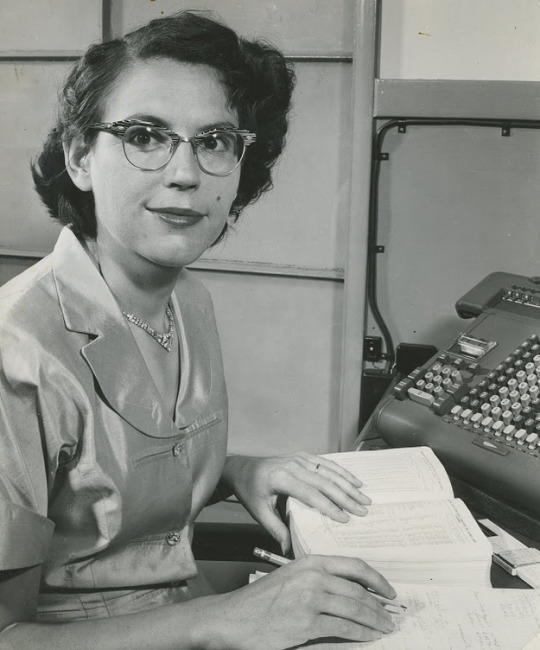
Mary Sherman Morgan was a rocket scientist who invented hydyne, a liquid fuel that powered the USA’s Jupiter C-rocket.
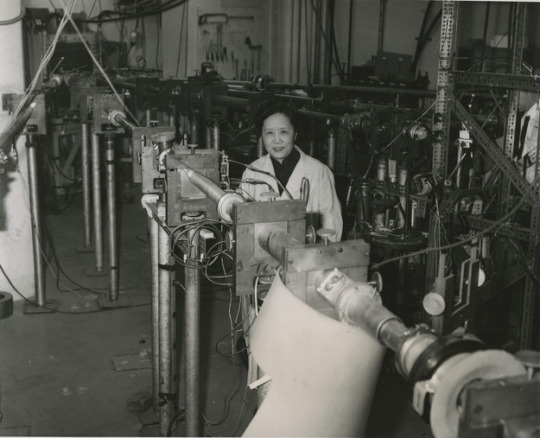
Chien-Siung Wu was a physicist who worked on the Manhattan Project, as well as experimental radioactive studies. She was the first woman to become president of the American Physical Society.
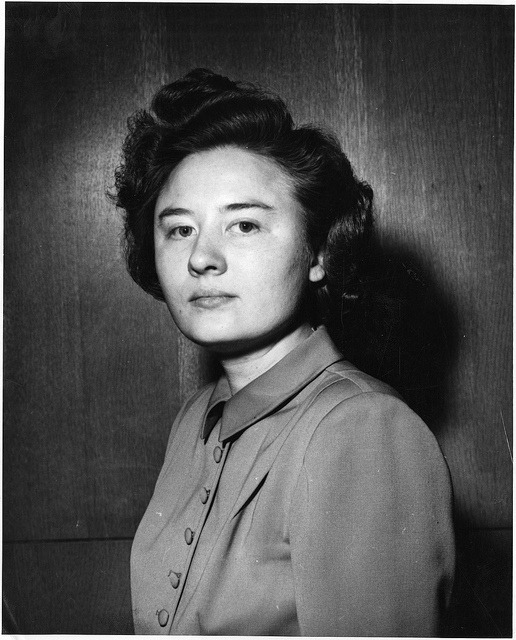
Mildred Catherine Rebstock was the first person to synthesize the antibiotic chloromycetin.
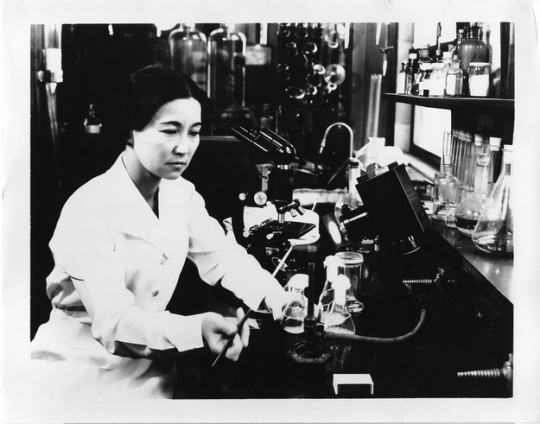
Ruby Hirose was a chemist who conducted vital research about an infant paralysis vaccine.
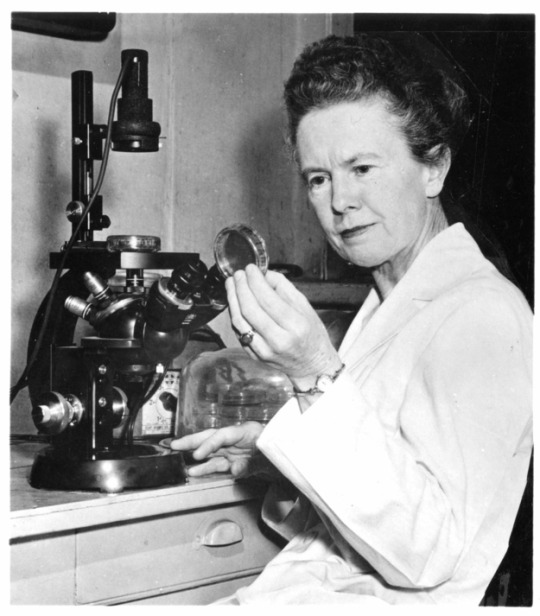
Hattie Elizabeth Alexander was a pediatrician and microbiologist who developed a remedy for Haemophilus influenzae, and conducted vital research on antibiotic resistance.
Marie Tharp was a scientist who mapped the floor of the Atlantic Ocean and provided proof of continental drift.
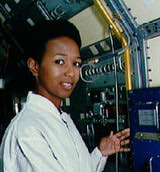
Mae Jamison is an astronaut who holds a degree in chemical engineering from Stanford University and was the first black woman in space.
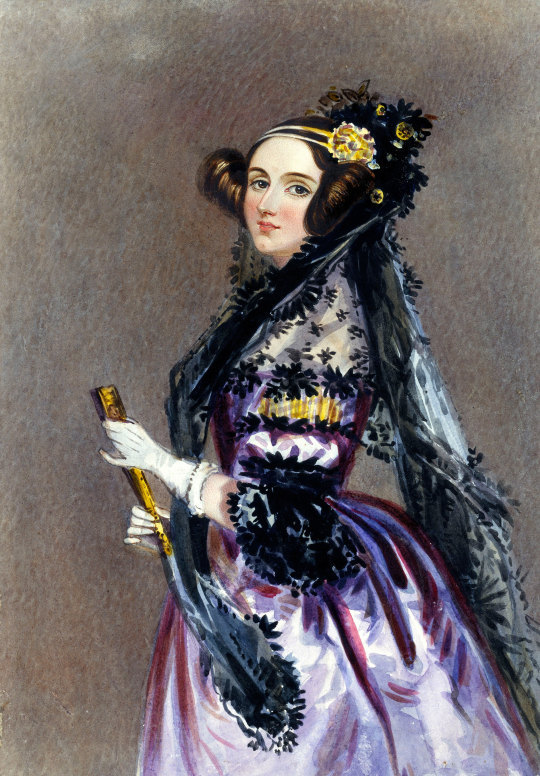
Ada Lovelace was a mathematician and considered to be the world’s first computer programmer.
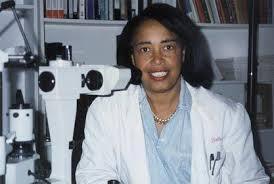
Patricia E Bath is ophthalmologist and the inventor of the Laserphaco Probe, which is used to treat cataracts.
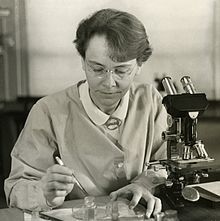
Barbara McClintock won a Nobel prize for her discovery that genes could move in and between chromosomes.
That’s it for now, part three will be on its way. (Josephine Baker was requested in the first installment, just know I did not forget her! She’s in a different folder, titled ‘famous people you didn’t know were complete badasses, and she, along with Hedy Lamar and Audrey Hepburn will be in the next installment 🙂 )
Part 3
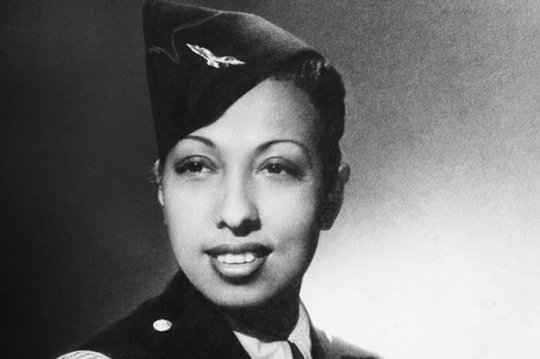
Josephine Baker, though today remembered for her dancing, singing, and larger than life personality, actually played a significant role in WWII. She joined Women’s Auxiliary of the Free French Air Force, got her pilot’s license in 1933, and by 1944 she raised 3,143,000 francs for the war effort. She entertained the troops, which was a doubly whammy of justice. She refused to entertain segregated troops, so the French military was forced to integrate the troops for all her performances. She also smuggled secret messages in her music across countless borders.
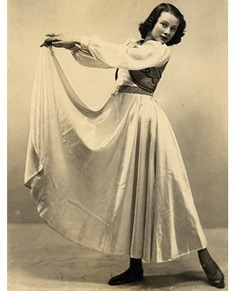
Audrey Hepburn is known as one of the most beautiful and talent actresses of the 1950′s, but her contributions to the world started far before her first film and continued until well after her cinematic heyday. In WWII stricken Austria, Audrey, then an aspiring ballerina, would give secret ballet performances to raise money for the Austrian resistance. She even helped smuggle secret messages for the resistance. On one such occasion, she was stopped by an enemy soldier. He asked her what she was doing and she, pretending not to understand, presented him with a bouquet of wildflowers she’d been absentmindedly picking. She was let go and the message was delivered safely. It was her experience in the war which would later prompt her to become one of the founders of UNICEF.
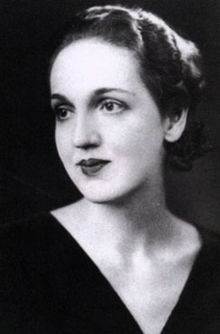
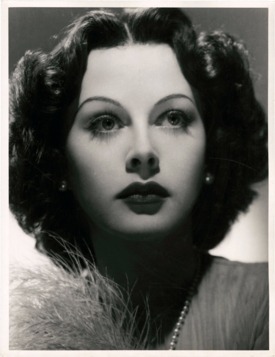
Hedy Lamarr was an actress well known for her piercing gaze and deadpan wit. What she’s less known for is being a brilliant mathematician who invented the frequency hopping spread spectrum. Without her invention, we wouldn’t have bluetooth or wifi.
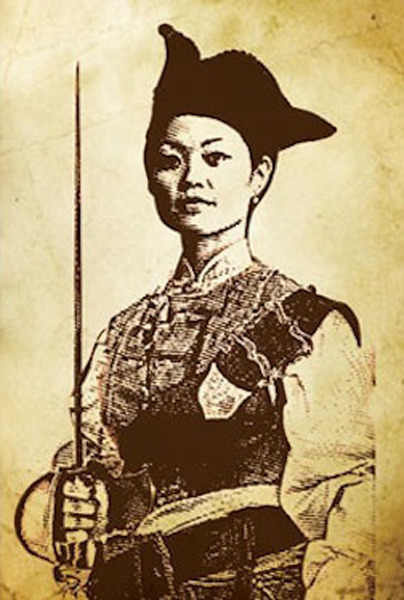
Ching Shih was one of the world’s most successful pirates. At the death of her (pirate) husband, the former prostitute took command of his ships and started her pirating career. At the height of her career she commanded 1800 ships and more than 80,000 male and female pirates. She became powerful enough to challenge every empire’s naval forces in the world and her Red Flag Fleet was feared from the Chinese coast to Malaysia. Unable to defeat her, the Chinese government caved and offered her amnesty. She surprised everyone by taking it and became one of the few pirates in history to retire. She also took care of her crew even after her retirement; most of Ching’s pirates were pardoned. She died a respectable millionaire.
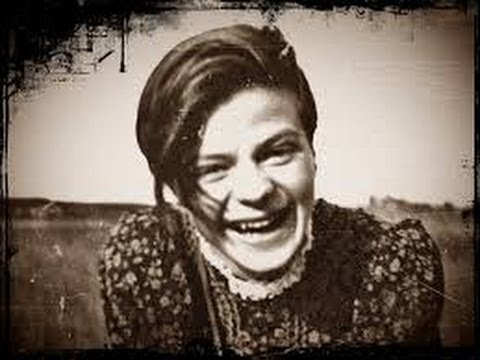
Sophie School was an active member of the White Rose non-violent resistance group in WWII Germany. In 1943 she, along with her brother and the rest of the White Rose were arrested for passing out leaflets encouraging passive resistance. She and her brother were beheaded by guillotine just a few hours later. Her last words were “How can we expect righteousness to prevail when there is hardly anyone willing to give himself up individually to a righteous cause. Such a fine, sunny day, and I have to go, but what does my death matter, if through us, thousands of people are awakened and stirred to action?”
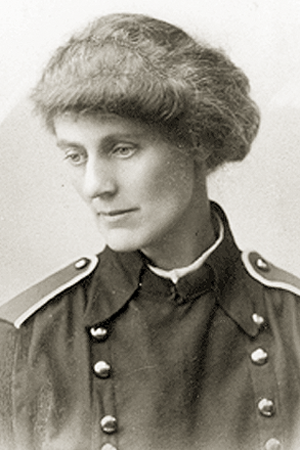
(Written by Emporer-of-nerds) Constance Markievicz (was a) Very important figure in the Irish independence movement, first woman elected to the British House of Commons, and one of the first women to hold a cabinet position in government (Minister for Labour of the Irish Republic (which was a short-lived revolutionary state predating the current Ireland/Éire))!
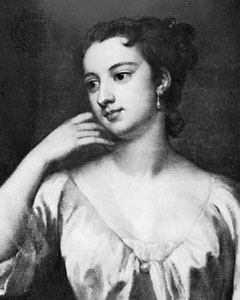
Lady Mary Wortley Montagu was an English ambassador to Turkey in the early 1700s, and documented her experience carefully. When she saw the Turkish perform an early method of small-pox vaccination, she urgently wrote home. She is responsible for the first variolation small-pox vaccinations in Europe.
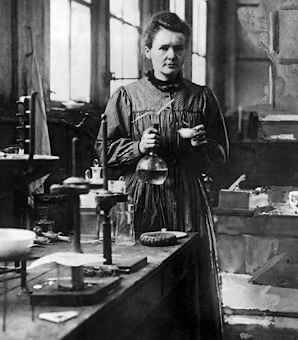
Marie Curie is fairly well known. Unfortunately she’s often known as the ‘assistant’ to her husband. She was a pioneering physicist and chemist, who’s work with radiation was groundbreaking. She was the first woman to win a Nobel prize and the only one to win one in two fields for her discovery of polonium and uranium. It’s also notable that she was the first woman in Europe to receive a doctorate degree. Her discoveries made the x-ray machine possible, and Curie immediately put it to work. She invented a small, mobile type of x-ray machine and worked with her daughter at casualty collection points in WWI, using the machine to locate shrapnel and bullets in wounded soldiers. She died of pernicious anemia, a result of years of radioactive exposure. Many of her notebooks are still too radioactive to be read.
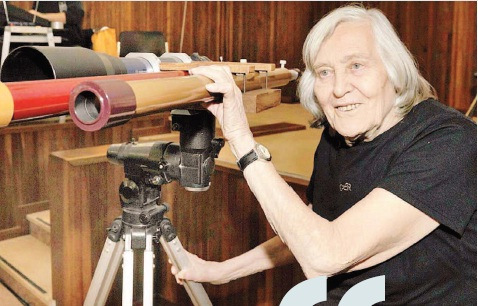
Margherita Hack was an Italian astrophysicist and became administrator of the Trieste Astronomical Observatory, bringing it to renowned respect and fame. She was a prolific science writer and was awarded the Targa Giuseppe Piazzi for the scientific research, and later the Cortina Ulisse Prize for scientific dissemination. Asteroid 8558 Hack, discovered in 1995, was named in her honor.
(This installment was a little all over the place as far as achievements go, and short, since it was mostly requests! Hypatia of Alexandria was also requested but she, along with Sappho and others, are getting their own installment. The next installment will center around women of the literary world!)
Great respect for this!
Note that there were many many more, both before and after photography was invented.
Don’t ever let some fuckboy tell you that women just cleaned and cooked until very recently.
So important.
WOW thank you so much for compiling these and then sharing them for the rest of us for education! I knew some of these stories but am so thankful to learn more.
In the heat of battle, photographer Horace Bristol captured one of the most unique and erotic photos of WWII.
Bristol photographed a young crewman of a US Navy “Dumbo” PBY rescue mission, manning his gun after having stripped naked and jumped into the water of Rabaul Harbor to rescue a badly burned Marine pilot. The Marine was shot down while bombing the Japanese-held fortress of Rabaul.
“…we got a call to pick up an airman who was down in the Bay. The Japanese were shooting at him from the island, and when they saw us they started shooting at us. The man who was shot down was temporarily blinded, so one of our crew stripped off his clothes and jumped in to bring him aboard. He couldn’t have swum very well wearing his boots and clothes. As soon as we could, we took off. We weren’t waiting around for anybody to put on formal clothes. We were being shot at and wanted to get the hell out of there. The naked man got back into his position at his gun in the blister of the plane.”
“And well, there was his butt, and I had a camera. I mean I AM a historian.”
That is the BEST EVER quote about the nature of historians I’ve ever seen
What a 10,000 year old glacial ice supposedly looks like. The photographer calculated that the ice was 10,000 years old because that’s how long it takes for all of the air to be forced out of glacial ice, leaving it clear, like crystal, rather than white like most glacial ice, such as the iceberg in the background.












 Plume de Lynx