THAT FIRST SITE IS EVERY WRITER’S DREAM DO YOU KNOW HOW MANY TIMES I’VE TRIED WRITING SOMETHING AND THOUGHT GOD DAMN IS THERE A SPECIFIC WORD FOR WHAT I’M USING TWO SENTENCES TO DESCRIBE AND JUST GETTING A BUNCH OF SHIT GOOGLE RESULTS
Do an
outline, whatever way works best.
Get yourself out of the word soup and know where the story is headed.
Conflicts
and obstacles. Hurt the protagonist, put things in their way, this keeps
the story interesting. An easy journey makes the story boring and boring is
hard to write.
Change
the POV. Sometimes all it takes to untangle a knotted story is to look at
it through different eyes, be it through the sidekick, the antagonist, a minor
character, whatever.
Know the
characters. You can’t write a story if the characters are strangers to you.
Know their likes, dislikes, fears, and most importantly, their motivation. This makes the path clearer.
Fill in
holes. Writing doesn’t have to be linear; you can always go back and fill in plotholes,
and add content and context.
Have
flashbacks, hallucinations, dream sequences or foreshadowing events. These
stir the story up, deviations from the expected course add a feeling of urgency
and uncertainty to the narrative.
Introduce
a new mystery. If there’s something that just doesn’t add up, a big question mark, the story becomes more
compelling. Beware: this can also cause you to sink further into the mire.
Take
something from your protagonist. A weapon, asset, ally or loved one. Force
him to operate without it, it can reinvigorate a stale story.
Twists
and betrayal. Maybe someone isn’t who they say they are or the protagonist
is betrayed by someone he thought he could trust. This can shake the story up
and get it rolling again.
Secrets. If
someone has a deep, dark secret that they’re forced to lie about, it’s a good
way to stir up some fresh conflict. New lies to cover up the old ones, the
secret being revealed, and all the resulting chaos.
Kill
someone. Make a character death that is productive to the plot, but not “just because”. If done well, it affects
all the characters, stirs up the story and gets it moving.
Ill-advised
character actions. Tension is created when a character we love does
something we hate. Identify the thing the readers don’t want to happen, then
engineer it so it happens worse than they imagined.
Create cliff-hangers. Keep the readers’ attention by putting the characters into new problems and
make them wait for you to write your way out of it. This challenge can really
bring out your creativity.
Raise the
stakes. Make the consequences of failure worse, make the journey harder.
Suddenly the protagonist’s goal is more than he expected, or he has to make an
important choice.
Make the
hero active. You can’t always wait for external influences on the
characters, sometimes you have to make the hero take actions himself. Not
necessarily to be successful, but active
and complicit in the narrative.
Different
threat levels. Make the conflicts on a physical level (“I’m about to be
killed by a demon”), an emotional level (“But that demon was my true love”) and
a philosophical level (“If I’m forced to kill my true love before they kill me,
how can love ever succeed in the face of evil?”).
Figure
out an ending. If you know where the story is going to end, it helps get
the ball rolling towards that end, even if it’s not the same ending that you
actually end up writing.
What if?
What if the hero kills the antagonist now, gets captured, or goes insane? When
you write down different questions like these, the answer to how to continue the
story will present itself.
Start
fresh or skip ahead. Delete the last five thousand words and try again. It’s
terrifying at first, but frees you up for a fresh start to find a proper path. Or
you can skip the part that’s putting you on edge – forget about that fidgety
crap, you can do it later – and write the next scene. Whatever was in-between
will come with time.
*Blinks* I-I’m not the only one to call writer’s block needing to un-stick the story?
I discovered something useful today, taking breaks or exercising never helps me but THIS does, sharing to save a life
I just found out that some pro artists that work for companies like Dreamworks etc sometimes hold their pens this or similar way so it gotta work. Recently I spent 5 days on drawing for long periods of time (we talk about min 5 hours in one go to max 12 hours long crunch) and not once did my hand bother me.
Here is a list of twenty dialogue prompts! Thank you everyone for contributing!
“Hey man, remember that one time you almost destroyed the country?” “Yeah bro, that was wild.”
“The shortest moments are the longest memories.”
“Are – did you – did you just BLOW UP THE MOON?” “You said it was irritating.”
“You know, when you said you were pregnant, I honestly expected our child to be…you know.”
“We celebrate now, we may not see tomorrow.”
“For the last time: I’ve met the devil and you’re not him!”
“Sure, let me just..lie down here”
“Dont cry for me. Celebrate over our legacy.”
“How could you be so selfish?!” “I learnt from the best.”
“Pineapple /really/ doesn’t belong on pizza.” “Good thing this isn’t for you then.”
“You are one in a million” “Cool, where can I meet another 7000 of me?”
“You know what saddens me the most? The fact that when we both go back to our timelines, we won’t be able to befriend eachother again. Hell, I don’t even know if we’ll be the same people!”
“Hi, I’m the Grim Reaper, and this is Jackass”
“Just because I fight on the side of the angels, don’t make the mistake of thinking I am one.”
“dude, I think your whole ‘im Steve I eat people’ thing is getting kind of old.”
“You worked for my uncle for 15 years, and he never once asked you to deal with a body?”
“Bruh, I don’t think possessing people is good for you”
“I leave you alone for one minute and now we have the king of hell, several cats and a large goat in our living room. What the hell were you trying to do?”
“What even *is* the right amount of eyes, Karen? You tell me.”
“How can you just leave me here, covered in orange juice and surrounded by your old victims?“
PSA to all you fantasy writers because I have just had a truly frustrating twenty minutes talking to someone about this: it’s okay to put mobility aids in your novel and have them just be ordinary.
Like. Super okay.
I don’t give a shit if it’s high fantasy, low fantasy or somewhere between the lovechild of Tolkein meets My Immortal. It’s okay to use mobility devices in your narrative. It’s okay to use the word “wheelchair”. You don’t have to remake the fucking wheel. It’s already been done for you.
And no, it doesn’t detract from the “realism” of your fictional universe in which you get to set the standard for realism. Please don’t try to use that as a reason for not using these things.
There is no reason to lock the disabled people in your narrative into towers because “that’s the way it was”, least of all in your novel about dragons and mermaids and other made up creatures. There is no historical realism here. You are in charge. You get to decide what that means.
Also:
“Depiction of Chinese philosopher Confucius in a wheelchair, dating to ca. 1680. The artist may have been thinking of methods of transport common in his own day.”
“The earliest records of wheeled furniture are an inscription found on a stone slate in China and a child’s bed depicted in a frieze on a Greek vase, both dating between the 6th and 5th century BCE.[2][3][4][5]The first records of wheeled seats being used for transporting disabled people date to three centuries later in China; the Chinese used early wheelbarrows to move people as well as heavy objects. A distinction between the two functions was not made for another several hundred years, around 525 CE, when images of wheeled chairs made specifically to carry people begin to occur in Chinese art.[5]”
“In 1655,Stephan Farffler, a 22 year old paraplegic watchmaker, built the world’s first self-propelling chair on a three-wheel chassis using a system of cranks and cogwheels.[6][3] However, the device had an appearance of a hand bike more than a wheelchair since the design included hand cranks mounted at the front wheel.[2]
The invalid carriage or Bath chair brought the technology into more common use from around 1760.[7]
In 1887, wheelchairs (“rolling chairs”) were introduced to Atlantic City so invalid tourists could rent them to enjoy the Boardwalk. Soon, many healthy tourists also rented the decorated “rolling chairs” and servants to push them as a show of decadence and treatment they could never experience at home.[8]
In 1933 Harry C. Jennings, Sr. and his disabled friend Herbert Everest, both mechanical engineers, invented the first lightweight, steel, folding, portable wheelchair.[9] Everest had previously broken his back in a mining accident. Everest and Jennings saw the business potential of the invention and went on to become the first mass-market manufacturers of wheelchairs. Their “X-brace” design is still in common use, albeit with updated materials and other improvements. The X-brace idea came to Harry from the men’s folding “camp chairs / stools”, rotated 90 degrees, that Harry and Herbert used in the outdoors and at the mines.[citation needed]
“But Joy, how do I describe this contraption in a fantasy setting that wont make it seem out of place?”
“It was a chair on wheels, which Prince FancyPants McElferson propelled forwards using his arms to direct the motion of the chair.”
“It was a chair on wheels, which Prince EvenFancierPants McElferson used to get about, pushed along by one of his companions or one of his many attending servants.”
“But it’s a high realm magical fantas—”
“It was a floating chair, the hum of magical energy keeping it off the ground casting a faint glow against the cobblestones as {CHARACTER} guided it round with expert ease, gliding back and forth.”
“But it’s a stempunk nov—”
“Unlike other wheelchairs he’d seen before, this one appeared to be self propelling, powered by the gasket of steam at the back, and directed by the use of a rudder like toggle in the front.”
Give. Disabled. Characters. In. Fantasy. Novels. Mobility. Aids.
If you can spend 60 pages telling me the history of your world in innate detail down to the formation of how magical rocks were formed, you can god damn write three lines in passing about a wheelchair.
Signed, your editor who doesn’t have time for this ableist fantasy realm shit.
If your fantasy setting is having trouble with things like “What other cultures exist in this universe and how do they get on?” or “How do diabled people live?” or “How’s gender work here?” without sounding like Your Conservative Aunt Edna That You Really Wish You Didn’t Have To Be Nice To At Thanksgiving, it’s a good sign that you need to go back, not to the drawing board, but to yourself and your real world, and think real hard about how you’re handling those things in real life.
It’ll do you and your writing a literal world of good.
Okay but like
Do we have to limit ourselves to wheelchairs?
Or could we have like, different kinds of mobility aids? Like we don’t have to remake the fucking wheel, but what if we want to? Like a world with cool magic should have tons of magical ways to help people get around. Same thing with technology. Like sure wheelchairs are cool but so is a guy with like, a fully controllable robot leg suit, or a paraplegic wizard who just flies around sitting on a magic cloud they’ve made solid with their spells.
Absolutely not! I used the example of wheelchairs because the person I was talking to decided to tell me that mobility aids were historically inaccurate and therefore had no place in their historical fantasy novel setting. So I went the entire hell out of my way to drag them behind historically accurate wheelchairs. I actually have another post circulating at the moment that talks about the use of other aids and how magic and other things could work as a mobility aid. I just switched to mobile so I can’t link, but if you scroll my blog you’ll find it.
This is all I’ve been talking about today because it’s all anyone will let me talk about lol.
I would caution against “magical healing,” though. This is one of the few parts of The Hunger Games that really pissed me off. Katniss loses her hearing for a couple of days, and those couple of days suck, but guess what! Capitol makes it all better! Harry Potter suffers from similar issues–Jo Rowling has said we don’t see things like wizards in wheelchairs because they use magic to “fix things like that.”
It’s okay to let your character struggle even in the face of magic, and even to use it for worldbuilding. Just off the top of my head I asked myself “so how would I handle a character with a missing arm in an LOTR-style world?”, and had two answers: 1) the dwarves could make a serviceable, well-crafted prosthetic with somewhat limited mobility (since dwarves don’t wield magic), or elves could sing one out of wood–but while lithe and beautiful, it would always be at greater risk for breaking, because magical wood is still wood.
It’s tempting to show how ~*~*~awesome~*~*~ magic is in your world by “fixing” disabled characters. RESIST. Let them be disabled and let them have assistive devices. (And if you ever need a good excuse for why the characters can’t just “fix it” via magic, go ask a Fullmetal Alchemist fan to explain the law of equivalent exchange. I’m not kidding. I don’t even go there and I know the backstory into the magical parts of the world is INSANELY well-done and can be a great guide to setting up your own magical rules.)
As I literally just posted a Bureauverse short story about wizards and addiction. *fingerguns* I could not agree with you more.
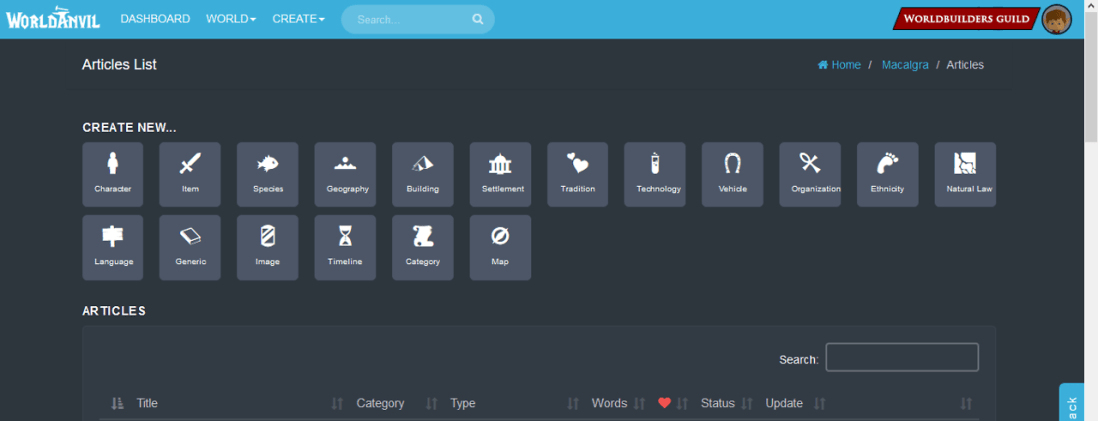
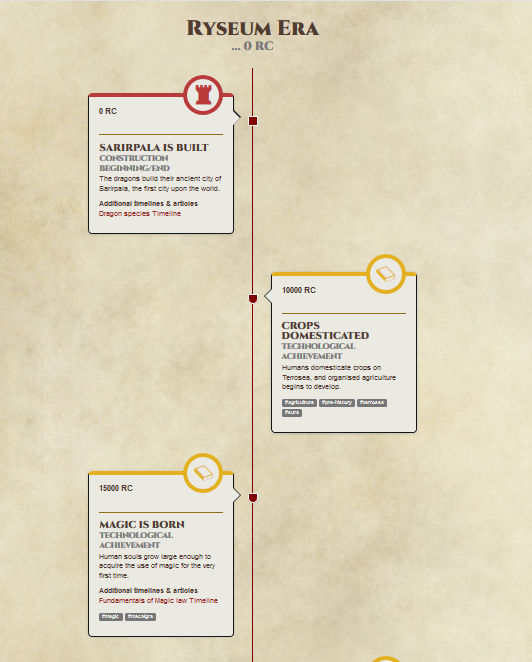
I need to take a moment to rave about my absolute favourite tool for writing right now! WorldAnvil.com! Its a brand new project that is already amazing. and free to use. You can make maps and drop location pins. Create timelines. Write articles using helpful templates. Engage with a really cool worldbuilding community on their discord server. Follow other worlds. And much more … . It’s being made by a two person team and already its extraordinary.
If you write, RPG or just like to worldbuild, please give WorldAnvil.com a try!
Shocking no one I have opinions about horses, and in light of a similar post I saw that I didn’t like I decided (couldn’t help myself really cause I’m a jerk) to write my own. No I won’t link to the other one for reasons you’ll see below, mainly being that horse people are jerks–yes including me–and what do I know?lol)
So..
Horses and ponies:
A horse and a pony are not the same thing, but height (while
a good starting point) is not the only fact in determining whether a horse is a
horse or a pony. Nor is it the only factor for deciding what load an equine can
carry or haul. A horse may be tall and rangy but ultimately not suited for
heavy loads, while some larger ponies (or horses who happen to be pony height)
might be broad and stout and able to carry a bigger ride or pull a cart with
ease. You can find a helpful link [here].
Sex/gender/age:
Horses typically live 25-30 years, though many live into their thirties. Breed and size definitely matter here, and there always anomalies. Ponies tend to have a longer lifespan.
Young horses are called foals. Technically up to age four
but this neutral designator is not used as much after they reach one year old.
At which point they’re called yearlings.
Once a horse’s sex is known they’re pretty much referred to by the gender
specific terms: filly (young female up to age four) and colt (young male up to
age four).
Once a male is gelded/castrated (and this is done for a number of reasons and at different ages for different reasons because #horsepeople) they’re typically called a ‘gelding’
no matter the age.
Which brings me to adult (four and over) horses. Mares
(females), stallions (uncastrated males), and geldings.
Young horses are generally not ridden as early as the racing
industry would have you believe. It’s not safe or healthy practice for horses
so young to be started with heavy riders/work loads. I personally do not
believe they should be started under saddle and rider until age two or more and
then lightly. Ideally age 3, but this does depend on the breed. Draft horses
and warmbloods physically mature more slowly than say thoroughbreds and quarter
horses, but I still don’t think *those* should start as early as the racing
industry demands.
WE INTERRUPT THIS POST TO REMIND YOU THAT HORSE PEOPLE ARE
THE BEST AND THE WORST:
Look, we all have opinions. If you’ve met a horse person who
says they don’t really have an opinion they’re lying about one or the other. (being a horse person or not having an opinion. lol) We
don’t all agree and we almost all think we know best and in at least one
situation we’re right and at least one situation we’re wrong. Which is why I’m
not citing sources. You can find hundreds with just a quick google search that
agree with me and just as many that don’t. Instead I will say that these are my
opinions based on nearly forty years research and practical experience and that
nearly all of my opinions/beliefs can and will be adjusted depending on the
animal. The equine animal. Not the human animal. Though I will make adjustments
for humans and their horses if a training technique doesn’t work for them. But
changing my thoughts just cause someone yells at me about it on the internet…nah.
WE NOW RESUME OUR INFORMATIONAL POST:
Temperament:
Gendered personality statements are largely biased and
useless unless they contain actual cause and effect explanations. For instance, mares are not
‘harder to work with’ or moody. They experience estrus cycles that make their
behavior and attitudes change but these are predictable if you know your dang
horse. Otherwise a fairer statement would be ‘spring makes the entire animal
kingdom act like morons and mares and stallions are included there in.’ so for
that matter are geldings who were gelded later in life.
You can find a very good introduction to equine puberty and breeding behavior [here].
Breed is often a
better gauge of temperament and if you are writing horses I highly recommend
you research breeds rather than making assumptions or listening to assumptions about sex for behavior. The simple truth is that
mares in heat/estrus are going to be feeling their oats so to speak and
likewise stallions (or late gelded geldings) will be wanting to sow theirs. Lol
This makes everyone act like fools on occasion. Stallions would likely only be
ridden or handled by experienced riders/horse people, but as always there are
exceptions. I once worked with a stallion who followed me like a lamb past a
dozen mares all calling to him and breed ready. The trick here is that when you
write these atypical creatures, make sure your readers know it’s atypical.
Speaking of
Breed:
Different breeds have different builds and different temperaments
much like dogs. You need to choose the right one for the job/role. And yes,
like dogs there are ‘mutts’ out there and by and large they are awesome, but
how awesome and how suited depends on what breeds are mixed in there and of
course the individual horse.
This [Wikipedia page] is actually a great starting point for researching. Once you find your breed
though it’s always better to google the breed organization for the most current
standards.
Anecdotes:
You’ll always find/hear stories from people contradicting
any and all of the above. Remember, horse people (and yes that includes me) are
jerks and generally think they know everything so sure…this one guy might not
like ponies because he knew some assholes and wouldn’t want his kids to ride
them. Sure this woman swears that Shetland ponies are the most kid friendly in
the world. *shrug* it’s going to vary pony to pony, but overall breed standards
and reputations exist for reasons.
An incomplete list of your usual Horse Professionals:
Most of these seem pretty self-explanatory but I’ll explain
farrier.
A farrier is a person who works on horses feet. Hooves grow
the entirety of a horse’s life, so they have to be trimmed (like our finger
nails) fairly routinely (generally 6-8 weeks depending on growth season,
weather, etc). Some horses wear shoes, but not all and there are (shockingly)
varying stances on when or whether or a horse should. This is largely based on
what work a horse does, the health of their feet/legs/confirmation, and what
surfaces said horse works on (dirt, concrete, etc).
Also, blacksmiths aren’t as common nowadays. Most farriers I know buy their shoes wholesale and make modifications to them. But if you’re writing historical/fantasy style works with worlds before horseshoes were mass produced then you’ll want to research them and add them in as appropriate. Often blacksmiths and farriers worked closely together or where the same person working both trades.
Finally, (not finally,
but finally for this post)
Equine Confirmation:
Equine confirmation is all about how a horse is put
together. How they’re built. Height, weight, stance, etc.
Confirmation standards vary by breed, some are aesthetic,
some are structural. Some are both and can affect a horse’s health and
abilities. A horse might be pigeon toed
or bow legged or have high withers or low heels. A horse might need correct
efforts for these (like braces, shoes, certain saddles/pads, physical therapy,
training, etc). Helpful starting link [here]. But as always it’s best to move onto the breed specific information out there.
Finally, (for real this time) some other things I’ve written on the subject of
horses and writing (but never a basic intro):
As always feel free to research, or ask me anything. Know
that like every horse person out there I’m biased. I just happen to be honest
about it and relatively aware of what my biases are. 😉
aries: what are you passionate about?
taurus: name 3 of your favorite books.
gemini: what was the last text you sent?
cancer: if you could choose your child’s zodiac sign, what would it be?
leo: name something you love about yourself.
virgo: what’s your #1 pet peeve?
libra: describe your dream partner.
scorpio: do you trust easily?
sagittarius: if you could travel to any place in the world, where would it be?
capricorn: what’s your dream job?
aquarius: do you believe in aliens?
pisces: describe someone you love.
sun: describe yourself in 3 words.
moon: what’s your favorite song?
rising/asc: how would you describe your style?
mars: are you easily angered?
venus: what’s your aesthetic?
mercury: what color do you talk in?
jupiter: what moral do you live by?
saturn: what’s your biggest fear?
uranus: are you rebellious?
neptune: share one of your dreams.
pluto: what’s the biggest thing you’ve learned by far in your life?
lilith: do you have any guilty pleasures?
chiron: have you ever broken a bone?
ceres: are you a momfriend?
pallas: do you have a good relationship with your parents?
juno: do you believe in soul mates?
1st house: are you confident?
2nd house: if you could only keep one of your personal items, what would you choose?
3rd house: do you like to read?
4th house: what does your bedroom look like?
5th house: name your favorite movie or show.
6th house: do you participate in community service?
7th house: if you could choose, what zodiac sign would you like your dream partner to be?
8th house: do you believe in reincarnation?
9th house: what’s your favorite quote?
10th house: are you good at public speaking?
11th house: what sign(s) is your best friend/squad?
12th house: do you like to be alone?
For artists who have problems with perspective (furniture etc.) in indoor scenes like me – there’s an online programm called roomsketcher where you can design a house/roon and snap pictures of it using different perspectives.
It’s got an almost endless range of furniture, doors, windows, stairs etc and is easy to use. In addition to that, you don’t have to install anything and if you create an account (which is free) you can save and return to your houses.
e) he might be called Tim but that might be short for something
– Timmos
– Timotheus
– Timiron (yeah just add “Ron” when in doubt)
– Tiroth
– Timarimos
Congratulations your Tim both has a cute nickname and a full name that sounds vaguely badass, or if not badass long-winded and unnecessary enough to be a Fantasy Name™.
Also try to make the syllables sound like their personality. A suave and socially smooth character could maybe not have any hard ‘r’ or ‘br’ or ‘tr’ in their names. Etc.
Saving for future reference and because of the glorious Monty python gif
This is really nice because you get interesting names WITHOUT making them ten syllables long and entire unpronounceable.
take old english names prior to the norman conquest. wulfric.
if you like, shorten them. atheldryth->audrey, theldry, eldry.




 Plume de Lynx