Some of the greatest accomplishments by medieval and renaissance women were accomplished over a banquet table or tea. And there were tons of women warriors (many and most of whom merely ended up casualties of war, as was the case for most warriors of either sex).
Actually making a significant difference as a female warrior a la Joan of Arc was near-impossible. Meanwhile there were numerous Kings’ mistresses who ended wars and created public service programs like hospitals over tea and therefore had far more positive, powerful, and lasting impact upon the world we live in today than most of the warriors in history, male or female. It’s just that most female accomplishments are often written out by historians, dismissed as being nothing but frivolous partying (when in fact said “frivolous partying” did more to shape the medieval and renaissance periods than 90% of the wars fought). It was a Sumerian princess in a tower who essentially invented literature, a Japanese noblewoman attending parties who wrote the first modern novel.
Women who defied gender roles were awesome, yes. Women who used “feminine” pursuits to assert their strength were JUST AS awesome.
“Other girls” were almost ALWAYS AMAZING. Just because the dudebros who have held the pens for centuries who reinforce the idea of “traditional masculinity = strength” have written out the importance of the banquet table, chivalry, and legends DOES NOT MEAN THAT MISOGYNISTIC B.S. SHOULD BE REINFORCED NOW.
“Proper ladies” were rarely, if ever shallow or mere baby machines, even if they were treated as such. We should not be perpetuating that. The pens are in our hands now. Use them for good.
Please and thank you.
ALSO *medievalist pushes up glasses* this public/private dichotomy was NOT REALLY A THING during the Middle Ages (and I am sad to say that tea-drinking was very limited.) The banquet table was EXPLICITLY a political space! as well as one for partying! In the heady days of second-wave feminism, Joan Kelly wrote a whole article about how the Renaissance limited noblewomen’s roles more. Also there’s a great book called Gendering the Master Narrative by two of my favorite medievalists and you can read a synopsis of why it’s awesome here.
ALSO ALSO. 90+ percent of women were, obviously, not members of the nobility. Although disadvantaged in law, they often enjoyed a certain degree of equality in practice (until men noticed, in the case of professional regulation.) But you know what the vast, overwhelming majority of people in the Middle Ages were doing? Farming. And farming requires everyone to work. This doesn’t mean that there wasn’t a gendered division of labor, but it meant that everyone cooperated. And according to the “boring,” everyday documents I spend most of my professional life working with (yay?) husbands and wives cooperated and shared initiative in decisions; single women could and did participate in professions and get known as sailors and healers and weavers. I don’t want to get too carried away and proclaim a “golden age” because, y’know, sexism was a huge thing, it was hard to divorce for cruelty, etc. But while official medieval thought often portrayed women as sinks of iniquity (thanks, patristic authors,) some women were writing against that (thanks, Christine de Pizan! thanks, Heloise!) and they weren’t portrayed as delicate flowers. And they were certainly not isolated from active life. I could give you essays on how religious women managed land and founded hospitals and fed and fought with their neighbors.
Tl; dr: medieval women were indeed awesome, for many and varied reasons.
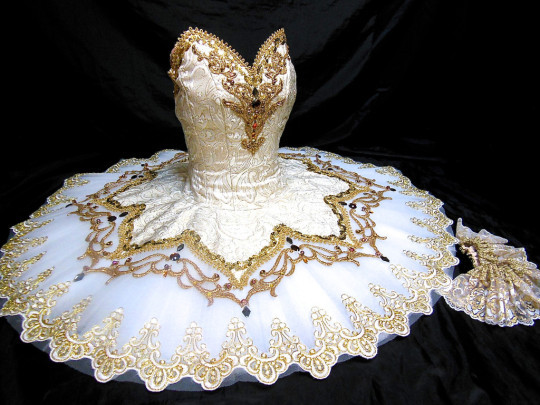
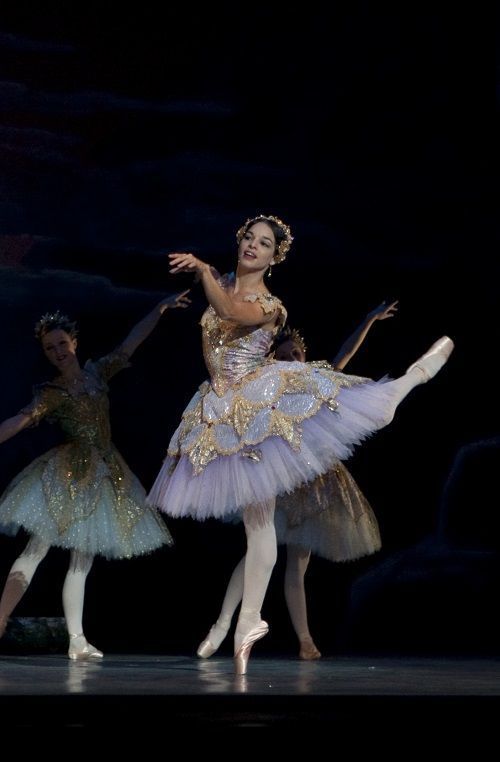
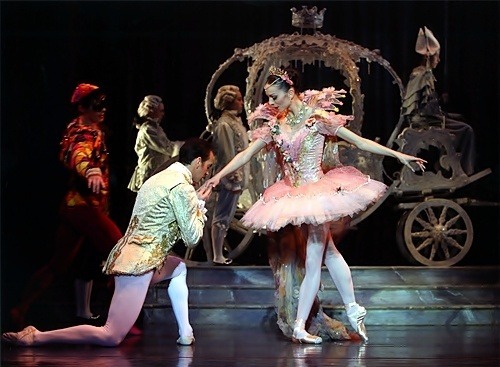
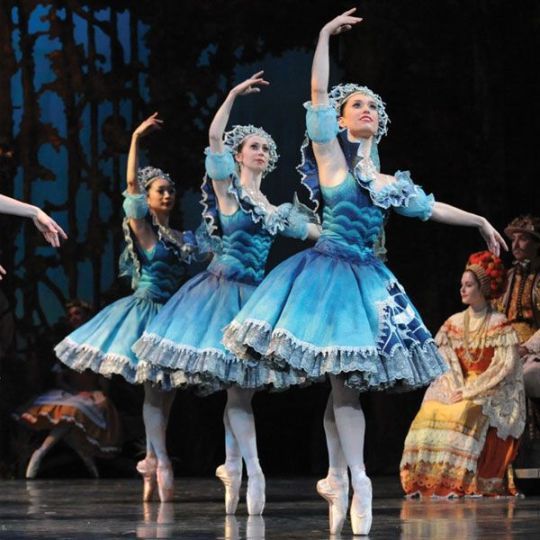
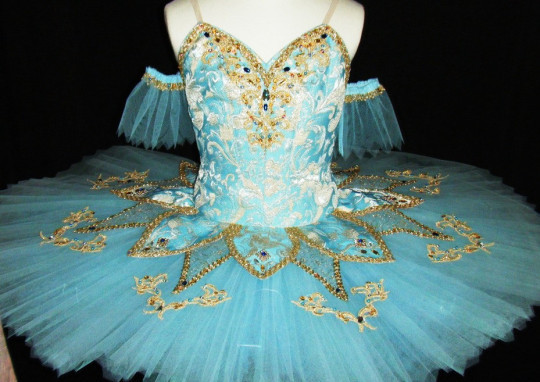
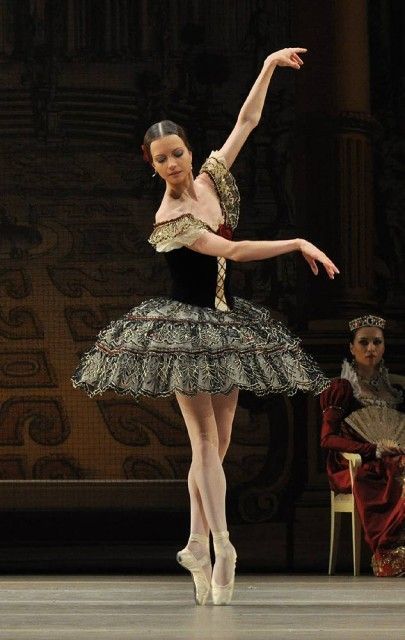
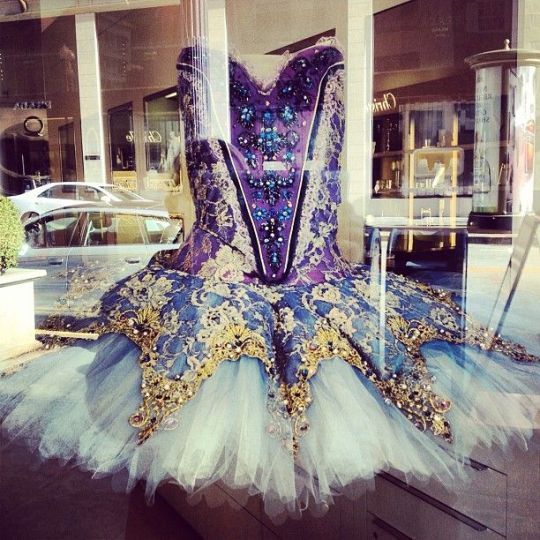
Can we PLEASE take a moment to appreciate the goddamn AMAZING amount of craftsmanship that goes into making pro ballet costumes?
I MEAN …
COME ON PEOPLE!
GENUINELY FUCKING SPECTACULAR!
THE DETAIL!
THE BEAUTY!!
THE GORGEOUSNESS OF IT ALL!!!
Costume designers are some of the most awesomely skilled people on the planet and I feel like they very rarely get as much admiration as they deserve. Especially in ballet, because a lot of the time at least half the audience doesn’t get the chance to see how intricate and beautiful these pieces truly are. I want to thank the artists who put so much effort into making characters look amazing.
I figured I would subtitle a great skit from a functionally now-defunct, but beloved French satirical show. It’s from 2003, on the brink of the Iraq War.
After 30 years on the airwaves, this show has died yesterday, for good this time. A billionnaire took over the channel a few years back and had tried to axe the show back then, but everyone went up in arms about it, including our president.
So instead, he did a death by slow suffocation : cutting budgets, firing the old writers, until the result was unwatchable.
Here’s a loosely translated bit of a report by Les Jours:
In recent weeks, the atmosphere was akin to “The Walking Dead” in the staff. Shootings canceled left and right: three weeks in May, two in June. And the teams are warned at the last moment. “We are not even given audience figures anymore but only views on Facebook,” an employee recently told us. For weeks, there were not even any official voices of the Guignols on the sets, Yves Lecoq (the 200-voice man) was injured and no longer worked. Same panade among the puppeteers who left little by little : a dozen recently. On some recordings, there were not enough puppeteers to manipulate latex figures. Solution ? “Corporate told us that we would do a shot / counter-shot, said a team member, disappointed, with the same person who operates two puppets. The employees also describe filming “in impossible security conditions, in a very small office, with electrical equipment that blocks the door”.
Lucy and Gwyn got me to watch Detroit: Become Human (Protect Connor my beautiful baby boy) and then I saw this beautiful art by @jizart and this happened…
The routine was flawless. Not a step out of place, every jump perfectly rotated. Yuuri was always perfect. But apparently, perfect did not mean good. It was a concept he was finding difficult to understand. Though every step was exactly as the program described, his scores were always low. It was the same for all androids in his position. Their programs were performed to perfection, but their scores remained low.
“It’s your performance, not your components.” The familiar voice of Victor Nikiforov floated through the room, catching Yuuri’s attention, “Your skating is perfect, but it lacks… soul.”
Eyes now trained on Victor, Yuuri cocked his head, “I don’t understand.”
“Yeah, I should’ve expected that,” Victor nodded to himself, stepping onto the ice, “Follow me.”
At first, Yuuri simply watched as Victor’s gold blades moved along the ice, propelling him forward with such grace. Even that was something Yuuri was unable to achieve. There was something about the way humans moved on the ice, something that Yuuri simply could not replicate no matter how many times he analysed them.
Following Victor onto the ice, Yuuri stood beside him, watching closely as Victor crossed his arms over his chest, “Why do you skate, Yuuri?”
“It’s what I was programmed for,” The answer seemed simple enough. There were androids for just about everything. His programming was design for skating. Yuuri was made to memorise programs and perform them to perfection, and he wasn’t the only one. And yet every android like him had the same struggles and none of them could figure out exactly why they could not compare to human skaters.
Victor sighed, shaking his head, “But doesn’t it bring you any joy?”
“Androids can’t feel emotions,” Yuuri’s face remained stoic, his hands rested politely behind his back as he paid close attention to Victor, “Skating is simply my purpose.”












 Plume de Lynx